
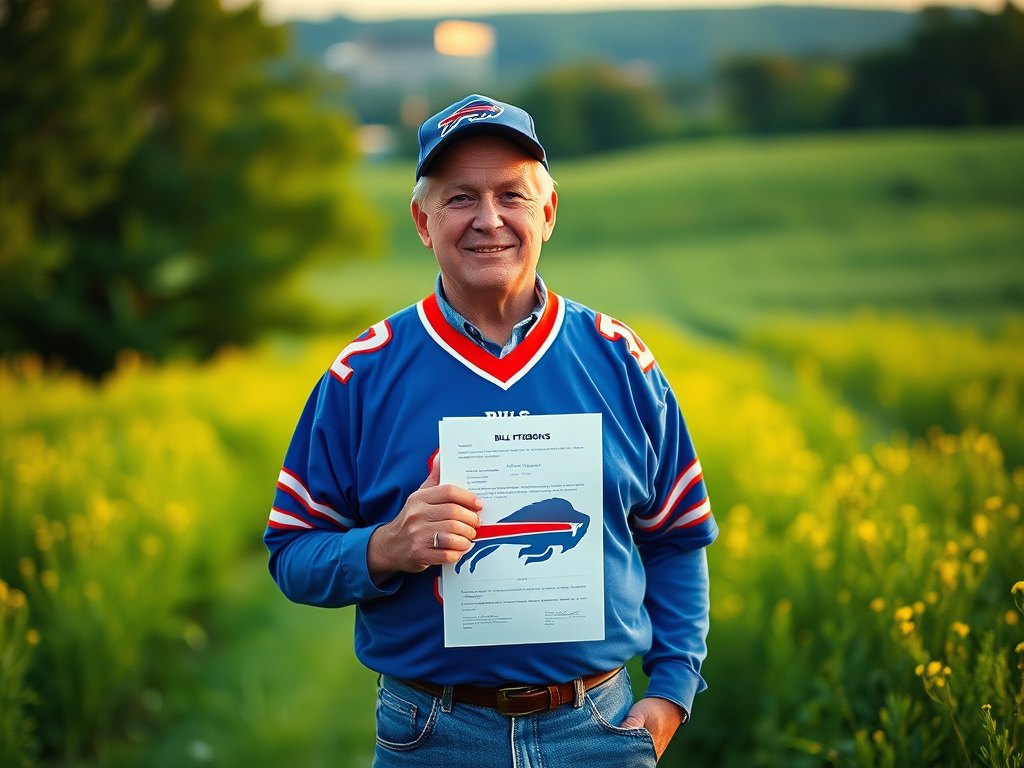

Bill Fitzgibbons, who grew up a Bills fan in the Buffalo area in the 1970s, left 37 years ago to work in agricultural machinery sales along the East Coast. Though he’s since lived in New Hampshire, Pennsylvania, and now just outside Atlanta, his loyalty to the Bills and the spirit of western New York hasn’t wavered.
So, when Erie County offered special bonds to help fund the team’s new stadium, Fitzgibbons eagerly bought in. These bonds didn’t grant him any ownership in the team or stadium; rather, his investment helped Erie County cover part of the construction costs. Nonetheless, it felt like a connection to his roots, and he would earn a 5.25% federally tax-free return on his $11,000 in 25-year bonds.
“The Bills and western New York stay with you even when you move away,” Fitzgibbons, now 61, said. “That place will always be home. Without the Bills, all that’s left are chicken wings—which you can get anywhere now—bad weather, and Niagara Falls.”
Municipal bonds aren’t known for excitement, but they’re essential tools for local governments and appeal to investors for their steady returns and tax advantages. Each year, Erie County issues around $40 million in AA-rated bonds to fund infrastructure projects. In October, it issued $125 million specifically to cover half of its $1.7 billion contribution to the new Bills stadium being built in Orchard Park, a Buffalo suburb.
Erie County Comptroller Kevin Hardwick thought dedicated Bills fans might enjoy the chance to buy these bonds. They couldn’t call themselves “owners,” like the fans of the Green Bay Packers, a publicly owned team whose stockholders hold essentially symbolic shares. But by investing in these bonds, fans could show loyalty and make a wise financial move.
“I probably wouldn’t market sewer bonds to the typical fan who loves pregame tailgating antics like table-jumping or mustard and ketchup sprays,” Hardwick joked. “But these are general obligation bonds with some spirit.”

Public funding for stadiums often faces criticism from economists and fans alike, who view it as unnecessary and inefficient. Some see Erie County’s bond sale as more of a public relations move, with little unique benefit compared to other municipal bonds.
“It’s a solid P.R. effort, but apart from offering a hands-on role in the stadium’s development, it’s not unlike any other municipal bond,” noted J.C. Bradbury, a sports economist at Kennesaw State University who critiques public funding of stadiums. “Still, at least buyers of these bonds expect a positive return.”
During a one-day presale, the county received 95 individual orders totaling $3.2 million, about 40% from Erie County residents. The remainder went to institutional investors, which dominate the municipal bond market. While some of these bonds may end up in mutual funds available to individual investors, identifying specific bonds within such funds can be challenging.

Erie County rarely sells bonds directly to individuals, and Hardwick’s office couldn’t recall another instance of stadium bonds marketed to the public. The process involved setting up a website to inform potential buyers and facilitate purchases. While some underwriters had prior experience with sports-related projects, most had only worked with fund managers.
Educating the public was a challenge. Some Erie County residents mistakenly believed the bonds were a tax rather than an investment. Others didn’t understand why interest rates on the bonds weren’t fixed until after the sale closed. The bonds, with maturity dates extending up to 25 years, required careful explanation.
“A lot of people new to the bond market were confused,” said County Executive Mark Poloncarz. “This wasn’t a taxpayer mandate; it was a way for our residents to benefit from Erie County’s projects instead of letting some big institutional investor profit.”

The county offered the bonds around the same time the Bills encouraged fans to purchase personal seat licenses, a requirement to buy season tickets in the new stadium (planned for 2026). These licenses, costing up to $50,000, prompted backlash from fans. Others were frustrated that the state and county had agreed to contribute $850 million to help the team’s billionaire owner, Terry Pegula, finance the stadium.
While Hardwick and Poloncarz didn’t set a specific sales goal, they admitted the $3.2 million figure fell a bit short of expectations. Nonetheless, the sale generated interest in a typically overlooked financial process.
For fans like Fitzgibbons, financial return wasn’t his main priority.
“I hope they never reach maturity,” he said. “I just want to hold onto them.”



Leave a Reply