
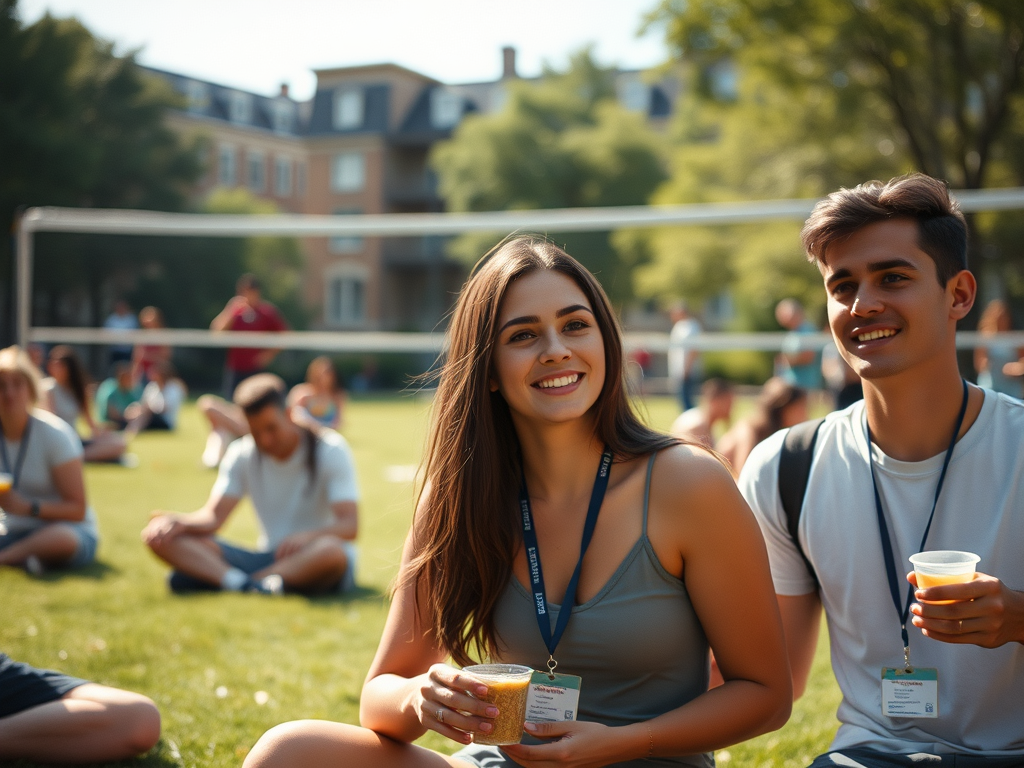
On the surface, Columbia University’s campus seemed to have returned to normal after a spring semester marked by pro-Palestinian protests and police interventions. Last week, students were enjoying lunch on the lawns and playing volleyball under the sunny skies.
However, Reinhold Martin, an architectural historian at Columbia, likened the scene to a “horror film,” noting that something still felt off.
Missing were the children from nearby preschools, local residents walking their dogs, and familiar characters like the man who used to flip plastic bottles into trash cans with his feet. The campus gates have remained closed since the fall semester began, restricting entry to those with a Columbia ID due to concerns that protests might flare up again. This situation is highly unusual for a university known for its openness, and inside the gates, students and faculty described the atmosphere as more tense and divided.
Rosnel Leyva, a junior, used to bring friends to campus, which he called his “little garden in the midst of Manhattan.” But now, he says, “it feels more like paradise lost.”
Across the country, students and faculty at schools that experienced pro-Palestinian protests after the October 7 attacks on Israel and the subsequent Gaza war have noticed changes. Stricter protest regulations have, for now, subdued demonstrations, but feelings of loss, anger, and frustration remain beneath the surface.
Pro-Palestinian activism is still present, though protests have become less frequent. Meanwhile, Jewish students who identify as Zionists — supporting Israel’s right to exist as a Jewish state — continue to feel isolated.

Though these stricter rules were meant to make Jewish students feel safer amid rising antisemitism, some free speech advocates argue that universities’ efforts to suppress protests through discipline won’t be effective in the long term.
“There’s been a significant crackdown on speech for faculty, staff, and students,” said Todd Wolfson, national president of the American Association of University Professors. “It’s sad. It undermines the core values of higher education, including critical thinking and democratic discourse.”
At UCLA, new rules ban encampments and hold groups accountable for security costs, which students say has discouraged protests. There’s also been an increase in armed police presence on campus.
These measures aim to prevent a recurrence of earlier violence, such as when a pro-Palestinian camp was attacked by pro-Israel counterprotesters, resulting in chaos that campus security failed to contain. But students say peace still hasn’t been fully restored.
“It’s a tense atmosphere that’s pretending to be normal, like it was before October 7,” said Layth Handoush, a junior at UCLA. “It feels like there’s a lack of hope and just a general sadness.”
At Northwestern University, Holly Simmons, a junior, said protest activity has mostly moved online due to the stricter policies, making in-person protests less common.
At Harvard, the gates around Harvard Yard are now open again after being closed last spring, and students and tourists mingle freely. But polarization remains evident.
Students are being disciplined not only for participating in encampments but also for subtler forms of protest, such as a silent “study-in” at Widener Library in protest of Israel’s actions in Lebanon. At that event, some students wore kaffiyehs and displayed posters on their laptops saying, “Imagine It Happened Here.” Twelve students were suspended from the library for two weeks following the protest.
“The biggest change is how the university has really cracked down,” said Jack Flanigan, a Harvard sophomore.
Across the country, universities have been under pressure to contain protests that some Jewish students say have crossed into antisemitism. Many schools are facing federal investigations over complaints of harassment and other incidents on campus.
Columbia’s interim president, Katrina Armstrong, expressed hopes of reopening the campus gates soon in a letter to the community. “Columbia will continue to exist as Columbia only if we remain open to and engaged with the world beyond our gates,” she wrote. However, due to ongoing political uncertainties, the campus will remain closed for now.

Some students have welcomed the new rules and the quieter atmosphere they’ve brought to divided campuses.
At the University of Pennsylvania, where steel fencing now surrounds parts of the College Green, sophomore Reider McFeely supports the university’s efforts to prevent another encampment. “Tents aren’t what this space is meant for,” he said. “I support protests that follow the guidelines, but the encampment crossed a line.”
At Harvard, senior Jacob Miller, a former Hillel chapter leader, believes that administrators should have enforced protest rules more strictly last spring. “Rules lose their meaning if they’re not enforced,” he said.
Columbia and its affiliated Barnard College have particularly felt the impact of these changes, as they became central to last year’s student encampment movement. The most visible change is the closure of campus gates, requiring students to swipe in to enter. Barnard has also banned dorm room decorations to prevent students from posting pro-Palestinian messages that some found offensive. Both schools have used student ID swipe data to identify protest participants for disciplinary action, leaving many students feeling surveilled.
Barnard’s campus has changed so much under its new president, Laura Ann Rosenbury, that it’s “unrecognizable,” said Nara Milanich, a history professor. “It’s astonishing to see how quickly a community can unravel,” she said, calling the situation a cautionary tale.
With restrictions on political activity, some students, like Barnard junior Marie Adele Grosso, have been forced to take their protests outside campus gates. “There’s a lot more fear now,” Grosso said. “Students are scared to protest. Even those at low risk don’t know what might get them in trouble.”

Barnard has fallen to the bottom of a free speech ranking by the Foundation for Individual Rights and Expression, which measures student confidence in their school’s support for free speech. Columbia, Harvard, NYU, and Penn also ranked among the lowest.
While Barnard markets itself as supportive of activism, senior Bellajeet Sahota said the reality is far from that. Last winter, an administrator questioned her about who had posted a sign on her living space’s wall criticizing President Rosenbury. “It said, ‘Laura, you are not my president,’” Sahota recalled.
If the goal of these harsher measures was to reduce tension, Sahota believes they are having the opposite effect. “By being so harsh, they’re preventing us from coming together,” she said. “They’re just focused on punishing everything.”
Rosenbury, in a letter to the Barnard community last week, acknowledged the challenges the campus had faced over the past year. “Now, more than ever, we must show care and compassion toward one another and help heal our fractured world,” she wrote.

Yet students like Barnard freshman Jane, who is Jewish, still feel the strain. “I’ve had people stop talking to me just because they found out I’m Jewish,” she said.
Elisha Baker, a junior at Columbia who is outspoken about his support for Israel, described similar isolation. He is concerned that recent rollbacks of some protest restrictions might make things worse. “I just want to be a normal student,” Baker said. “But I can’t avoid the groups who either openly express hatred toward me or have done so in the past.”r who I am, or have done so in the past.”



Leave a Reply