

Liberty University students who chose degrees aimed at ministry careers are pressing the U.S. Supreme Court to review Virginia rules that make those programs ineligible for certain state tuition grants, bringing renewed attention to a long-running constitutional dispute over when government education aid may exclude religious study.
The latest development is procedural rather than a newly announced Virginia policy. Two Supreme Court petitions involving Liberty students are now pending, while recent reports published Sept. 4 have highlighted the financial consequences for students whose majors fall into categories Virginia defines as religious training or theological education. The state’s policy has existed for years, and federal courts have previously upheld its application.
The Virginia Tuition Assistance Grant, commonly known as VTAG, provides state-funded assistance to qualifying Virginia residents attending accredited private nonprofit colleges and universities in the commonwealth. Religious colleges themselves are not barred from participating. Liberty University, Regent University, Eastern Mennonite University and other faith-affiliated institutions are among eligible schools. The restriction instead turns on the student’s degree program.
Virginia law specifies that the program is intended for education other than “religious training or theological education.” State administrators use federal Classification of Instructional Programs, or CIP, categories to help determine eligibility. Programs classified in the 39-series, covering theology and religious vocations, are generally excluded, while some programs categorized under philosophy and religious studies can qualify. Liberty’s current financial-aid guidance similarly tells students that some religion programs are eligible while theology and religious-vocation programs are not.
That distinction became consequential for Bethany Hall. According to the published Fourth Circuit decision in Hall v. Fleming, Hall entered Liberty as a Music Education: Choral major after being told she qualified for a $5,000 VTAG award for the 2023-24 academic year. She later changed her major to Youth Ministries and then sought to switch to Music & Worship. Both were classified as CIP Code 39 programs. Liberty’s financial-aid office informed her that those programs were not eligible, and Hall did not receive VTAG assistance for the 2023-24 or 2024-25 academic years.
Hall sued A. Scott Fleming, director of the State Council of Higher Education for Virginia, alleging that the exclusion violated the First Amendment’s Free Exercise Clause. A federal district court dismissed her claim, and the U.S. Court of Appeals for the Fourth Circuit affirmed that decision on May 13, 2026.

The appellate court concluded that the Supreme Court’s decision in Locke v. Davey remained controlling. In that 2004 case, the justices upheld Washington state’s decision to exclude students pursuing devotional theology degrees from a generally available scholarship program. The Fourth Circuit said that although the Supreme Court has issued several major religious-freedom decisions since Locke, those rulings had not overruled it.
Hall is now asking the Supreme Court to revisit that conclusion. Her petition, docketed as No. 26-193, was filed Aug. 11 and docketed Aug. 14. The Court’s docket shows that Virginia’s deadline to respond has been extended to Oct. 14. An amicus brief was filed Sept. 1. The justices have not granted review, meaning the Fourth Circuit ruling remains in effect.
A second case, Johnson v. Fleming, involves Liberty students Cameron Johnson and Luke Thomas and graduate student Trace Stevens. The Supreme Court docket shows their petition for certiorari before judgment was filed Aug. 20 and docketed Aug. 25 as No. 26-240. A petition before judgment asks the Supreme Court to intervene before the normal federal appeals process is complete, an unusual procedural route. The response in that case is currently due Sept. 24.
Johnson, according to court filings and his attorneys, chose pastoral leadership as his major and was denied VTAG eligibility because the program was classified as religious vocational training. Thomas has pursued a dispute involving Liberty’s Music & Worship program. Stevens presents a related but distinct issue: he is a Virginia Army National Guard member pursuing a Master of Divinity and has challenged restrictions involving the state’s National Guard tuition-assistance program.
The students’ attorneys argue that the legal landscape has changed substantially since Locke. They point to Supreme Court decisions including Trinity Lutheran Church v. Comer in 2017, Espinoza v. Montana Department of Revenue in 2020 and Carson v. Makin in 2022. Those cases limited governments’ ability to exclude religious institutions or participants from generally available public benefits merely because of their religious character or, in Carson, because tuition assistance would support religious instruction.
Virginia’s position, reflected in the lower-court litigation, is that Locke remains binding and specifically permits a state to draw a narrower line around government funding for training intended to prepare students for religious vocations. The Fourth Circuit agreed in Hall’s case, emphasizing that lower courts cannot treat a Supreme Court precedent as overruled unless the Supreme Court itself does so.
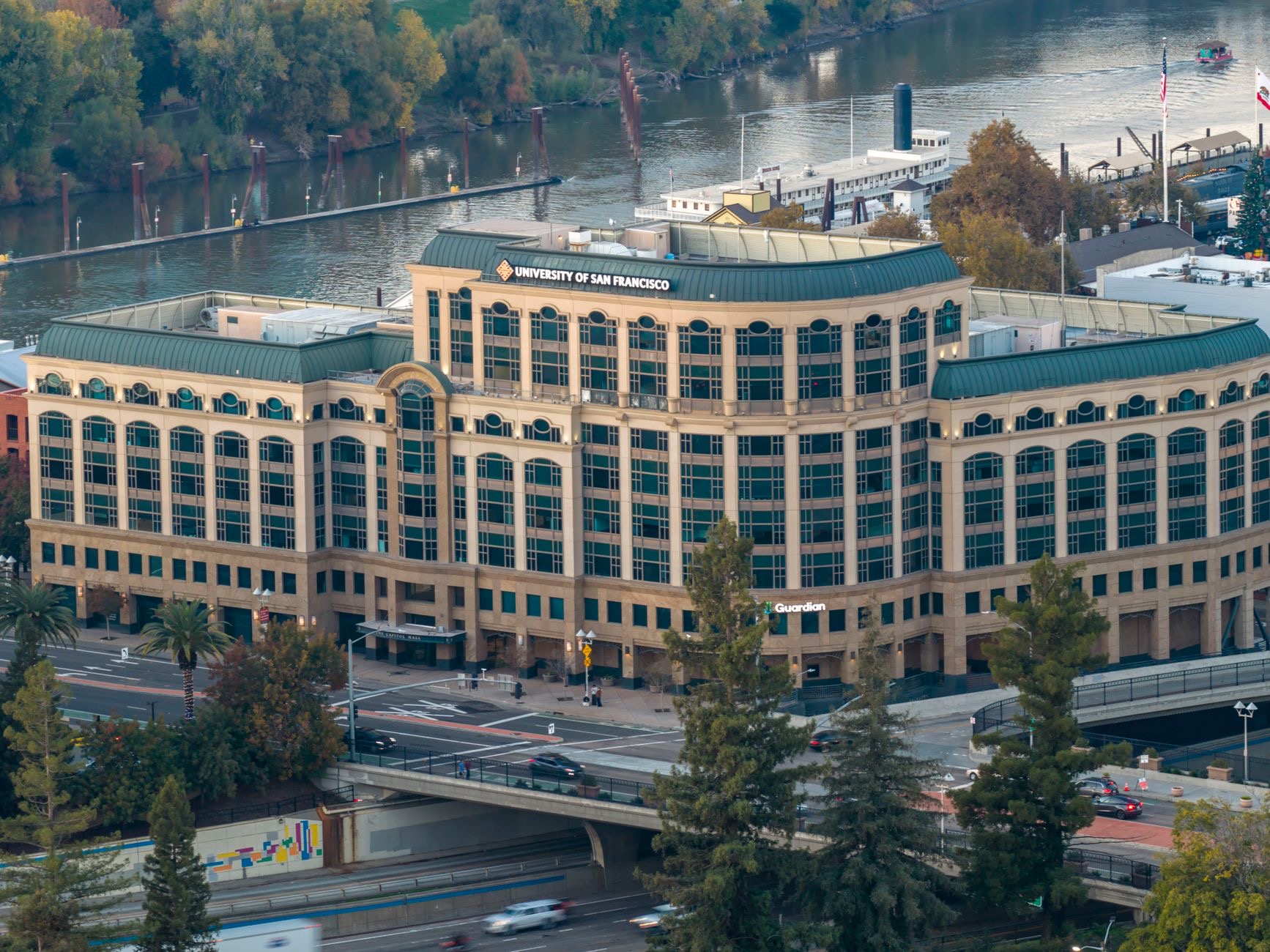
The financial impact can be substantial for students attending private colleges. Liberty lists the 2026-27 VTAG amount at $5,250 annually for residential undergraduate students and $2,625 for online undergraduates. Residential graduate students are listed for awards of $5,000, although graduate VTAG eligibility is generally limited to qualifying health-related professional programs rather than theological degrees.
The dispute also illustrates how a student’s academic classification can affect aid even when the institution itself remains fully eligible. A Liberty student studying an eligible secular or religious-studies program may receive VTAG, while another student at the same university can lose eligibility after changing to a ministry-oriented program classified in the theology and religious-vocations category.
For colleges, that makes degree coding and financial-aid counseling important when students change majors. Liberty explicitly warns on its VTAG information page that eligibility based on degree programs is subject to change and identifies both eligible religious-studies programs and excluded theology or religious-vocation programs. Students considering a major change can therefore face a different aid package even without changing schools.
The Supreme Court’s next step remains uncertain. A petition does not mean the justices will hear a case, and no merits ruling is currently scheduled in either Hall or Johnson. If review is denied, the existing lower-court decisions and Virginia’s current rules will remain in place. If the Court takes one or both cases, the dispute could give the justices an opportunity to clarify how Locke fits with the Court’s more recent line of decisions involving religious participation in publicly funded education programs.
For now, Virginia students pursuing qualifying private-college degrees can continue to apply for VTAG, while students enrolled in designated religious-training or theological-education programs remain outside the program under existing state rules. The Supreme Court petitions have transformed what began as individual financial-aid disputes into a closely watched test of where states may draw the constitutional line between supporting private education generally and declining to subsidize vocational ministry training.




Leave a Reply