
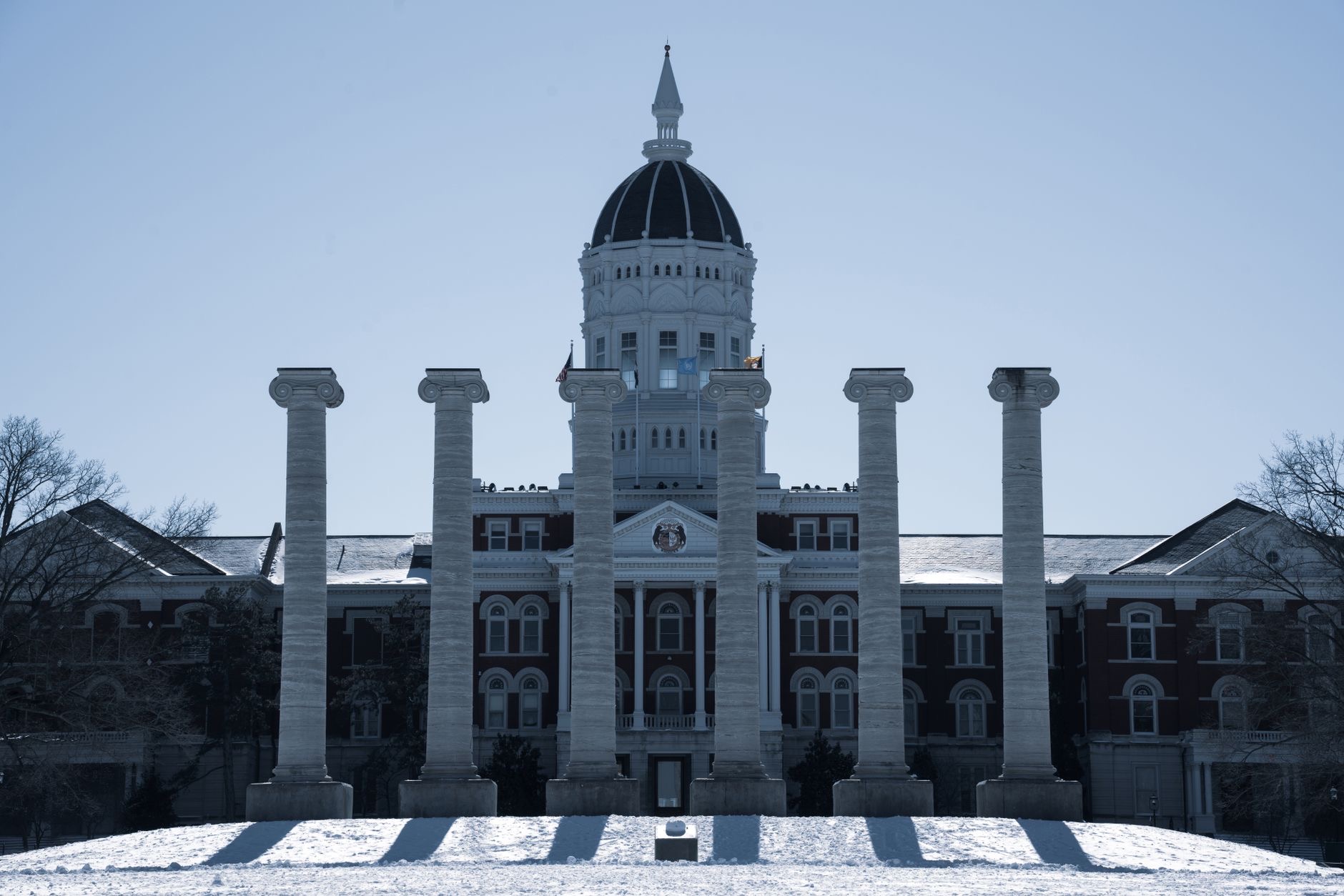
The University of Virginia is expecting fewer doctoral students this fall as uncertainty surrounding federal research funding pushes graduate programs to become more conservative about admitting new Ph.D. candidates, adding a prominent public university to a nationwide contraction in advanced research training.
Preliminary fall 2026 enrollment data provided by UVA spokesperson Bethanie Glover to The Cavalier Daily show 2,213 doctoral students expected to study at the university, compared with 2,332 in fall 2025. That represents a decline of about 5%. Master’s enrollment is also lower than last year, at 3,962 students, although it remains slightly above its fall 2024 level. The doctoral figures exclude professional M.D. and J.D. programs.
The distinction is important because Ph.D. programs generally depend much more heavily on research financing than many master’s programs. Doctoral students often receive multi-year packages combining tuition support, stipends and employment as research or teaching assistants. That means departments considering a new admission must think several years ahead rather than simply determine whether money is available for the coming semester.
Phil Trella, UVA’s associate vice provost and director of the Office of Graduate and Postdoctoral Affairs, told The Cavalier Daily that graduate enrollment had increased significantly between 2022 and 2025, rising about 15% over that period. Preliminary 2026 numbers, however, suggest enrollment is moving back toward levels seen before that expansion.
Trella said the university remains committed to funding promises already made to students. But when future resources are uncertain, programs may respond by reducing incoming cohorts rather than risk making financial commitments they cannot sustain. That approach protects students already enrolled while shifting much of the immediate impact onto prospective applicants.
The pattern at UVA mirrors a broader national pullback. Data collected by the Association of American Universities Data Exchange from 55 major research universities show the number of applicants accepted to doctoral programs for fall 2026 declined 15% from fall 2025. The AAU said it was the second consecutive year showing a substantial reduction in new Ph.D. students at leading research institutions.

The national figures also show that demand and capacity are moving in different directions for domestic students. Applications from U.S. students increased 3%, according to AAU, yet universities still reduced overall admissions. International applications, meanwhile, fell 21%, adding another source of pressure to institutions that have long recruited heavily from overseas for graduate science and engineering programs.
Funding is central to the calculation because federal agencies remain the largest financial backers of university research. National Science Foundation data show U.S. higher-education institutions recorded about $117.7 billion in research and development expenditures in fiscal 2024. Federal sources accounted for more than $64 billion, or roughly 55% of the total. The Department of Health and Human Services, which includes the National Institutes of Health, was the largest federal source.
Those figures describe spending before the latest funding disruptions, but they illustrate why uncertainty in Washington can quickly translate into caution inside graduate admissions offices. Research grants frequently support not only equipment and laboratory costs but also the stipends and salaries of graduate researchers, postdoctoral scholars and other personnel.
The problem for universities is therefore not limited to the ultimate size of congressional appropriations. The timing of awards, grant cancellations, changes to funding conditions and uncertainty over renewals can all make it more difficult for departments to forecast resources over the five or more years a doctoral student may need to complete a degree. AAU has argued that federal grant instability has become a major factor behind reduced admissions at its member institutions.
At UVA, the effects are not uniform across disciplines. The university has more than 50 Ph.D. programs, and their enrollment levels, funding structures and reliance on federal agencies differ substantially. Some departments may have faculty grants or other institutional resources capable of supporting relatively stable cohorts, while programs more dependent on uncertain external grants have less flexibility.

Environmental Sciences offers one example. Stephan De Wekker, the department’s graduate studies director, told The Cavalier Daily that its 2026 doctoral cohort has six students, the smallest of the past four years. The department admitted cohorts of 11 in 2023, seven in 2024 and 12 in 2025. Its research draws support from agencies including the NSF, Department of Energy and NASA.
For students already pursuing doctorates, tighter funding can have consequences even when universities maintain their basic financial guarantees. Graduate students may spend more time working as teaching assistants when research support is constrained, potentially reducing the time available for dissertation research. Scarcer discretionary funding can also limit conference travel, field work and other activities that contribute to professional development.
The effects could reach undergraduate education as well. Doctoral students frequently staff laboratory sections, lead discussions and mentor undergraduate researchers. AAU has warned that smaller doctoral cohorts may eventually reduce the number of graduate instructors and research mentors available to undergraduates, particularly in science and engineering fields.
The longer-term issue is the research workforce. Universities produce scientists who later move into faculty positions, government laboratories, biotechnology, semiconductor companies, artificial intelligence firms and other technology-intensive industries. A smaller doctoral pipeline today would not necessarily create an immediate labor shortage, but sustained reductions could narrow the pool of experienced researchers several years from now.
For UVA and its peers, the fall 2026 numbers provide an early measure of how uncertainty about federal research policy is reaching admissions decisions. The university’s current students remain the priority, while prospective students are encountering smaller cohorts and potentially more competitive admissions. Whether the contraction persists will depend heavily on whether federal research agencies can provide universities with the predictable, multi-year funding environment on which the U.S. doctoral training system has traditionally relied.




Leave a Reply