
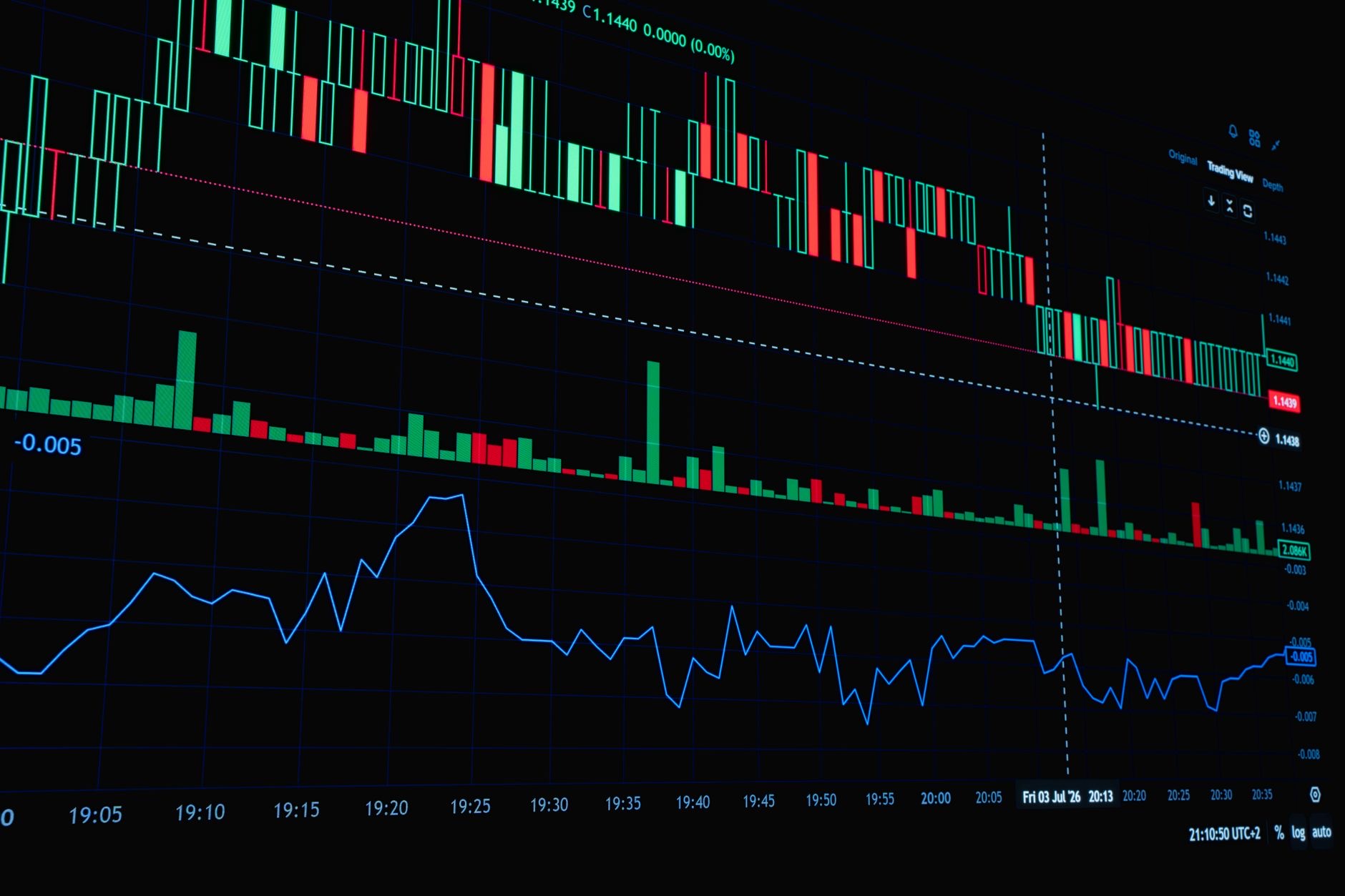
U.S. stocks rallied and Treasury yields fell after employers unexpectedly reduced payrolls by 23,000 in July, a sharp disappointment that weakened the case for an imminent Federal Reserve interest-rate increase. The initial advance carried the S&P 500 to another record close, although renewed concerns about oil prices and inflation had eroded some of those gains by Tuesday.
The S&P 500 rose 47.68 points, or 0.6%, to close at 7,757.64 on Friday, Aug. 7. The Dow Jones Industrial Average gained 151.83 points, or 0.3%, to 54,036.93, while the technology-heavy Nasdaq composite climbed 342.26 points, or 1.3%, to 26,690.62. All three indexes completed a second consecutive week of gains.
The rally reflected a familiar Wall Street dynamic in which weak economic data can raise asset prices by reducing the likelihood of tighter monetary policy. Higher interest rates generally make borrowing more expensive, restrain economic activity and reduce the present value investors assign to companies’ future earnings. Growth-oriented technology companies can be particularly sensitive to changes in bond yields and rate expectations.
The Bureau of Labor Statistics said total nonfarm payroll employment changed little in July, declining by 23,000 after averaging gains of only 34,000 a month during the previous 12 months. The result was much weaker than economists had anticipated and was accompanied by downward revisions that removed 103,000 jobs from previously reported May and June totals.
May’s gain was revised to 63,000 from 129,000, while June’s increase was cut to 20,000 from 57,000. Those revisions reinforced the conclusion that hiring had been losing momentum for several months rather than suddenly contracting in July. The unemployment rate, derived from a separate household survey, was little changed at 4.1%, representing about 6.9 million unemployed people.
The stable unemployment rate did not erase other signs of strain. Labor-force participation held at 61.4%, down 0.7 percentage point since January, and the employment-to-population ratio stood at 58.9%. The number of workers on temporary layoff rose by 153,000 to 921,000. Average hourly earnings increased only 2 cents to $37.62 and were 3.2% higher than a year earlier.

Job losses were concentrated in several parts of the economy. Local government education employment fell by 50,000, while retailers eliminated 19,000 positions. Financial activities continued to trend lower, losing 14,000 jobs in July and 121,000 since a recent peak in May 2025. Health care remained a source of growth, adding 22,000 positions, though that was below its average monthly increase over the preceding year.
Bond investors reacted quickly. The yield on the 10-year Treasury declined to roughly 4.64% on the day of the report, while the two-year yield, which is especially responsive to expectations for Federal Reserve policy, fell to about 4.20%. Falling yields can reduce financing pressure across the economy and make equities comparatively more attractive.
Technology companies provided much of the support for the broader market. Semiconductor and software shares advanced, with the large market values of companies such as Nvidia and Broadcom amplifying their effect on the major indexes. Airbnb also surged after delivering results and an outlook that exceeded Wall Street’s expectations. The corporate earnings season has helped reassure investors that profits can remain resilient despite softer hiring.
The payroll report arrived shortly after the Federal Open Market Committee voted to hold the federal funds target range at 3.5% to 3.75%. Three policymakers dissented from the July 29 decision in favor of a quarter-point increase, underscoring concern that inflation remains too high. The Fed said economic activity was expanding at a solid pace but acknowledged elevated uncertainty, including the effects of conflict in the Middle East.
July’s employment figures complicate that assessment. A central bank focused only on inflation might respond to persistent price pressure with another increase. A central bank seeing a broad deterioration in employment would have more reason to wait. Because the Fed has a dual mandate covering stable prices and maximum employment, subsequent inflation, wage and spending data will be critical to the September decision.
The market’s celebration of weak payrolls also has limits. A modest cooling in hiring can produce a favorable outcome if it relieves inflation pressure without causing a recession. A sustained decline in jobs would threaten household income, consumer spending and corporate revenue. The downward revisions to prior months therefore carried a more troubling signal for the real economy than the headline market rally suggested.

That tension became clearer by Tuesday, Aug. 11. The S&P 500 and Dow each fell 0.3%, and the Nasdaq declined 0.6%, moving away from their recent highs. The 10-year Treasury yield had risen from its post-jobs-report level as investors again weighed inflation risks. Small-company shares performed better, with the Russell 2000 gaining 0.3%.
Oil was a major reason for the reversal in sentiment. Brent crude briefly traded above $90 a barrel before settling at $88.91, up 1.4% for the session, amid uncertainty about supplies and the Strait of Hormuz. More expensive energy can lift gasoline, transportation and production costs, potentially slowing progress toward the Fed’s inflation goal.
The result is a less straightforward outlook than Friday’s rally implied. Weak employment numbers gave policymakers room to postpone a rate increase, but they did not guarantee a pause. If inflation accelerates because of energy costs or broader price pressure, officials could still conclude that policy needs to become more restrictive. Conversely, another weak employment report would strengthen arguments against tightening.
Investors are consequently turning to the next round of inflation and consumer-spending figures. Those releases will help determine whether July’s payroll decline represents an economy cooling sufficiently to contain prices or one weakening while inflation remains elevated. The distinction matters for banks, homebuilders, retailers and technology companies whose financing costs and revenue expectations are closely tied to the Fed’s next move.
For now, the jobs report has shifted the burden of proof. Before the data, markets were increasingly debating whether the Fed might raise rates as soon as September. After the payroll decline and large revisions, policymakers would need strong evidence of persistent inflation to tighten policy while hiring is losing momentum. Wall Street’s initial jump reflected relief over that change, while Tuesday’s retreat showed the debate remains unsettled.




Leave a Reply