
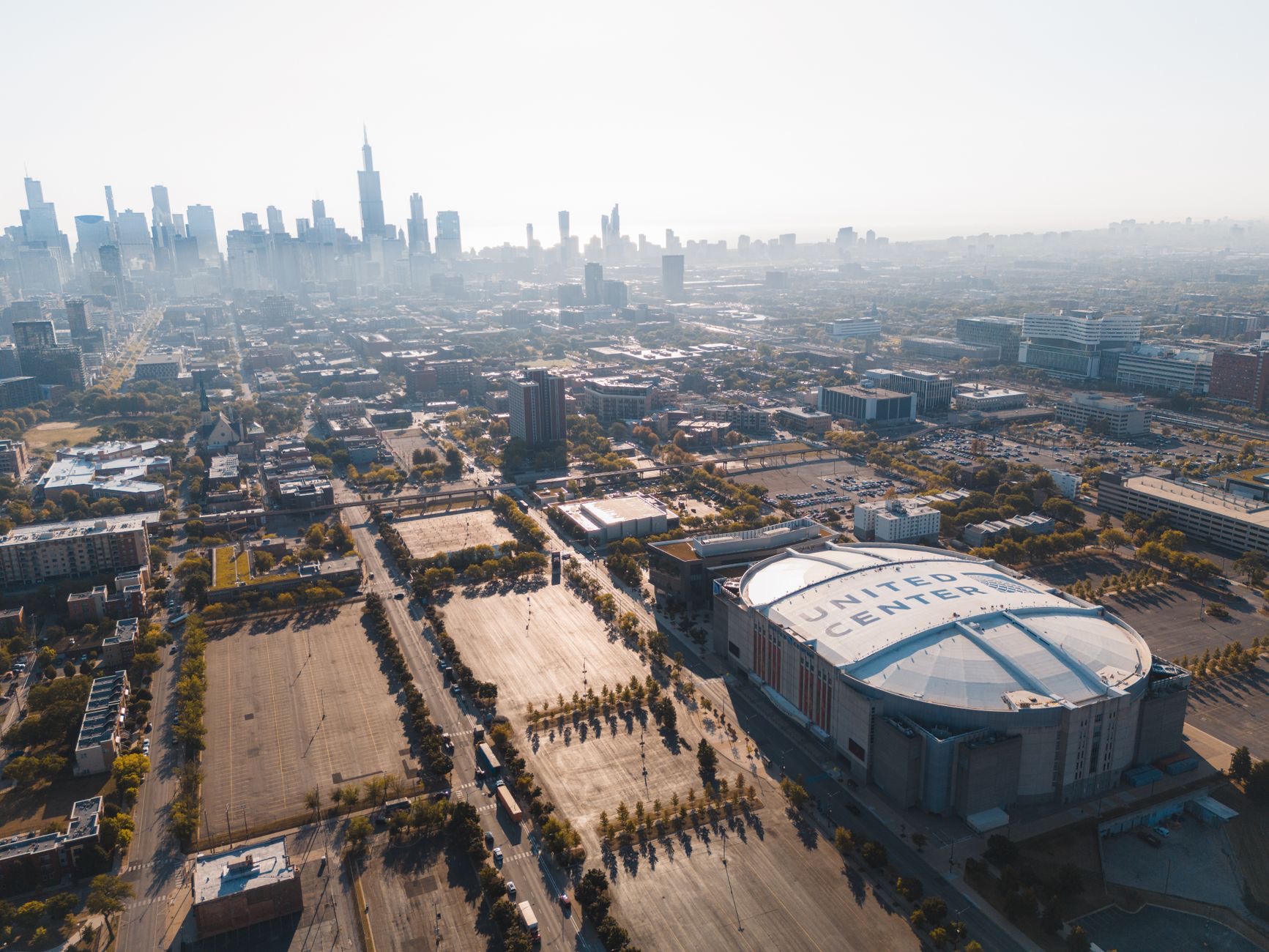
One week after Spain closed the first 48-team men’s World Cup with a 1-0 extra-time victory over Argentina in the New York-New Jersey area, the U.S. sports calendar handed its national spotlight to the WNBA. Chicago’s All-Star weekend ended Saturday night with Team Spoon beating Team Coop 129-122 at the United Center, giving basketball fans a lively bridge out of the post-World Cup lull.
Jonquel Jones supplied the weekend’s defining performance. The New York Liberty center finished with 22 points, 13 rebounds and eight assists, earning All-Star Game MVP honors after taking control for Team Spoon in the second half. Her near triple-double added another major award to a résumé that already includes regular-season, Commissioner’s Cup and WNBA Finals MVP honors.
The event’s scale mattered almost as much as the final score. The announced crowd of 19,783 was a WNBA All-Star Game record, filling the United Center for a showcase built around the league’s established stars, emerging players and distinct personalities. Kelsey Mitchell scored a game-high 28 points for Team Coop, Caitlin Clark produced an early run of long-range shots for Team Spoon, and 20-year-old Dominique Malonga delivered one of the night’s loudest moments with a dunk. The WNBA said it was the first dunk in its All-Star Game since 2022.
Nneka Ogwumike also moved into first place on the league’s career All-Star scoring list, passing Maya Moore. The milestone fit a weekend that deliberately connected generations. Hall of Famers Cynthia Cooper and Teresa Weatherspoon selected and guided the two teams, while Friday’s Shooting Stars competition paired current players, former stars and a high school player.
That intergenerational format produced another crowd-pleasing result. Team Washington, featuring Elena Delle Donne, Shakira Austin and Jezelle “GG” Banks, won the Shooting Stars competition with 31 points. Dallas Wings rookie Azzi Fudd then became the first rookie to win the WNBA 3-Point Contest, giving the opening night a breakthrough performance without making the entire weekend dependent on one established headliner.

The league also used Chicago itself as part of the presentation. Former President Barack Obama met the All-Stars before they became the first professional athletes to take the court at the Obama Presidential Center. The visit, followed by programming for rising high school students, extended the weekend beyond the usual skills events, sponsor activations and exhibition game.
That community-facing tone helped create the “good-vibes” feel surrounding the weekend. The WNBA arrived in Chicago amid serious questions about player safety, online harassment, officiating and the relationship between Commissioner Cathy Engelbert and the players. Those issues did not disappear, but they did not dominate the game in the way labor conflict and institutional distrust have overshadowed other league showcases.
Yahoo Sports reported that the atmosphere was less contentious than at previous All-Star gatherings, even as players and Engelbert acknowledged that communication still needs work. Four months after the league and its players completed a landmark collective bargaining agreement, the central challenge has shifted from reaching a deal to rebuilding trust and turning the agreement’s gains into consistent day-to-day operations.
The weekend included at least one concrete response to a recurring complaint. The WNBA announced that it will open a centralized replay center for the 2027 season, using infrastructure at the NBA Replay Center in Secaucus, New Jersey. The system will connect directly to WNBA arenas and provide officials with multiple camera angles and centralized support during reviewable plays. The league described the move as an investment in officiating, competitive integrity and the game experience.
The timing is important. The WNBA is trying to convert a surge in attention into durable habits among fans, broadcasters, sponsors and local markets. A record All-Star crowd provides a visible measure of demand, but the weekend’s broader appeal came from the combination of competition, accessibility and personality. Clark’s deep shooting, Jones’ all-around control, Malonga’s dunk and the interaction between current and former players created clips and storylines that could travel well beyond the television audience.

The World Cup comparison underlines the opportunity. The soccer tournament ran for 39 days across the United States, Canada and Mexico, culminating July 19 when Ferran Torres scored in the 106th minute to give Spain its second men’s title. FIFA said the event drew a record 6,810,966 spectators across 16 stadiums and 104 matches, making it unusually difficult for any domestic event to follow without feeling smaller.
The WNBA did not try to replicate the World Cup’s global scale. Instead, it offered a concentrated national event with a different kind of momentum: recognizable American stars, a packed arena, youth participation, social-media-friendly moments and a league story that remains in motion. For fans experiencing “World Cup withdrawal,” the weekend provided a reminder that the summer sports calendar did not end with the final in New Jersey.
There are limits to the celebratory reading. The league still faces scrutiny over officiating consistency, harassment directed at players and whether its leadership can maintain stronger relationships with the athletes driving its growth. Engelbert’s future has also remained a subject of public discussion. A successful exhibition weekend cannot resolve those questions, and a replay center will address only one operational concern.
Still, Chicago gave the WNBA a useful midseason reset. The league showcased its talent without losing sight of its history, put a record audience in the building and introduced a tangible officiating initiative for next season. The result was not merely an entertaining All-Star Game. It was a well-timed handoff in the U.S. sports conversation, from the end of an expanded home World Cup to a women’s basketball league working to turn attention into lasting relevance.




Leave a Reply