
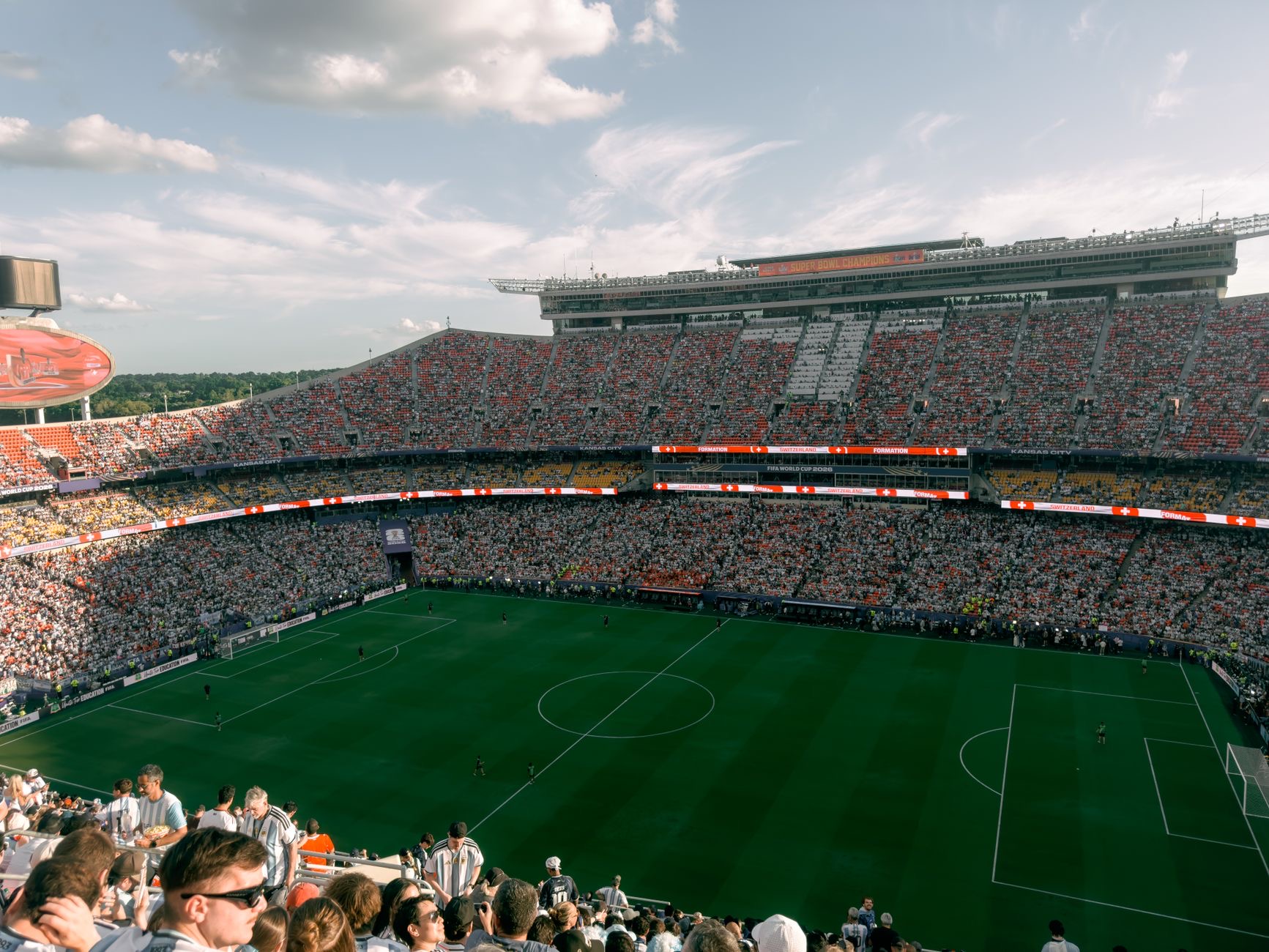
Spain will enter Sunday’s 2026 World Cup final as the betting favorite over defending champion Argentina, with the latest forecast placing greater weight on Spain’s historically efficient defense than on Argentina’s perfect tournament record and Lionel Messi’s continued production.
Early U.S.-style odds reported ahead of the final listed Spain at about +120 to win during regulation, Argentina at +275 and the draw after 90 minutes at +200. Those prices translate to raw implied probabilities of roughly 45% for a Spain victory, 33% for a draw and 27% for an Argentina victory before accounting for the sportsbook’s margin. Lines can differ among operators and may move as starting lineups, weather conditions and late team news become available.
The market’s preference for Spain is grounded in a defensive run rarely seen at this stage of a World Cup. Luis de la Fuente’s team has conceded one goal in seven matches and has not trailed at any point in the tournament. Spain reached the final with six victories and one draw, scoring 13 goals while recording clean sheets against Cape Verde, Saudi Arabia, Uruguay, Austria, Portugal, France and all but one of its opponents.
Spain’s semifinal performance strengthened its position. A 2-0 victory over France eliminated a team that had been widely favored earlier in the knockout rounds and demonstrated Spain’s ability to control a game without depending on a high-scoring performance. The result also gave Spain one additional day of recovery before the final, while Argentina played England the following night in Atlanta.
Rodri remains central to Spain’s approach. The captain has dictated possession from midfield, completed more passes than any teammate and helped the European champions maintain their structure when opponents attempt to counterattack. Spain presses aggressively after losing the ball, reducing the time available for opposing midfielders to find runners behind its defense.
The Spanish back line has also exceeded expectations. Goalkeeper Unai Simón has faced relatively few shots because of the protection in front of him, while 19-year-old center back Pau Cubarsí has started throughout the competition. Lamine Yamal, who turned 19 during the tournament, offers a different threat on the right wing, using close control and acceleration to pull defenders away from Spain’s central attackers.

Argentina’s route to the final has been less controlled but more productive. Lionel Scaloni’s team has won all seven matches and scored a tournament-high 19 goals. After comfortable group-stage victories over Algeria, Austria and Jordan, Argentina survived increasingly difficult knockout matches against Cape Verde, Egypt, Switzerland and England.
The defending champions have repeatedly improved as games have progressed. Argentina has scored most of its knockout-stage goals late, including decisive contributions after the 78th minute. That pattern complicates any forecast based primarily on Spain’s early control. Even if Spain dominates possession and territory, Argentina has shown it can remain within reach before changing a match through substitutions, set pieces or individual creation.
Messi remains the central variable. At 39, the Inter Miami forward leads the tournament with eight goals and has also produced four assists. He created both Argentina goals in the 2-1 semifinal comeback against England, becoming more influential after Argentina fell behind. His ability to receive the ball between midfield and defense could force Spain to alter a pressing system that has otherwise operated with exceptional consistency.
Argentina also has alternatives when opponents concentrate on Messi. Lautaro Martínez scored against Switzerland and then delivered the winning goal against England. Enzo Fernández provides forward passing and late runs from midfield, while goalkeeper Emiliano Martínez brings extensive experience in elimination matches and penalty shootouts. Argentina has not recorded a clean sheet since the group stage, however, leaving a clear opening for Spain’s wide attackers.
The contrast between the finalists explains why Spain is favored but not overwhelmingly so. Spain has the stronger defensive profile, a 37-match unbeaten streak and a tournament record of six wins and one draw. Argentina has conceded seven goals but remains undefeated, has won 13 consecutive World Cup matches without a regulation loss and carries the institutional confidence of winning the 2021 Copa América, the 2022 World Cup and the 2024 Copa América.

A low-scoring match would generally support Spain’s forecast because its structure has limited high-quality chances and allowed it to protect narrow leads. Argentina’s best route may be to disrupt Spain’s midfield rhythm, force turnovers and keep the score close into the final quarter of the game. Extra time would increase the importance of squad depth, fatigue and Argentina’s experience in high-pressure finishes.
The historical stakes are substantial. Spain is trying to win its second World Cup after its 2010 championship and reinforce its position as the dominant men’s national team of the current cycle. Argentina is pursuing a fourth title and would become the first country since Brazil in 1962 to repeat as men’s World Cup champion. Italy in 1934 and 1938 and Brazil in 1958 and 1962 are the only previous repeat winners.
The final will begin at 2 p.m. Eastern on Sunday at MetLife Stadium, identified by FIFA during the tournament as New York New Jersey Stadium. Fox will carry the English-language broadcast in the United States, while Telemundo will provide Spanish-language television coverage. Spanish-language streaming will also be available through Peacock.
The match is the 104th and final game of the expanded tournament, which began with 48 teams and was staged across three countries. For the United States, the event closes more than five weeks of matches in major NFL and soccer venues and places the championship in the country’s largest media market.
Odds establish Spain as the more likely regulation-time winner, but the difference is narrow enough to reflect Argentina’s attacking record, Messi’s form and the defending champion’s repeated late recoveries. Spain’s defense has been the tournament’s most reliable unit. Argentina has been its most persistent survivor. Sunday’s final will determine which profile proves more durable under the competition’s greatest pressure.




Leave a Reply