
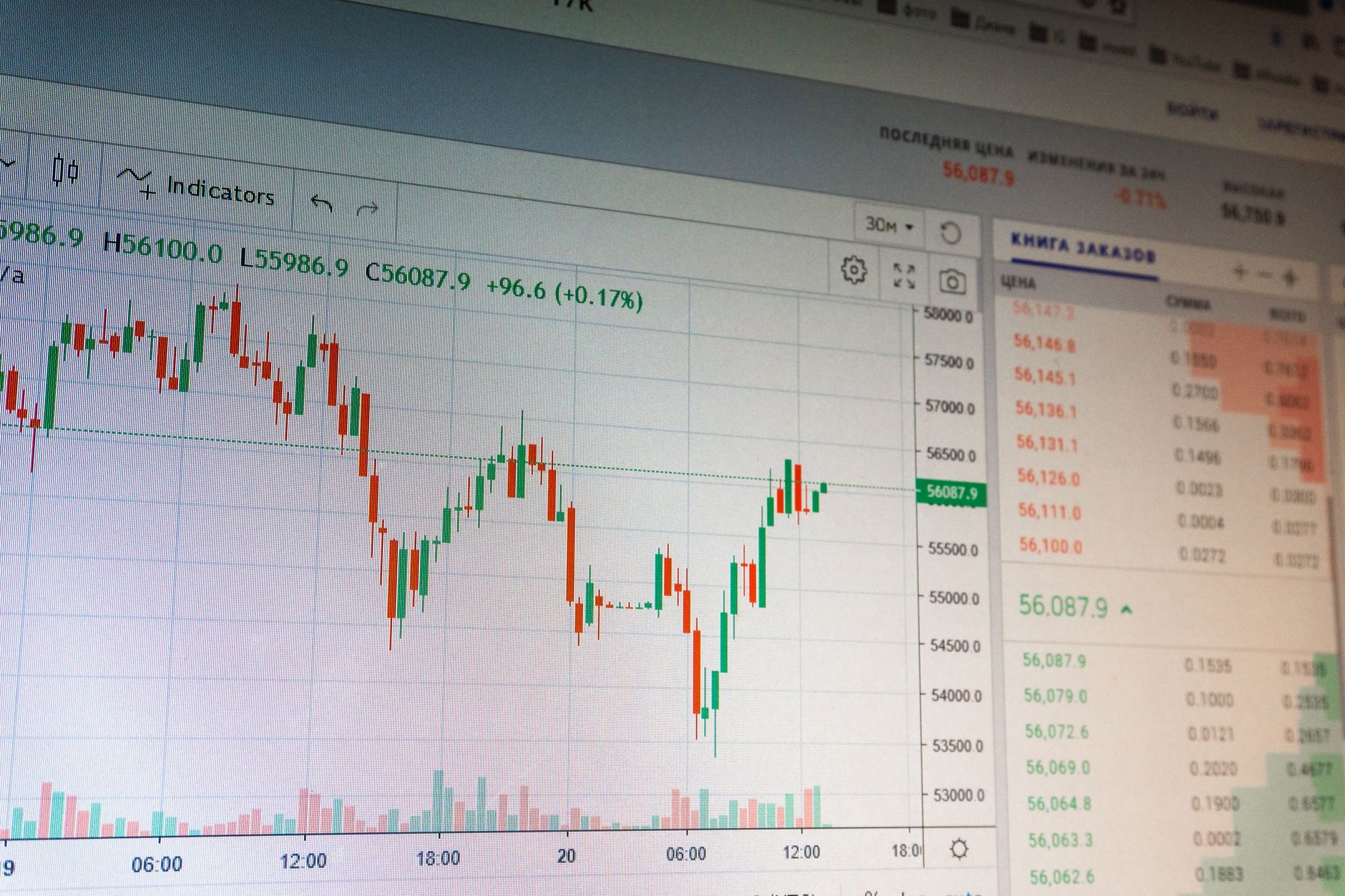
U.S. stocks closed lower Thursday as sharp losses in semiconductor and artificial-intelligence-linked companies outweighed strength across much of the broader market, reinforcing concerns that investors are becoming less willing to reward expensive technology shares simply for exceeding quarterly forecasts.
The S&P 500 fell 38.63 points, or 0.5%, to 7,533.77. The Dow Jones Industrial Average declined 105.67 points, or 0.2%, to 52,552.97, while the technology-heavy Nasdaq Composite dropped 387.28 points, or 1.5%, to 25,881.95. The Russell 2000 index of smaller companies edged down 1.69 points, or 0.1%, to 2,974.57.
The headline declines masked a more divided session. More companies rose than fell within the S&P 500, according to market data reported by The Associated Press, while an equal-weighted version of the index outperformed the conventional benchmark. Healthcare and consumer-staples shares advanced, indicating that investors were rotating toward businesses viewed as less dependent on the AI spending cycle.
Semiconductor companies remained the central source of pressure. Nvidia, Taiwan Semiconductor Manufacturing’s U.S.-listed shares and several memory and data-storage companies declined as investors reassessed valuations after an extraordinary run for businesses tied to data centers, advanced chips and generative AI infrastructure. The selling extended beyond the United States, weighing heavily on technology markets in Asia.
The reaction was notable because TSMC’s underlying quarterly results were strong. The world’s largest contract chipmaker reported second-quarter revenue of NT$1.27 trillion, equivalent to $40.20 billion, an increase of 33.7% in U.S.-dollar terms from the same period a year earlier. Net income rose 77.4%, and the company recorded a gross margin of 67.7% and an operating margin of 60.3%.
TSMC also projected third-quarter revenue of $44.6 billion to $45.8 billion, signaling continued demand for advanced manufacturing capacity. The company produces chips designed by major U.S. technology businesses, including suppliers serving cloud computing, smartphones, networking equipment and AI accelerators. Its outlook is therefore closely watched as an indicator of spending throughout the global technology supply chain.
Even those figures failed to generate a sustained rally. Investors instead focused on the amount of capital required to expand advanced fabrication capacity and on whether exceptionally high profitability can persist as manufacturers build new facilities, introduce more complex production technologies and navigate geopolitical pressures. The muted response illustrated how elevated expectations can turn a strong earnings report into a negative stock-market catalyst.

The selloff also highlighted the difference between corporate performance and share-price performance. Companies connected to AI have attracted heavy investment on expectations that demand for computing power will continue rising rapidly. After substantial gains, however, their valuations increasingly require not only strong revenue growth but also evidence that customers can earn adequate returns from large infrastructure budgets.
That question has become particularly important for Silicon Valley’s largest cloud and software companies. Major technology platforms have committed billions of dollars to processors, networking equipment, energy contracts and data-center construction. Investors are expected to examine upcoming earnings calls for details on utilization rates, AI-related sales, operating costs and the timing of returns on those investments.
Thursday’s market action suggested that the scrutiny could extend across the entire technology sector. A disappointing forecast, weaker free cash flow or even an increase in planned capital expenditures could produce an outsized share-price reaction, particularly for companies that entered earnings season near historically high valuation multiples.
Netflix became the next prominent test after the closing bell. The streaming company reported second-quarter earnings of 80 cents per share, slightly above the consensus estimate tracked by MarketBeat, while revenue of approximately $12.56 billion came in narrowly below expectations. Revenue increased 13.4% from a year earlier, and the company said its business remained broadly on track with its 2026 financial plan.
The market’s response to Netflix was closely watched because the company sits at the intersection of technology, media and consumer spending. Investors have been evaluating whether subscriber growth, advertising revenue and pricing can offset rising content costs and competition from short-form video, live programming and other entertainment platforms. Cash flow and forward guidance have become increasingly important as Netflix expands beyond its traditional subscription model.
Outside technology, earnings reports offered a more constructive reading of the U.S. economy. Several financial institutions reported loan growth, fee income and relatively stable credit performance, suggesting that consumers and businesses have continued borrowing despite elevated financing costs. U.S. Bancorp reported record quarterly revenue, supported by loan growth, fee businesses and the contribution from its acquisition of BTIG.

Those bank results have helped reduce immediate fears of a sharp deterioration in household or corporate credit. Investors nevertheless remain alert to provisions for loan losses, delinquency rates, commercial real-estate exposure and the effect of interest rates on funding costs. Management commentary on credit cards, auto loans, deposits and business lending will remain an important gauge of economic momentum.
Bond-market movements added another constraint for stocks Thursday. Treasury yields rose, increasing the discount rate applied to future corporate earnings and placing additional pressure on companies whose valuations depend heavily on profits expected many years from now. Higher yields can be particularly challenging for technology shares, while benefiting some financial companies if lending margins improve.
Oil prices gave up earlier gains and finished slightly lower, but energy markets remained sensitive to geopolitical developments. Persistent uncertainty involving the Middle East has complicated the outlook for inflation, transportation costs and Federal Reserve policy. A sustained rise in energy prices could weaken household purchasing power and make it more difficult for policymakers to consider lowering interest rates.
The combination of strong earnings, falling technology shares and relatively healthy market breadth points to a possible change in leadership rather than a uniform retreat from equities. Investors appeared willing to buy companies with dependable cash flow and reasonable valuations while reducing exposure to parts of the market where expectations had become exceptionally demanding.
The next phase of earnings season will determine whether that rotation broadens. Reports from major technology, industrial, consumer and financial companies will provide evidence about AI demand, labor costs, pricing power, capital spending and the resilience of U.S. consumers. For the market’s largest technology stocks, the threshold is increasingly clear: beating quarterly estimates may not be enough unless companies can also demonstrate that heavy investment will translate into durable and profitable growth.




Leave a Reply