
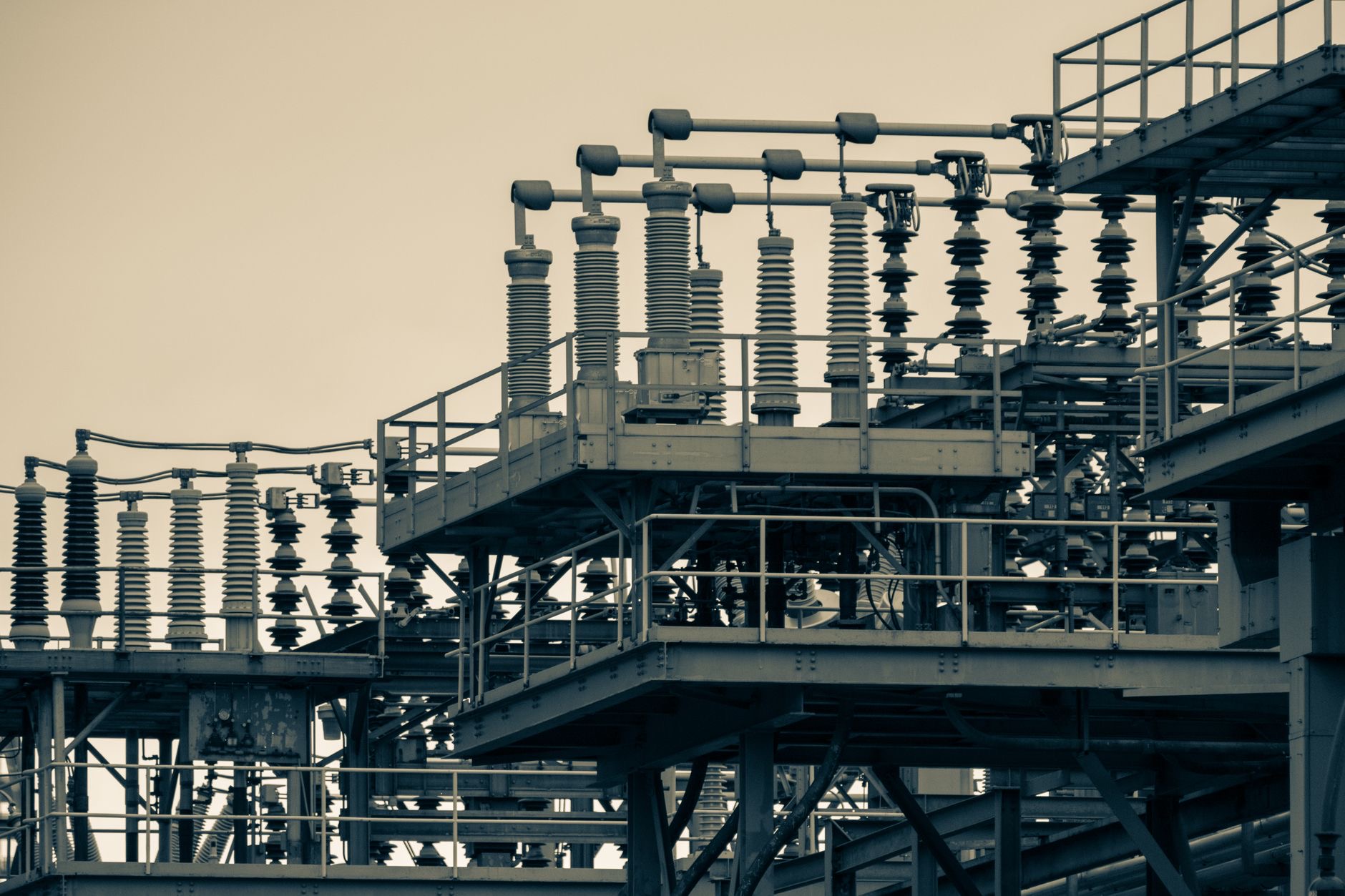
Atkore has become a focal point for investors looking for U.S. industrial stocks tied to factory construction, data center buildouts and electrical infrastructure, leading a short list of companies positioned around the physical side of the AI and reshoring boom.
The group highlighted in recent market coverage includes Atkore Inc., Bowman Consulting Group Ltd. and Matrix Service Company, three smaller or mid-sized U.S.-listed industrial names with different exposures to the same theme: more domestic manufacturing capacity, more power-hungry computing facilities and more demand for engineering, conduit, grid and construction services. The timing matters because markets were closed Friday, July 3, for the Independence Day observance, leaving investors to reassess industrial and infrastructure themes over the holiday weekend before the next full trading session.
Atkore sits closest to the electrical-infrastructure angle. The company, based in Harvey, Illinois, describes itself as a manufacturer of electrical products for commercial, industrial, data center, telecommunications and solar applications. Its product portfolio includes conduit, cable-management systems, metal framing and other infrastructure products used to route and protect wiring across buildings and industrial sites. That places Atkore in a different part of the AI trade than semiconductor designers or cloud platforms: it is a “picks and shovels” supplier for the physical facilities that must be built before servers can run.
The company’s latest numbers show why the stock is both attractive to theme-driven investors and complicated for fundamental investors. In its fiscal second quarter ended March 27, Atkore reported net sales of $731.4 million, up 4.2% from a year earlier. Management said organic volume rose about 5% year over year and that sales, adjusted EBITDA and adjusted earnings per share improved sequentially from the first quarter. The Electrical segment, the company’s largest business, posted an 8.1% increase in net sales to $532.5 million.
But the same report also showed pressure on profitability. Atkore recorded a net loss of $124.1 million for the quarter, reflecting a $136.5 million litigation settlement expense tied to PVC pipe antitrust litigation and losses on assets held for sale. Adjusted EBITDA fell 30.4% from a year earlier to $81.1 million, with the company citing lower gross profit and input costs that outpaced selling-price increases. Atkore maintained its fiscal 2026 outlook for adjusted EBITDA of $340 million to $360 million and adjusted net income per diluted share of $5.05 to $5.55.
For investors, that combination creates the core debate around Atkore stock. The company has credible exposure to data centers, industrial facilities, solar and electrification, all areas that can benefit from U.S. capital spending on AI infrastructure and domestic supply chains. At the same time, its results show that volume growth does not automatically protect margins when steel, PVC, freight, labor and competitive pricing are moving against the company. Atkore’s portfolio cleanup is also ongoing: the company has divested its HDPE pipe and conduit business and a surface protection and coatings business in Belgium as part of a broader push to focus on core electrical infrastructure.

Market data underline the caution. Atkore’s shares last closed at $69.21 on July 2, down 4.4% in that session, with a market capitalization of roughly $2.34 billion, according to company stock information. MarketBeat data showed a consensus “Hold” rating among six analysts and an average 12-month price target of $81.67, implying that Wall Street’s base case remains constructive but not broadly bullish. That is consistent with a stock that fits a strong long-term infrastructure narrative while still carrying near-term earnings and legal overhangs.
The second name in the screen, Bowman Consulting Group, offers a less product-driven and more services-oriented way to track the same buildout. Bowman is a Reston, Virginia-based professional services firm providing infrastructure design and asset lifecycle engineering. Its work spans transportation, building infrastructure, power, utilities, energy and natural resources. Recent company materials show more than 100 U.S. offices and more than 2,500 professionals nationwide, with management framing the company as a beneficiary of infrastructure design demand.
Bowman’s first-quarter results reinforced that growth profile. The company reported gross contract revenue of $126.5 million, up 12% from a year earlier, and net service billing of $114.2 million, up 14.1%. Adjusted EBITDA increased 15.8% to $16.8 million, while gross backlog rose 55.9% to $652.7 million. The company raised its 2026 net revenue guidance to a range of $520 million to $540 million, which it said indicated more than 20% revenue growth for the year.
The attraction for investors is Bowman’s exposure to planning, engineering and program management before and during construction. Data centers, power upgrades, transportation work and mining-related infrastructure can all require design and permitting expertise before large construction spending appears in revenue for contractors and suppliers. The risk is that Bowman is still building scale and remains exposed to acquisition integration, labor costs and the timing of public and private infrastructure awards. The company reported a GAAP net loss of $3.7 million in the first quarter, wider than a $1.7 million loss a year earlier, even as its adjusted metrics improved.
Matrix Service, the third name, gives the theme a heavier engineering-and-construction angle. The Tulsa, Oklahoma-based company serves energy and industrial markets through storage and terminal solutions, utility and power infrastructure, and process and industrial facilities. Matrix is not a pure data center contractor, but its power infrastructure and industrial project work make it relevant to a market increasingly focused on electricity availability, grid reliability and high-specification construction.

In its fiscal third quarter ended March 31, Matrix reported revenue of $206.7 million, net income of $0.8 million and adjusted EBITDA of $4.9 million. Liquidity stood at $297.2 million, and the company said it had no outstanding debt. Backlog was $1.0 billion at quarter end, with project awards of $108.3 million. Management said some new awards included more than $30 million in increased electrical infrastructure and grid-related investments driven in part by data center demand, while the broader project opportunity pipeline remained more than $6.9 billion.
Matrix also shows why infrastructure stocks can be volatile even when the end-market narrative is favorable. The company lowered its fiscal 2026 revenue guidance to $870 million to $890 million after client-related engineering and permitting delays, along with severe weather, shifted work into later periods. That is a reminder that data center and factory demand may create opportunity, but revenue recognition still depends on project timing, permitting, customer decisions, weather, labor availability and execution.
The macro backdrop gives all three stocks a stronger strategic context. Federal Reserve Bank of St. Louis data based on U.S. Census Bureau construction figures showed manufacturing construction spending at a seasonally adjusted annual rate of $174.8 billion in May 2026. That was down from earlier months in 2026 but still far above pre-pandemic norms, reflecting the lasting impact of semiconductor, battery, clean-energy and advanced manufacturing investments. Data centers are adding a second demand stream, with AI workloads forcing cloud providers, utilities and developers to expand power, cooling and electrical capacity.
That is the business case behind the stock screen: Atkore can supply electrical components, Bowman can help design and manage infrastructure projects, and Matrix can build and maintain complex industrial and power assets. Together, they represent the less glamorous but essential side of AI and reshoring. The immediate question for investors is whether the theme can overcome company-specific issues. Atkore must show that higher volumes and portfolio focus can restore margins. Bowman must convert backlog into profitable work. Matrix must turn a large pipeline into awards and revenue without more major delays.
For Silicon Valley and the broader U.S. business economy, the story is bigger than three tickers. AI demand is increasingly colliding with physical constraints: substations, transmission, switchgear, skilled labor, permitting and local opposition. Stocks tied to those constraints may see more attention as investors look for beneficiaries outside the largest technology companies. Atkore’s lead position in the latest industrial screen shows that the market is widening its definition of the AI trade, but it also shows that infrastructure exposure alone is not enough. The winners will need pricing power, project discipline and balance-sheet flexibility as the factory and data center cycle matures.




Leave a Reply