
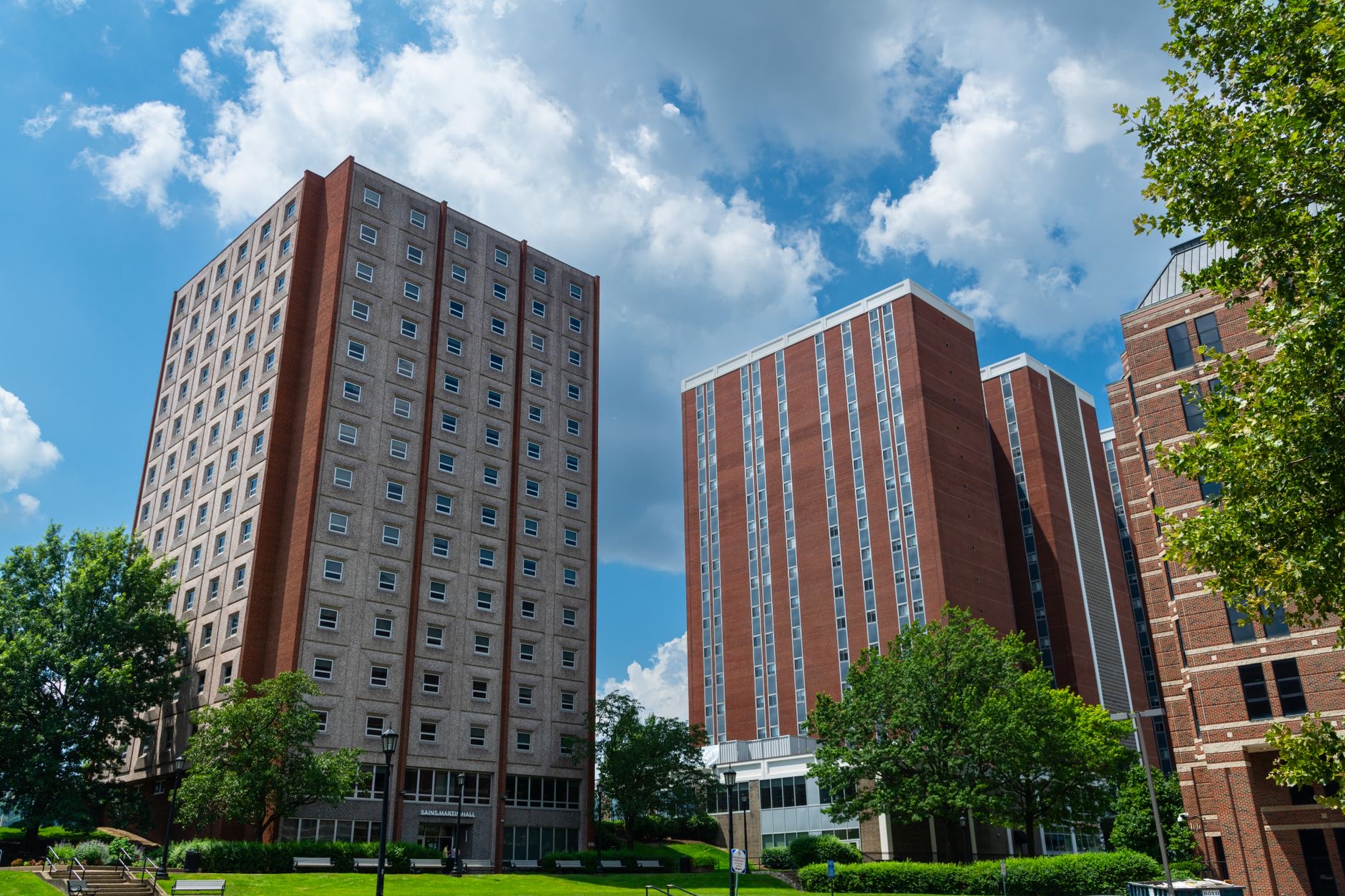
A Kentucky State University alumnus involved in lawsuits over the future of the state’s only public historically Black university is warning that a state-mandated restructuring could push out the very students KSU was built to serve, sharpening a legal and political fight over Senate Bill 185.
Rev. Jacques Wigginton, a KSU graduate from the 1980s and case manager in a state lawsuit challenging the law, described the overhaul as “campus gentrification” in an interview with the Lexington Herald-Leader. His criticism centers on a basic allegation from plaintiffs: that academic contraction, stricter student rules and a shift toward a polytechnic model could reduce access for marginalized students while leaving behind a smaller, more selective institution.
The dispute has moved through Franklin County Circuit Court as students and alumni challenge SB 185, the law signed by Kentucky Gov. Andy Beshear on April 13. The measure declared an emergency related to Kentucky State University and put the school under a framework of financial oversight and academic restructuring. It requires KSU to move toward a land-grant polytechnic identity, limits certain programs, creates new oversight by the Kentucky Council on Postsecondary Education and imposes tighter rules around spending, enrollment and debt collection.
Plaintiffs are suing KSU, the state, lawmakers, Beshear and other officials in an effort to stop enforcement of the law. The litigation includes a state case and a federal civil-rights case, according to the Herald-Leader. The defendants have pushed back, with Beshear seeking dismissal from both lawsuits. His legal team has argued that a governor’s general duty to enforce state law does not automatically make him a proper defendant in such litigation.
The core education issue is whether the state’s intervention is a rescue plan or a forced narrowing of an HBCU’s mission. KSU has faced serious financial strain, and state officials have argued that academic consolidation and oversight are necessary to put the university on a sustainable path. Critics say the law’s practical effect could be to shrink enrollment, cut faculty and end support structures that have helped students who arrived with academic or financial barriers.
Attorney James Morris, representing students and alumni in the lawsuits, told a Franklin County judge that plaintiffs view SB 185 as “a death by 1,000 cuts” to the university. Morris has argued that the law could ultimately steer students toward predominantly white institutions, including Kentucky’s community and technical college system. KSU had already entered a transfer partnership with the Kentucky Community and Technical College System in 2023, before the current litigation, but plaintiffs now point to the broader restructuring as part of a pattern they say could weaken KSU’s independent HBCU role.

Under SB 185 and related university actions, Kentucky State is being reshaped around six approved areas of study: Applied Sciences, Engineering, Health Sciences, Humanities, Natural Sciences and Technology. The Kentucky Council on Postsecondary Education approved that structure in June, saying the areas were intended to organize KSU’s academic portfolio around applied learning and workforce needs.
The council also approved the closure of four undergraduate programs: music education, music performance, political science and child development and family studies. KSU must develop teach-out plans for affected students and submit them to its accrediting body. University officials have said the academic plan was built around program review, student pathways, advising improvements, financial sustainability and alignment with a polytechnic mission.
KSU President Koffi C. Akakpo has framed the plan as a serious response to the requirements of SB 185 and the university’s long-term challenges. In a May campus message, he said the work was intended to strengthen the academic foundation that supports students, serves Kentucky and sustains the institution’s mission. KSU has also emphasized that it remains Kentucky’s only public HBCU and an 1890 land-grant university.
Opponents argue that the official language of mission alignment does not answer the access question. According to the Herald-Leader’s reporting on the lawsuits, KSU has halted 10 academic programs and faculty has dropped from 112 to at least 77 since 2023. University officials told state higher-education leaders that separations saved more than $1.27 million. Plaintiffs also point to the end of some “wraparound services” for students with lower GPAs and ACT scores as evidence that the restructuring could make KSU less accessible to students who historically relied on such support.
The law’s financial provisions have also drawn scrutiny. Legislative records show SB 185 gave the Council on Postsecondary Education a stronger role in approving KSU expenditures and financial oversight. A final amendment increased KSU’s spending authority threshold from $5,000 to $20,000 before certain approvals are required. The council later approved a policy requiring KSU to seek prior approval for expenditures over $20,000, submit an annual operating budget for monitoring and provide lists of positions and contractual obligations for one-time approval each academic year.

Admissions and student-account rules are another flashpoint. Legislative records show amendments changed the proposed admissions threshold, allowed alternative admissions criteria to be established by CPE and modified provisions affecting students with more than $1,000 owed to the university. Plaintiffs and critics say such rules could be especially consequential at an HBCU serving students who may already face financial barriers to persistence and completion.
Judge Thomas Dawson Wingate did not immediately resolve the central legal questions during the June hearing, according to the Herald-Leader. The court arguments included whether Beshear and other defendants should be dismissed and whether to pause implementation of SB 185 through a temporary restraining order. Wingate indicated he was weighing which defendants were the “real parties” in the case and set further proceedings for July.
The case now places Kentucky State at the intersection of higher-education finance, civil-rights litigation and HBCU governance. For state officials and university leaders, the question is whether a smaller, more workforce-aligned institution can emerge from financial distress without losing accreditation standing or academic relevance. For students, alumni and plaintiffs, the question is whether the state is preserving KSU or remaking it in a way that displaces the communities it was created to serve.
The lawsuits have not yet produced a final ruling, and the allegations remain contested. But the immediate stakes are already visible: program closures, faculty reductions, new oversight and a debate over whether financial stabilization at a public HBCU can be separated from the civil-rights history embedded in its mission.




Leave a Reply