
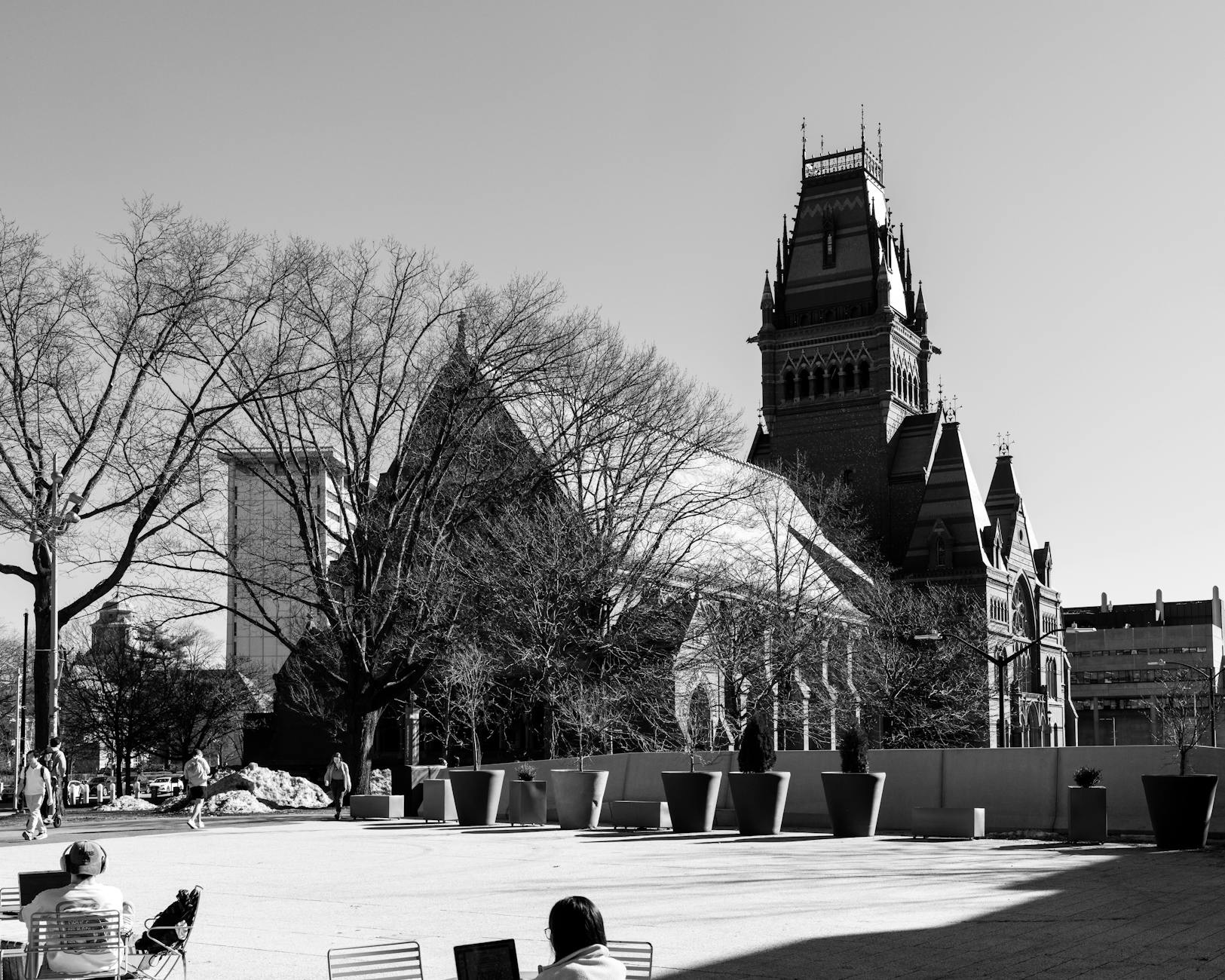
Harvard University on Monday asked a federal judge to throw out the Trump administration’s lawsuit accusing the school of violating federal civil rights law by failing to protect Jewish and Israeli students from antisemitism, arguing that the Justice Department’s case is outdated, legally flawed and part of what the university describes as an unconstitutional pressure campaign.
The motion to dismiss marks Harvard’s most direct response yet to the Justice Department’s March lawsuit, which alleges that the university was deliberately indifferent to antisemitic and anti-Israeli harassment on campus after the Oct. 7, 2023, Hamas attack on Israel. The government’s complaint says Harvard failed to enforce campus rules even-handedly and effectively denied Jewish and Israeli students equal access to educational opportunities.
Harvard disputes that account. In its latest filing, the university argues that the government’s complaint relies on a “snapshot in time” that no longer reflects campus conditions and omits reforms the school says it has put in place. Those measures, according to Harvard’s argument as reported by The Harvard Crimson, include new protest rules, antisemitism training, a streamlined disciplinary process and expanded complaint procedures.
The lawsuit is being heard in the U.S. District Court for the District of Massachusetts. The case is separate from a February Justice Department lawsuit seeking admissions-related records from Harvard, but both reflect a broader federal enforcement posture toward elite universities under the Trump administration. The antisemitism case is United States v. President and Fellows of Harvard College, filed March 20.
The Justice Department’s complaint alleges violations of Title VI of the Civil Rights Act of 1964, which prohibits discrimination on the basis of race, color or national origin in programs receiving federal financial assistance. Federal civil rights enforcement has long treated certain forms of antisemitic discrimination as covered when they involve shared ancestry or ethnic characteristics. The government says Harvard receives federal financial assistance, including from the Department of Health and Human Services, and is therefore subject to Title VI requirements.
In its March announcement, the Justice Department said the case was intended to hold Harvard accountable for alleged discrimination against Jewish and Israeli students. The department said it would not tolerate harassment, assault or intimidation of those students and argued that institutions receiving taxpayer funding must protect civil rights. HHS officials said Harvard had made public commitments to address antisemitism but that its proposed reforms did not meet Title VI requirements.

The complaint seeks significant remedies. It asks the court to compel Harvard’s compliance with Title VI and to recover what the government describes as billions of dollars in taxpayer subsidies awarded to an institution it alleges was out of compliance. The filing also raises a breach-of-contract theory, arguing that Harvard’s federal grants required continued compliance with Title VI and that noncompliance could justify rescinding grant payments for the period at issue.
Harvard’s dismissal request pushes back on both the legal basis and the factual premise of the suit. The university argues that the government cannot base a sweeping federal enforcement case on alleged past violations while ignoring the steps Harvard says it has taken to address the problem. Harvard also contends that the lawsuit is not a good-faith civil rights action but a continuation of federal efforts to punish the university for resisting government demands over campus policy and institutional governance.
The dispute follows a turbulent period for Harvard and other universities over the handling of campus protests and antisemitism complaints. Since 2023, colleges have faced pressure from students, alumni, donors, Congress, civil rights groups and federal agencies over their responses to demonstrations related to Israel and Gaza. Universities have also faced competing demands: protecting Jewish and Israeli students from harassment, preserving lawful political speech, enforcing protest rules and maintaining academic freedom.
Harvard has already faced private litigation over antisemitism allegations. Judge Richard G. Stearns previously allowed certain Title VI claims against Harvard to move forward in lawsuits brought by Jewish students and advocacy groups, while dismissing some related claims. Harvard has pointed to settlements and policy changes in those cases, including its January 2025 decision to incorporate the International Holocaust Remembrance Alliance definition of antisemitism into university nondiscrimination policies.
The Justice Department’s case differs from those private lawsuits because it is a federal enforcement action with potentially broader consequences for Harvard’s funding and governance. The government has framed the case as a matter of civil rights compliance tied to federal funds. Harvard has framed it as an overbroad and retaliatory effort that seeks to transform campus misconduct disputes into a federal takeover of university decision-making.

The case also comes after a separate legal battle over federal research funding. In 2025, Harvard challenged the Trump administration’s suspension and termination of research funds tied to allegations of antisemitism and ideological capture. A federal judge later ruled that the administration had violated constitutional protections and failed to follow required procedures in freezing billions of dollars in research funding. Harvard is now using that broader context to argue that the new lawsuit is part of the same campaign.
The administration, however, has maintained that the antisemitism case is distinct from the earlier funding dispute. The March complaint says the United States opened an investigation into Harvard’s response to antisemitic and anti-Israeli discrimination in February 2025, notified the university of findings in June 2025 and attempted to resolve the alleged violations before suing. The government says judicial enforcement is authorized when voluntary compliance cannot be secured.
For higher education, the outcome could shape how aggressively federal agencies pursue universities over campus climate and protest-related discrimination claims. If Harvard’s motion is granted, it may narrow the path for broad federal lawsuits based on past campus incidents where universities can point to later reforms. If the case survives, the Justice Department could continue seeking discovery and court-ordered remedies that may affect funding, oversight and internal disciplinary systems.
The motion also places Harvard at the center of a national test over the boundaries of federal power in education. Title VI gives the government strong tools to enforce civil rights compliance, but universities argue those tools cannot be used to dictate viewpoints, control internal academic decisions or punish institutions for resisting political demands. The court will now have to decide whether the government’s complaint plausibly states a current civil rights violation or whether Harvard’s objections are strong enough to end the case at the pleading stage.
No immediate ruling was issued Monday. The Justice Department is expected to oppose Harvard’s request, leaving Judge Stearns to decide whether the case can proceed toward discovery and potential remedies. Until then, the litigation will remain one of the most closely watched campus civil rights disputes in the country, with implications extending beyond Harvard to universities facing similar federal scrutiny.




Leave a Reply