
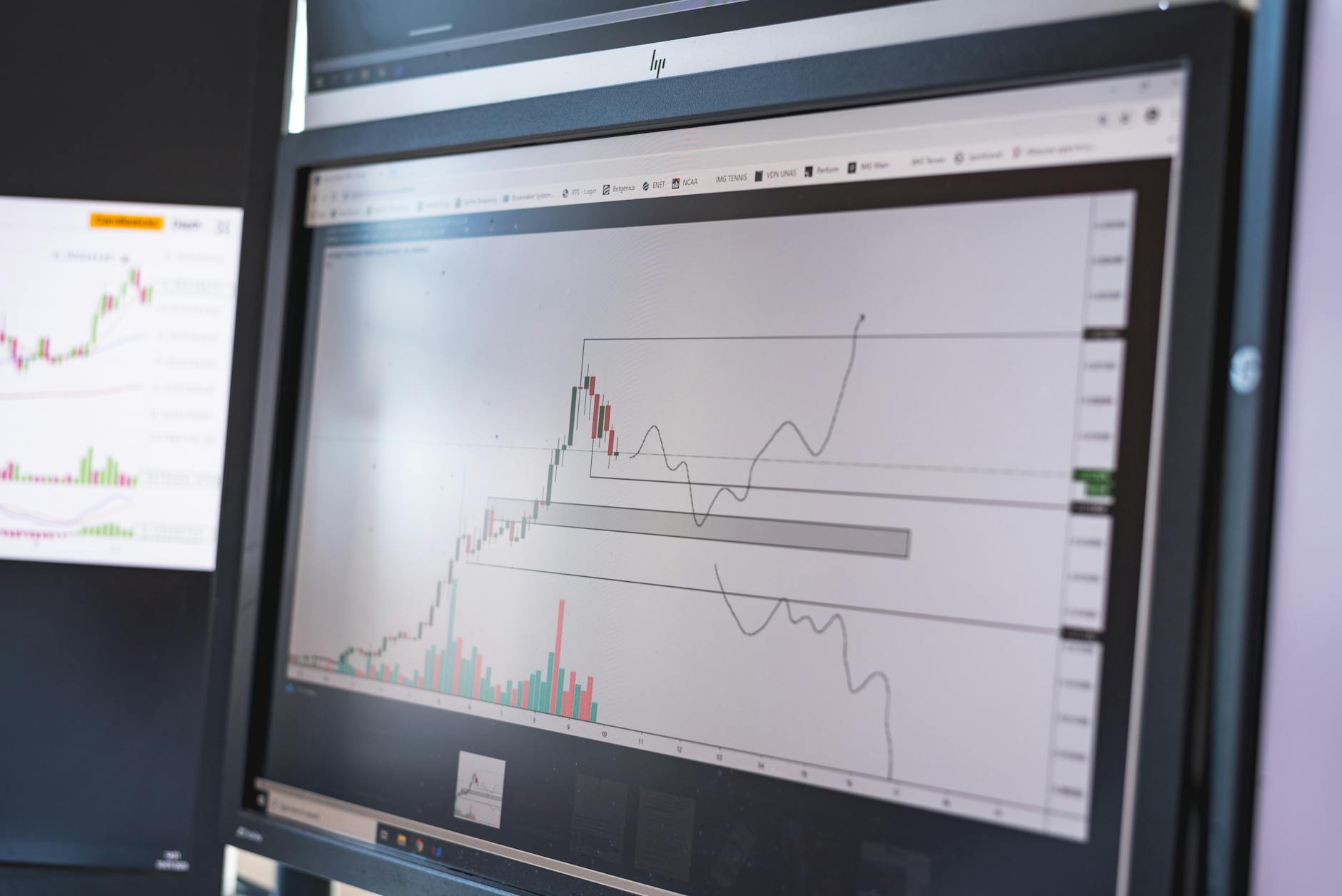
Wall Street’s week ahead is set to revolve around three closely watched tests for the stock market: whether Nvidia can keep validating the artificial intelligence trade, whether Google can strengthen confidence in its AI product roadmap, and whether big retailers can show that U.S. consumers are still spending despite pressure from inflation and borrowing costs.
The focus comes after a week in which major indexes remained near elevated levels even as investors confronted higher Treasury yields, firmer energy prices and renewed questions about how much longer the Federal Reserve may need to keep policy restrictive. The result is a market that still has a bullish growth narrative, led by AI and mega-cap technology, but one that is increasingly vulnerable to disappointment in earnings, guidance or macro data.
Nvidia is the biggest single corporate event on the calendar. The company says it will discuss results for the first quarter of fiscal 2027 on Wednesday, May 20, at 2 p.m. Pacific time, after the quarter ended April 26. The report is expected to be treated as more than a chip-company update: Nvidia has become a barometer for how aggressively cloud providers, enterprise customers and AI infrastructure builders are still committing capital to accelerated computing.
That matters because the broader market’s AI premium depends not only on Nvidia’s own revenue growth, but also on evidence that demand is broadening, supply constraints are easing and customers are still willing to spend at scale. Investors will be looking for data-center revenue trends, commentary on Blackwell systems, visibility into next-generation products and any signs that hyperscaler capital spending is translating into durable order flow rather than a short-term procurement surge.
The earnings call also arrives at a point when the market is trying to distinguish between AI companies that are producing cash flow now and companies whose valuations are tied to longer-term hopes. Nvidia sits at the center of that debate because its chips, networking products and software stack are among the clearest monetization points in the AI buildout. A strong report could reinforce the case that AI remains the stock market’s principal growth engine. A cautious outlook, even from a position of strength, could quickly ripple through semiconductor, cloud, power, data-center and software names.
The second major focus is Alphabet’s Google I/O conference, scheduled for May 19-20. Google says the event will include livestreamed keynotes and sessions, with expected updates across Gemini, Android and developer tools. For investors, the event is less about a single product launch than about whether Google can demonstrate that its AI investments are becoming more deeply embedded in consumer products, enterprise workflows and developer ecosystems.

Alphabet has faced intense scrutiny as generative AI changes the economics of search, advertising, cloud software and mobile platforms. Google I/O gives the company a stage to show how Gemini features are being distributed across its core products and how developers are being encouraged to build on its models and infrastructure. The stock-market question is whether those announcements can support confidence that Alphabet is defending its search franchise while expanding AI-related revenue opportunities.
The developer angle is important because the AI race is increasingly a platform contest. Investors are watching not just which company releases the most capable model, but which company can attract developers, retain users and integrate AI into products at massive scale. For Google, that means I/O may shape sentiment around Android, cloud, search, productivity tools and emerging AI interfaces. The event also has direct Silicon Valley relevance, taking place in Mountain View and centering on the competitive dynamics among the largest U.S. technology platforms.
The third test is retail earnings. Home Depot is scheduled to host its first-quarter earnings conference call Tuesday morning, followed by Lowe’s and Target on Wednesday and Walmart on Thursday. That sequence will give investors a broad read on housing-linked spending, discretionary demand, grocery and general merchandise trends. It also comes at a sensitive moment for consumer stocks, which have had to navigate uneven traffic, price sensitivity and a mixed economic backdrop.
Home Depot and Lowe’s will be watched for signs of whether homeowners are resuming big-ticket projects or continuing to defer renovations because of mortgage rates and affordability pressures. Home-improvement demand is closely tied to housing turnover, household balance sheets and confidence among professional contractors. Even modest changes in comparable sales, transaction counts or management commentary can influence how investors view the housing-adjacent economy.
Target’s results will be read differently. The company is more exposed to discretionary categories, including apparel, home goods and seasonal merchandise, making it a useful gauge of whether middle-income shoppers are still willing to spend beyond essentials. Investors will be looking for evidence that traffic trends are stabilizing, margins are holding up and the company’s merchandising strategy is resonating after a difficult stretch for parts of the retail sector.
Walmart may provide the most comprehensive consumer signal of the week. As the largest U.S. retailer, it captures spending across groceries, household staples, general merchandise, e-commerce and advertising. Its results can show whether shoppers are trading down, whether higher-income consumers continue to support sales growth and whether the company can keep expanding margins while competing aggressively on price. Because Walmart reports Thursday morning, its commentary could shape the market’s final read on the consumer before the week closes.

Beyond earnings and technology events, the macro calendar is also meaningful. The Federal Reserve’s May calendar lists the release of minutes from the April 28-29 Federal Open Market Committee meeting at 2 p.m. Wednesday. Traders will examine the minutes for any evidence of disagreement inside the central bank over inflation risks, the timing of future rate moves and the degree of confidence officials have in the current policy path.
The minutes may be especially important because equity investors have been sensitive to movements in longer-term yields. Higher yields can pressure stock valuations, particularly for growth companies whose expected profits are weighted further into the future. They can also feed into mortgage rates, corporate borrowing costs and consumer credit conditions. That makes the Fed document a potential bridge between this week’s technology and retail catalysts: AI stocks need financial conditions that do not undermine valuation multiples, while consumer companies need households that can withstand higher financing costs.
Energy prices and geopolitical risk add another layer. Market reports over the weekend pointed to elevated oil prices and cautious stock-index futures as investors monitored tensions involving Iran and broader global supply concerns. For U.S. equities, a sustained oil shock could complicate the inflation outlook and weigh on consumer sentiment, particularly if gasoline prices rise alongside borrowing costs.
The week’s setup leaves investors with a narrow path for continued gains. Nvidia and Google can support the market’s growth story if they reinforce confidence in AI demand and platform development. Retailers can support the economic story if they show consumers remain resilient across income levels and spending categories. The Fed minutes can support the valuation story if they do not push traders toward a more restrictive interest-rate outlook.
But the same catalysts could also expose fragility. An underwhelming Nvidia outlook would challenge the AI leadership trade. A Google I/O that fails to clarify monetization could leave Alphabet vulnerable to questions about AI spending returns. Weak retail guidance could revive concerns about the consumer. Hawkish Fed minutes or another jump in yields could pressure both cyclicals and growth stocks. That is why the market’s three big watch items this week are connected: they test whether the rally still has earnings power, product momentum and macro support working in the same direction.




Leave a Reply