
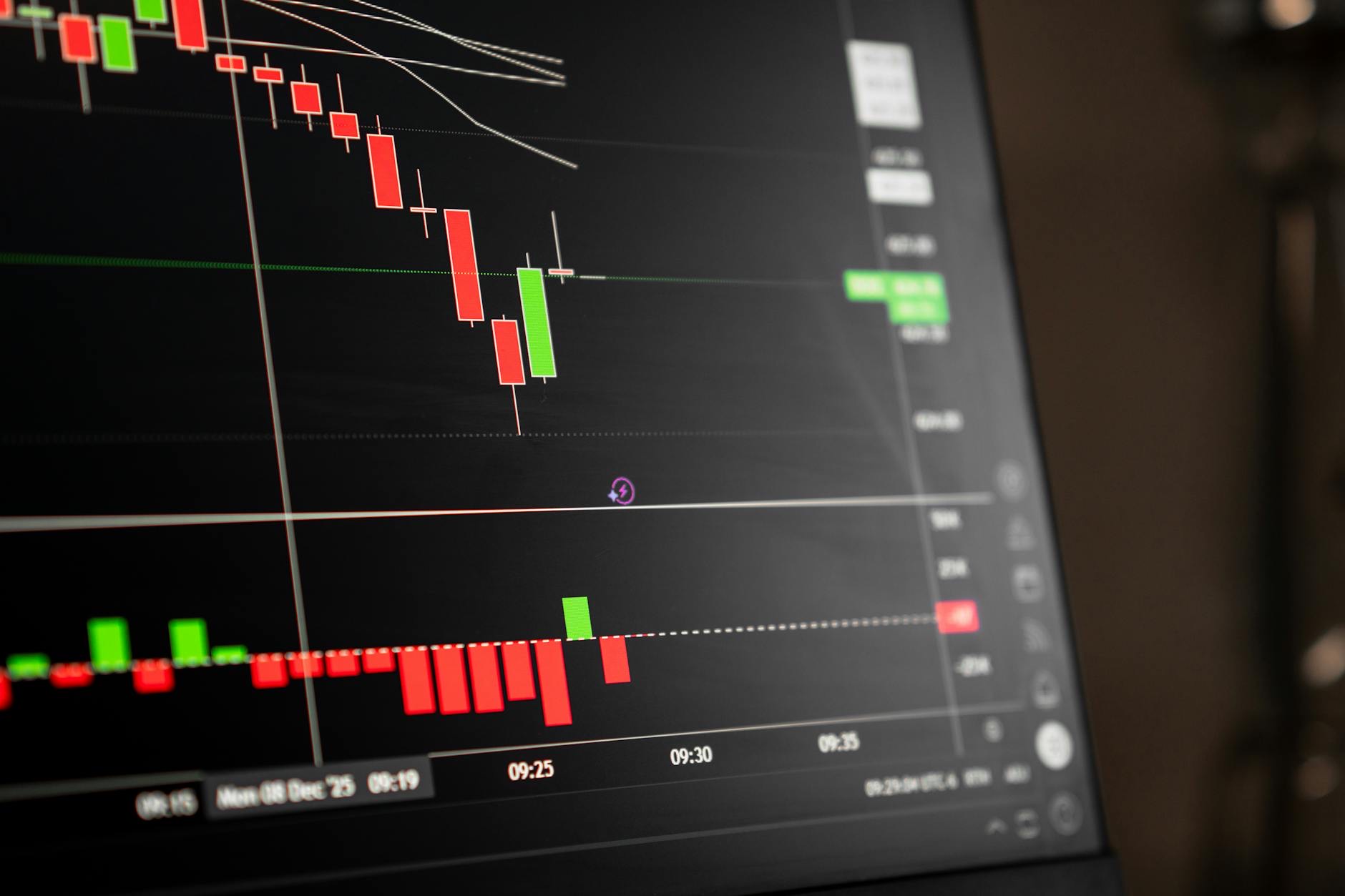
U.S. markets opened the new week facing a sharper test of the Trump economy after oil prices surged on renewed Iran tensions, adding pressure to a stock rally that has pushed major indexes close to record levels despite high gasoline prices, tariff uncertainty and questions about the Federal Reserve’s next move.
The immediate shift came after President Donald Trump rejected Iran’s latest response to a U.S. peace proposal, a development that sent crude prices higher and weighed on futures tied to the Dow, S&P 500 and Nasdaq. Reuters reported Monday that Brent crude rose to about $105 a barrel and U.S. crude approached $100 as traders reassessed the likelihood of a quick easing in the Strait of Hormuz disruption. Associated Press coverage also described mixed Asian trading and higher oil prices after Trump called Iran’s response “totally unacceptable.”
The market reaction matters because stocks had just finished a strong week. Barron’s reported that the S&P 500 rose 2.3% last week and notched another record close, while the Nasdaq gained 4.5%, helped by earnings momentum and enthusiasm around artificial intelligence. That strength has left investors with two competing narratives: corporate America is still delivering profit growth, but the macro backdrop is becoming more expensive and less predictable.
The assigned market warning, circulated through Google News from The Motley Fool, argued that investors may be overlooking several pressure points in President Trump’s economy. The analysis focused on three main risks: the Iran conflict’s effect on oil and gasoline prices, tariff-related costs for companies and consumers, and the possibility that historically high gasoline prices have preceded severe stock-market declines. It specifically noted that U.S. gasoline prices above $4 have been rare and that previous episodes occurred during periods of major market stress.
That historical frame should be used carefully. High gasoline prices alone do not cause bear markets, and the 2008 financial crisis and the 2022 inflation shock were driven by different sets of forces. Still, fuel prices are a direct channel between geopolitics and the U.S. consumer economy. When gasoline rises quickly, households have less cash for restaurants, travel, apparel, entertainment and other discretionary purchases. For retailers, airlines, delivery firms and manufacturers, higher fuel costs can also become a margin problem if they cannot fully pass costs through to customers.
Energy prices have become a politically sensitive and market-sensitive gauge because they feed into both consumer psychology and inflation expectations. Barron’s and other market reports placed the national average gasoline price around $4.52 a gallon over the weekend, citing AAA data. The U.S. Energy Information Administration’s latest weekly gasoline data were scheduled for release on May 12, meaning investors entered Monday with pump prices already high and another official update still pending.

The inflation implications are central. If crude remains near or above $100, the effect can move beyond gasoline and diesel into airline costs, shipping rates, plastics, chemicals, agriculture and consumer goods distribution. That makes the next inflation readings more important for equity markets. A hotter-than-expected consumer-price report could reinforce the view that the Federal Reserve has limited flexibility to cut rates, particularly if the labor market remains stable enough to keep policymakers focused on inflation rather than recession risk.
Wall Street has already begun reassessing rate-cut assumptions. Reuters reported Monday that Bank of America and Goldman Sachs pushed back expectations for Federal Reserve rate cuts, citing persistent inflation risk from high energy prices and resilient employment data. That is a significant shift for stock valuations because lower-rate expectations have helped support growth stocks, especially technology companies with long-duration earnings profiles.
The second risk is trade policy. The Yale Budget Lab’s April tariff analysis estimated that U.S. tariff policy had pushed the average effective tariff rate to levels not seen in decades, depending on whether measured before or after import substitution. For businesses, tariffs can raise input costs, complicate supply chains and force difficult choices about pricing. For households, tariffs can show up as higher prices for imported goods or domestically produced goods that rely on foreign components.
The combination of oil and tariffs is what makes the current setup more complicated than an ordinary geopolitical scare. Oil affects transportation and energy-intensive sectors across the economy. Tariffs affect goods prices and corporate sourcing decisions. Together, they can pressure inflation while also weighing on growth, a mix that markets typically find harder to digest than a simple slowdown that gives the Fed room to ease.
At the same time, the equity market has not been behaving like an economy on the edge of immediate contraction. Strong earnings, large buybacks and AI-related capital spending have helped keep investors engaged. Major technology and semiconductor shares have remained central to the market’s advance, while companies tied to AI infrastructure have drawn support from expectations that corporate and cloud-computing investment will remain durable even if consumer spending softens.

That divergence is now the central business story: markets are pricing in corporate resilience while parts of the real economy are absorbing higher costs. A rally led by earnings can continue through policy shocks if companies maintain margins and revenue growth. But if energy costs force analysts to cut consumer-spending assumptions or if tariffs begin eroding profit forecasts, the market’s tolerance for elevated valuations could narrow quickly.
Investors will also watch whether market breadth improves or weakens. If only a small group of megacap technology names carries the indexes higher, the headline level of the S&P 500 may overstate the health of the broader market. If industrials, consumer discretionary stocks, financials and small-cap companies participate, the rally may look more durable. Recent trading has shown enough strength to keep bulls engaged, but the oil shock adds another test for sectors most exposed to fuel, financing and discretionary demand.
For U.S. companies, the next several weeks may require a more cautious message to investors. Earnings calls are likely to face questions about fuel surcharges, tariff mitigation, inventory strategy, pricing power and demand elasticity. Retailers and travel companies will have to explain whether higher gasoline prices are changing booking or shopping patterns. Manufacturers will have to address whether tariffs are raising procurement costs. Banks and asset managers will be watched for signs of stress in consumer credit, commercial real estate and market liquidity.
The clearest near-term conclusion is that the market’s problem is not one data point. It is the interaction of several pressures arriving while stocks are already high. Oil has reintroduced inflation risk. Tariffs have kept business-cost uncertainty elevated. Fed-cut hopes are being pushed further out by some major banks. Meanwhile, investors remain willing to pay for earnings growth, especially where AI demand appears strong.
History suggests markets can recover from oil shocks, inflation scares and policy turmoil, but it does not guarantee a smooth path. The relevant question for Wall Street this week is whether the latest oil spike becomes another temporary headline in a resilient bull market or the start of a broader repricing of inflation, rates and earnings. For now, the stock market is still near its highs, but the margin for disappointment has become thinner.




Leave a Reply