
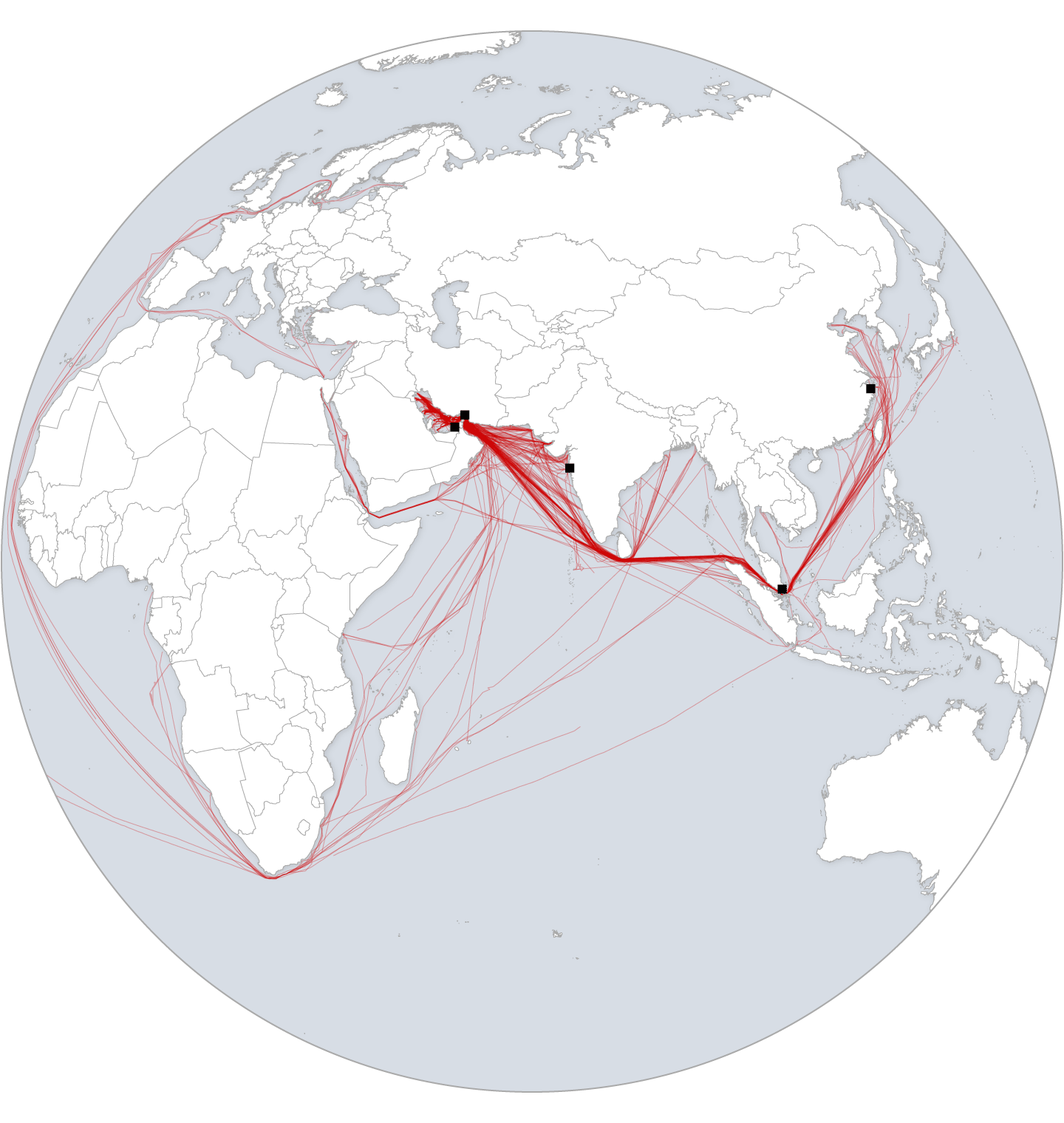
Tensions in the Middle East are sending shockwaves through global energy markets as traffic through the Strait of Hormuz — the narrow maritime corridor along Iran’s southern coastline — slows to a near standstill.
Under normal conditions, roughly 80 oil and gas tankers pass through the strait each day. The waterway serves as one of the world’s most vital energy arteries, carrying about 20 percent of global oil supplies along with substantial volumes of natural gas.
This week, however, shipping data from industry analytics firm Kpler, reviewed by The New York Times, shows a dramatic drop in activity. On Monday, only two oil and gas tankers appear to have navigated the strait. On Tuesday, just one vessel made the crossing.
Energy investors say the decline amounts to an effective shutdown. Dan Pickering, chief investment officer at Pickering Energy Partners in Houston, described the situation as a “de facto closure,” noting that numerous ships are currently waiting on both sides of the strait while operators hesitate to proceed.
The slowdown began after U.S. and Israeli strikes on Iran over the weekend intensified regional hostilities. Shipping companies have grown increasingly cautious, fearing escalation and further attacks. A prolonged disruption in the region could reverberate across the global economy, threatening energy security far beyond the Middle East and fueling renewed inflationary pressures.
Oil markets have reacted swiftly. International crude prices have climbed approximately 12 percent since the conflict escalated, trading near $81 per barrel as of Tuesday. Natural gas prices have also surged in both European and Asian markets, reflecting concerns about supply bottlenecks.
Iranian officials have issued stark warnings. A senior military commander threatened to “set on fire” vessels attempting to transit the strait. Meanwhile, reports indicate that ships operating nearby have already come under attack. Several energy facilities across the region have been struck or affected by nearby explosions, though initial assessments suggest that the structural damage has not been catastrophic.
The risks are not confined to Iranian waters. Authorities in Fujairah, a major energy hub in the United Arab Emirates, reported a fire on Tuesday caused by falling debris from a downed drone. In Qatar, liquefied natural gas production was temporarily halted on Monday following attacks that affected key facilities. LNG, which is cooled into liquid form for maritime transport, plays a crucial role in supplying energy to Europe and Asia.
With fewer tankers willing to pass through Hormuz, the global supply of oil and gas is tightening. The longer vessels remain sidelined, the more pronounced the supply constraints could become. That dynamic is likely to exert additional upward pressure on energy prices in the weeks ahead.
Shipping firms are weighing multiple risks. Beyond physical security concerns for crews and cargo, insurance costs for operating in the region have surged sharply. War-risk premiums are rising, and some insurers are reluctant to provide coverage at all under current conditions. As a result, many companies have temporarily suspended voyages through the strait.
On Tuesday, President Donald Trump stated that the U.S. Navy could begin escorting tankers through the Strait of Hormuz “if necessary.” He also announced that a U.S. government agency would offer political risk insurance to shipping companies operating in the conflict zone, aiming to stabilize maritime commerce.
The strait is not only essential for oil and gas tankers. Car carriers, container ships and other large commercial vessels also rely on the passage. In ordinary circumstances, close to 160 major ships traverse the waterway each day. The current disruption therefore extends beyond energy markets, with potential implications for broader global trade.

Complicating efforts to assess the full scale of the slowdown, some vessels in the region have disabled their tracking transponders or transmitted misleading location data. This practice, sometimes used to evade sanctions or avoid scrutiny, makes it difficult to obtain a comprehensive and real-time picture of maritime traffic.
One vessel drawing attention is the small oil tanker Shiva, which has reportedly falsified its location data multiple times, according to shipping monitors. Industry analysts suspect it may be transporting sanctioned Iranian crude. The Shiva was among the two tankers recorded as crossing the strait on Monday.
The majority of oil and gas flowing through the Strait of Hormuz originates from major producers such as Saudi Arabia, Iraq, Iran and the United Arab Emirates. These supplies are shipped to markets around the world, with Asia being the primary destination. In 2024, more than 80 percent of energy exports moving through the strait were delivered to Asian countries, including China, India, Japan and South Korea, according to data from the U.S. Energy Information Administration.
While many importing nations maintain strategic reserves that could cushion short-term disruptions, a prolonged blockage of the strait would likely strain national economies. Manufacturing, transportation and electricity generation sectors are particularly vulnerable to sustained energy shortages.

In recent years, global supply chains have faced repeated shocks — from pandemic-related shutdowns to geopolitical conflicts. Yet analysts warn that a sustained halt in tanker traffic through the Strait of Hormuz could prove especially disruptive, given the waterway’s outsized role in the world’s energy system.
As diplomatic tensions rise and military threats intensify, the situation in the Strait of Hormuz underscores how a single narrow passage can influence fuel prices, inflation trends and economic stability across continents. The coming days will be critical in determining whether the slowdown becomes a temporary pause or a deeper crisis for global energy markets.




Leave a Reply