

To sing along smoothly to “Golden,” the breakout hit from the animated film “KPop Demon Hunters,” it helps to have at least a basic grasp of Korean, since the song blends the language into its lyrics.
Online audiences seem to agree. As the track heads into Sunday’s Grammy Awards with four nominations, countless explainer videos have appeared on YouTube and TikTok breaking down the pronunciation and meaning of its Korean lines. Together, these clips have racked up millions of views.
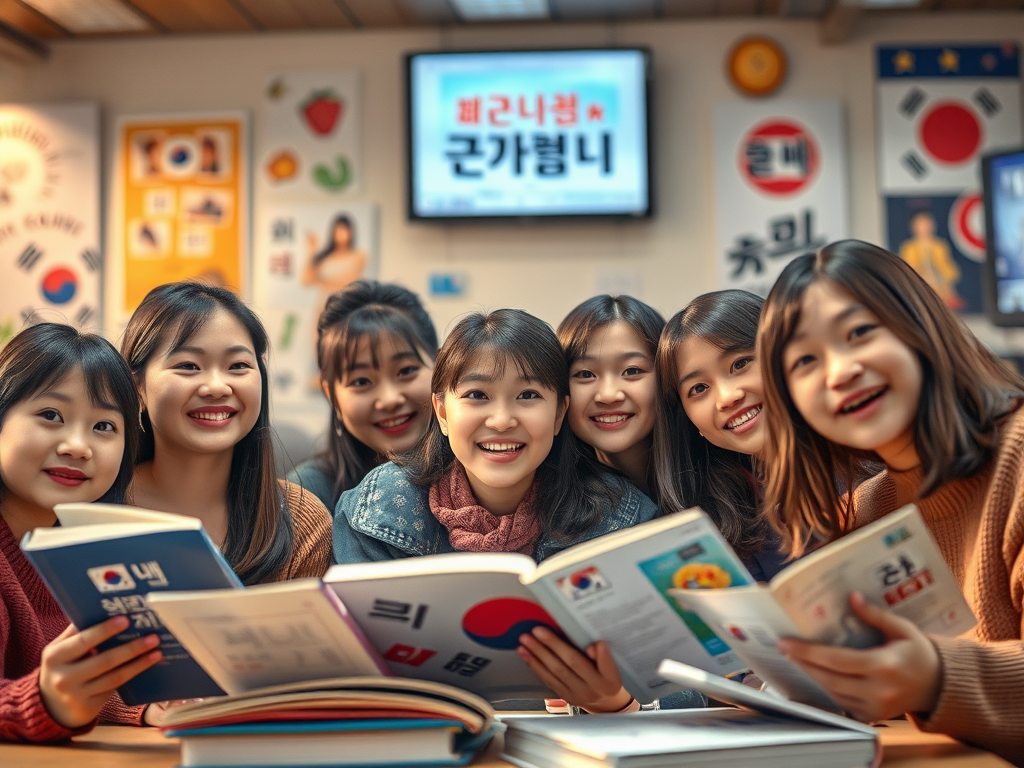
The growing fascination with Korean culture in the United States has now reached a point where many Americans with no family ties to Korea are choosing to study the language or learn hangul, the Korean alphabet.
Universities across the country, from California to Arkansas, are expanding their Korean language and culture programs to meet rising demand. Duolingo reported that the number of U.S. users learning Korean increased by 22 percent in a single year. Language institutes say they are scrambling to hire more instructors.
“We’re constrained only by how much we can scale,” said Tammy Kim, executive director of the Korean American Center in Irvine, California.
For some learners, interest begins with entertainment. Brecken Hipp, 35, recalls watching a Korean game show on Netflix while eating takeout with his wife. Frustrated by relying on subtitles, he decided to study the language himself.
“I kept thinking it would be so much easier if I could just understand what they were saying,” he said. Hipp, who works at a gaming company, now dedicates six to eight hours a week to learning Korean.
The global wave of Korean culture, known as “hallyu,” first surged in the U.S. in 2012 when Psy’s “Gangnam Style” became the first video on YouTube to surpass one billion views.

Since then, South Korea’s cultural influence has only grown. BTS has filled major stadiums and appeared on American television. Blackpink headlined Coachella. “Parasite” made history as the first non-English film to win Best Picture at the Oscars. Netflix’s “Squid Game” became its most-watched series ever, and “KPop Demon Hunters” has become the platform’s most popular film, with over 325 million views.
While the animated movie is largely in English, many other Korean shows and films are presented in Korean with subtitles, and K-pop songs frequently mix Korean and English.
“Korean is now seen as a cool language,” said Joowon Suh, who directs Columbia University’s Korean program.
This trend stands out at a time when interest in foreign languages has generally declined. Between 2016 and 2021, U.S. university enrollment in language courses dropped by 16 percent. Only three languages saw growth, with Korean rising by 38 percent, far outpacing American Sign Language and biblical Hebrew.
At the University of California, Berkeley, the shift has been dramatic. Two decades ago, the school offered just two Korean classes for non-heritage learners. Today, there are nine introductory courses, eight of which cater to students with no prior exposure to the language.
“I never could have imagined this level of interest back then,” said Junghee Park, who oversees the program.

High school teachers see similar enthusiasm. Bob Huh, who teaches in Maryland, says many of his students already know basic phrases before enrolling.
“Even though I grew up in Korea, they often know more about current K-pop than I do,” he joked.
Learning the basics can be surprisingly fast, since hangul is considered one of the most systematic writing systems in the world. But becoming fluent is far more challenging. Korean sentence structure differs greatly from English, and grammar changes depending on social context, age, and relationships. The U.S. State Department classifies Korean as one of the most difficult languages for English speakers, alongside Arabic, Chinese, and Japanese.


Lisa Hunt, a Brown University junior, has studied Korean for five semesters. She says it is consistently her most demanding course.
“You have to practice every single day,” she said.
Still, many students say the effort is worth it. Angel Huang, now a senior at Duke University, began studying Korean to connect with other K-pop fans but later developed a deeper interest in Korean history and politics. She even worked with North Korean refugees during a study-abroad program in Seoul.
“I don’t think I would be where I am today without Korean media,” she said.
For many learners, a trip to South Korea becomes a natural next step. Max Abrams built a large TikTok following documenting his life in Seoul while speaking Korean fluently. Although he eventually returned to the U.S., he says the cultural experience shaped him deeply.
Some students are careful to distance themselves from the label “Koreaboo,” a term used to describe people seen as obsessively fixated on Korean culture. Andy Ko, who moved from South Korea to Illinois as a child, says he now feels proud to casually use Korean words with friends.

In Seattle, Amber Guidry, a scientist with no Korean background, has immersed herself in the culture after becoming a fan of Korean dramas. She shops at H Mart, cooks Korean dishes at home, and uses Korean skincare products. She recently went to see “KPop Demon Hunters” in a packed theater where audiences sang along to “Golden.”
This spring, she plans to visit Seoul for the first time.
For many Americans, learning Korean has become more than a hobby. It is a gateway into a broader cultural world that continues to reshape how they see themselves and the global community.




Leave a Reply