
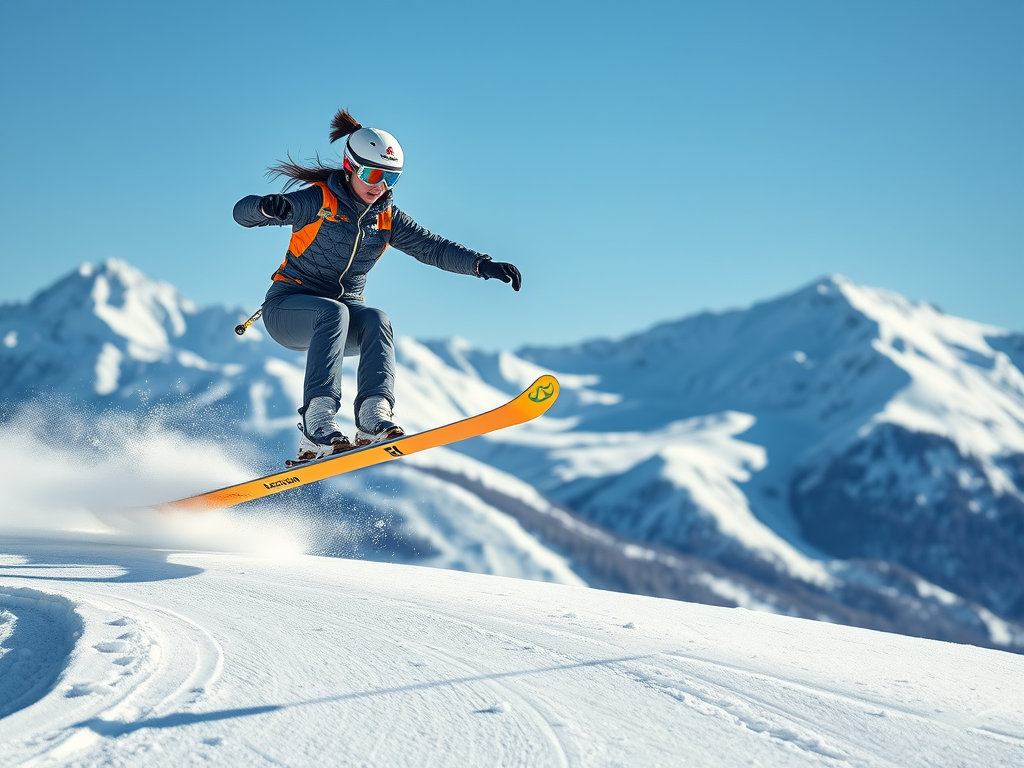

One name stands apart on Forbes’ list of the world’s highest-paid female athletes in 2025.
At the top sits tennis sensation Coco Gauff, whose estimated earnings reached $33 million, followed closely by Aryna Sabalenka at $30 million and Iga Swiatek at $25.1 million. Then comes a less obvious figure: freestyle skier Eileen Gu, who brought in $23.1 million. Unlike her tennis counterparts, Gu is not a mainstream household name in global sports, yet her income rivals the very best.
Since her breakthrough performance at the 2022 Beijing Winter Olympics — where she won two gold medals and a silver in big air, halfpipe, and slopestyle at just 18 years old — Gu has consistently ranked among the top five highest-paid female athletes in the world. At 22, she remains a rare presence from winter sports in a list dominated by summer athletes.
In the latest rankings, Gu sits above prominent figures such as Naomi Osaka, Madison Keys, and rising basketball star Caitlin Clark. The next winter Olympian on the list is Lindsey Vonn, tied for 18th place, yet earning roughly $15 million less than Gu.
This month, Gu is set to defend her Olympic titles in big air and halfpipe at the Milan Cortina Games. However, despite her competitive success, only $0.1 million of her earnings last year came directly from skiing. The remaining $23 million came from endorsements, making her one of the most commercially valuable athletes in the world.
Gu’s appeal extends far beyond sport. As a model represented by IMG, she has walked for luxury brands such as Victoria’s Secret and Louis Vuitton. Her ability to bridge athletics and fashion reflects a broader trend in women’s sports, where endorsement opportunities have grown faster than prize money.

Tennis remains the highest-paying sport in terms of on-court earnings, largely due to equal prize money at the four Grand Slams since 2007. Still, outside those tournaments, pay gaps persist. Gauff earned about $8 million from competition, Sabalenka $15 million, and Swiatek $10.1 million.
While many female athletes earn less through salaries alone, their influence and marketability continue to rise.
Sports marketing expert Josh Hershman notes that elite female athletes carry the same star power as their male counterparts when it comes to branding. He points out that although women’s team budgets may be smaller, brands are increasingly willing to invest in individual female athletes as global ambassadors.
Born and raised in San Francisco, Gu chose in 2019 to compete for China, her mother’s homeland, and is also known there as Gu Ailing. On the slopes, she is celebrated for her technically demanding tricks, but off the slopes she has built an extraordinary commercial presence.
Even as a teenager, Gu attracted major media attention in China, appearing on multiple fashion magazine covers at just 16. Hershman describes her as a “perfect storm” from a marketing perspective — an athlete with elite performance, a compelling personal story, and cross-cultural appeal.
Her dual connection to the United States and China gives her access to two of the world’s largest markets. By early 2026, she had more than seven million followers on Weibo, far surpassing her Instagram following. This reach gives her value far beyond the relatively niche sport of freestyle skiing.
In the lead-up to the Beijing Olympics, Gu’s endorsement portfolio expanded rapidly, with her image appearing on billboards across China. Since then, she has become more selective, focusing on long-term partnerships rather than sheer volume.

Her sponsors now include global brands such as Porsche, Red Bull, and IWC Schaffhausen, alongside major Chinese companies like Anta, Bosideng, Mengniu Dairy, and TCL. She has publicly stated that financial incentives did not drive her decision to represent China.
Her choice, however, has been controversial on both sides of the Pacific. In the U.S., some commentators accused her of betraying her country, while in China, some critics labeled her unpatriotic. Gu has responded forcefully, pointing out her record of representing China in dozens of international competitions and her contributions to the national team.
Questions about her citizenship status have also surfaced, but Gu has largely avoided clarifying the issue. She has often said that she feels American in the U.S. and Chinese in China, reflecting her complex identity.
Despite her glamorous public image, Gu often shares more personal moments on social media, from study sessions to training routines. She has balanced elite academics — studying at Stanford and Oxford — with a demanding athletic career that includes world-class skiing and high-profile modeling.
Her recent comeback victory at the Secret Garden halfpipe event in China marked her 19th World Cup win, following a serious injury earlier in the year. Afterward, she emphasized that her success comes from relentless discipline rather than talent alone.
Even if she were to retire from competition tomorrow, industry experts believe Gu would remain commercially powerful due to her broad appeal and cultural influence.
Yet money is not her primary motivation. In a handwritten journal entry shared online, she reflected that her work matters because of its impact on herself and others, and that losing herself in the process of striving for greatness is a privilege.
For many athletes, endorsements are the ultimate goal. For Gu, medals still come first.




Leave a Reply