
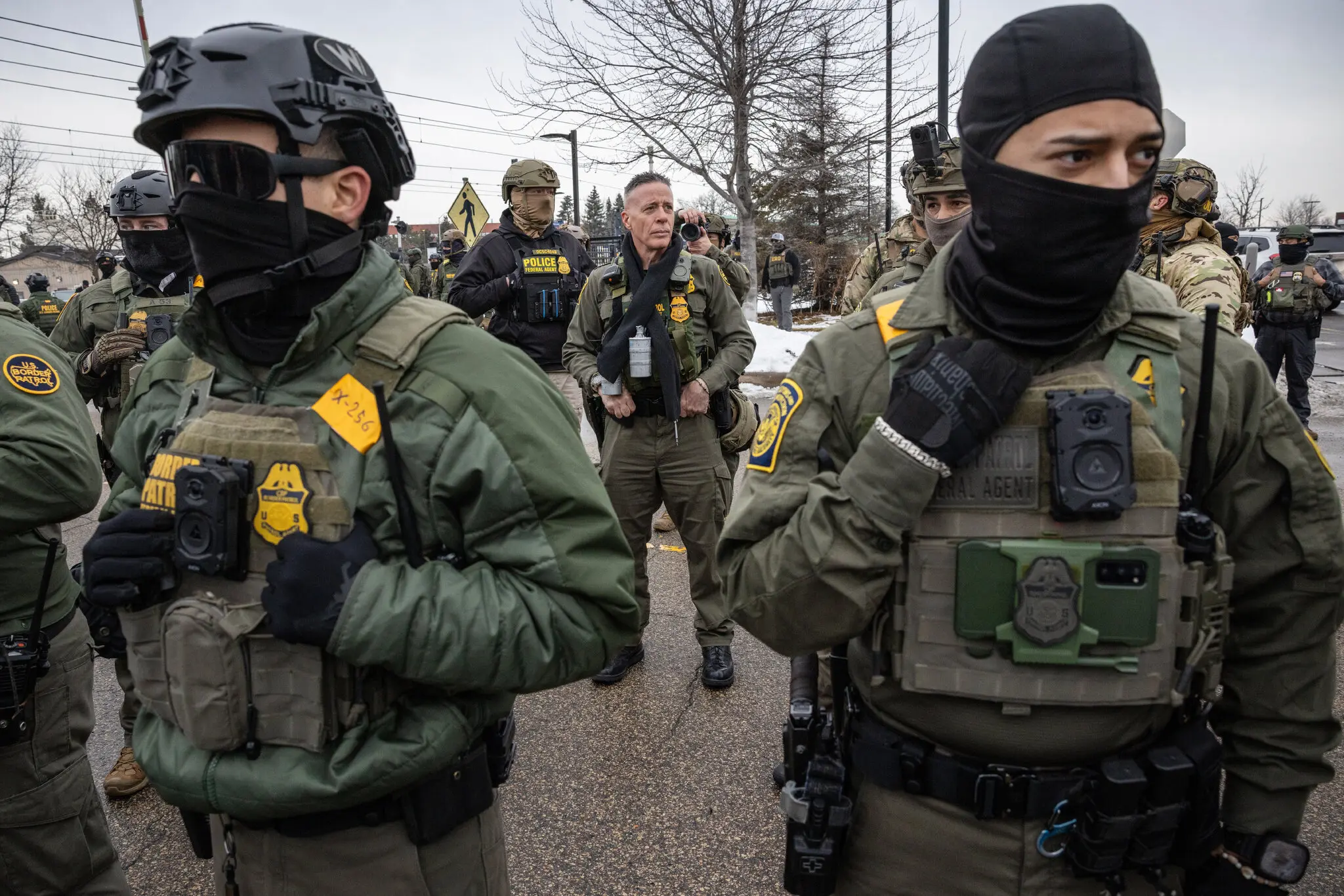
Gregory Bovino, a senior tactical leader within the U.S. Border Patrol, has emerged as one of the most visible and outspoken figures associated with President Donald Trump’s aggressive and controversial immigration enforcement campaign. Known for his forceful public statements and frequent television appearances, Bovino became a symbol of the administration’s nationwide immigration raids, which sparked unrest and resistance in multiple American cities.
Following a major immigration operation carried out in Chicago last autumn, demonstrations quickly spread across the city. Amid the unrest, federal authorities accused a local Latino resident of plotting violence against Bovino, alleging that the man had effectively placed a price on the commander’s life. The accusation was seized upon by officials as proof that immigration enforcement had pushed urban areas into chaos.
At the height of the controversy, Bovino himself cited the alleged threat as evidence that public order in U.S. cities was collapsing. Speaking to Fox News, he described the situation as resembling conditions in a developing country and went so far as to label Chicago a “war zone,” reinforcing the administration’s narrative that immigration enforcement officers were under siege.
That narrative suffered a serious blow on Thursday when a federal jury in Chicago cleared the accused man of all charges. The acquittal marked yet another legal setback for the Justice Department, which has struggled to secure convictions in a series of cases linked to the Trump administration’s immigration policies.
The defendant, Juan Espinoza Martinez, is a longtime Chicago resident and union carpenter. Prosecutors charged him with a serious felony, claiming he had attempted to solicit a contract killing. The case centered on private messages allegedly sent through Snapchat, which authorities said contained threats against Bovino and included an offer of money for his assassination.
According to prosecutors, Espinoza Martinez had shared images of Bovino along with messages such as “10K if you can take him down,” framing these statements as a clear attempt to encourage violence. Federal attorneys argued that the messages constituted a deliberate effort to incite murder, particularly given Bovino’s prominent role in immigration enforcement.
Defense attorneys, however, presented a very different picture during the three-day trial. They maintained that the government failed to prove any intent to follow through on the alleged threats. There was no evidence, they argued, that Espinoza Martinez had the financial means, the connections, or the genuine desire to arrange an assassination. Instead, the defense said he was merely repeating inflammatory statements circulating online.
Much of the defense strategy focused on the origin of the messages. According to Espinoza Martinez’s lawyers, the comments and images had already been widely shared on Facebook in response to immigration raids in Latino neighborhoods. The defendant, they said, simply forwarded what he had seen, without adding any personal plan or directive.
Early in the case, prosecutors attempted to portray Espinoza Martinez as a senior member of the Latin Kings, a notorious street gang that originated in Chicago. Court filings initially described him as a high-ranking gang affiliate, a characterization that carried serious implications for the jury’s perception of his intentions.
That claim was forcefully challenged by the defense. Jonathan Bedi, one of Espinoza Martinez’s attorneys, argued that the government had no proof whatsoever that his client was, or had ever been, a gang member. He criticized federal authorities for repeating unproven allegations in public statements and media appearances rather than presenting concrete evidence in court.
Facing scrutiny, prosecutors later softened their position, stating only that Espinoza Martinez had an “affinity” for the gang rather than formal membership. This shift prompted U.S. District Judge Joan Humphrey Lefkow to intervene. She ruled that any discussion of alleged gang ties would be excluded from the trial, determining that such claims were unsupported and potentially prejudicial.
With gang allegations off the table, the case hinged almost entirely on the Snapchat messages. Espinoza Martinez had sent them to just two individuals. The messages included phrases like “2K on info when they catch him” and repeated references to a $10,000 reward. One message also contained the phrase “LK on him,” seemingly referencing the Latin Kings, accompanied by hand-sign emojis.
One recipient of the messages was the defendant’s younger brother, Oscar Espinoza Martinez, who also works as a carpenter. Testifying in court, he said that the messages were nothing more than forwarded social media posts and that both brothers had seen similar content circulating online.
The second recipient was a small construction business owner who, unbeknownst to Espinoza Martinez, had been working as a government informant for years. This individual passed the messages directly to law enforcement, setting the federal investigation in motion.
In his opening statement, Assistant U.S. Attorney Minje Shin emphasized the seriousness of the messages, noting that they included a photograph of Bovino. He argued that by attaching the image, the defendant had clearly identified a target. Shin told jurors that Bovino represented a perceived threat to the defendant’s community and that the messages were meant to inspire violent action.
Defense attorneys did not deny that Espinoza Martinez was angry about immigration raids conducted in his neighborhood. However, they stressed that outrage, even when expressed in crude or reckless language, does not automatically constitute a federal crime. Bedi reminded jurors that repeating rumors or reposting inflammatory content from social media platforms is not illegal.
The trial moved quickly. Both sides completed their presentations in a single day, and closing arguments wrapped up before lunchtime on Thursday. Jurors deliberated for just over three hours before returning a not-guilty verdict, rejecting the prosecution’s theory of a murder-for-hire scheme.
During the proceedings, prosecutors also alleged that Espinoza Martinez, who was born in Mexico, was living in the United States without legal authorization. His brother testified that the defendant lived in the Chicago area with his wife and three children, working steadily in construction to support his family.
Video evidence played in court showed Espinoza Martinez appearing confused and distressed during an early interview with federal agents. In the recording, he agreed to answer questions without an attorney present and repeatedly expressed bewilderment about the accusations. He insisted that he had never tried to hire anyone to harm Bovino and said he had no intention of contacting anyone to do so.
Despite the acquittal, federal prosecutors remained firm in their interpretation of the evidence. First Assistant U.S. Attorney Jason Yonan argued in closing statements that the defendant’s words were meant to circulate widely and provoke action. He told jurors that such language could not be dismissed as harmless talk and insisted that it amounted to a call for violence.
Defense lawyer Dena Singer countered that interpretation, emphasizing her client’s lack of resources and capacity. She told the jury that Espinoza Martinez had no money, no network, and no realistic ability to carry out such a crime. According to Singer, the messages were merely echoes of online rhetoric, not steps toward an actual plot.
Singer also noted that Bovino’s photograph was already widely available due to his media presence. Sharing it, she argued, did not indicate criminal intent. She stressed that the defendant had sent the messages only to his brother and one other person, not broadcast them publicly. Disliking ICE operations, she said, does not equate to attempting murder.
After the verdict was announced, Espinoza Martinez embraced his attorneys in the courtroom. However, he was not immediately released from custody, as he still faces a separate immigration-related case. His future remains uncertain, pending further legal proceedings.
The Chicago U.S. attorney’s office declined to comment following the acquittal, as did the defense team and the defendant’s family. The case now joins a growing list of prosecutions tied to immigration enforcement that have failed to produce convictions.
Federal authorities continue to process hundreds of arrests connected to the ICE crackdown that began last year. In multiple instances, grand juries have refused to issue indictments against protesters or individuals accused of obstructing immigration operations, an outcome that was once rare but has become increasingly common in recent years.
In a separate case last November, U.S. District Judge Sara L. Ellis sharply criticized the Department of Homeland Security over its conduct during an immigration raid in Chicago’s Little Village neighborhood. She noted that Bovino had admitted to lying about whether he was struck by a rock before deploying tear gas against protesters.
Judge Ellis made her remarks during a civil lawsuit filed by a coalition of journalists, activists, and religious leaders. Represented by senior Justice Department attorneys, the government faced strong judicial rebuke. Ellis stated that the use of force by immigration agents in that incident was so extreme that it “shocks the conscience.”
Shortly afterward, federal prosecutors moved to drop charges against two drivers accused of using their vehicles to interfere with federal agents. Text messages later revealed that a Border Patrol officer involved in the incident had boasted to colleagues after shooting a woman multiple times, comments that further undermined the government’s case.
Meanwhile, reports have surfaced of internal turmoil within the Chicago U.S. attorney’s office. The Chicago Tribune disclosed that the lead prosecutor in the Espinoza Martinez case left his position weeks before the trial began, though it remains unclear whether his departure was related to the case.
More broadly, the office has been shaken by President Trump’s sweeping changes to the Justice Department, which critics say have shifted prosecutorial priorities toward punishing political opponents. Resignations have become so frequent that, last summer, leadership circulated a letter inviting retirees and former staff to consider returning to fill vacancies.
Veterans of the office reportedly found the letter shocking, noting that positions there were once highly sought after. The developments reflect deeper strains within federal law enforcement as immigration policy continues to divide courts, communities, and the Justice Department itself.




Leave a Reply