
Target has once again been pulled into the center of America’s increasingly bitter political and social debates, this time after a confrontation between federal immigration agents and store employees sparked outrage in a Minneapolis-area suburb.
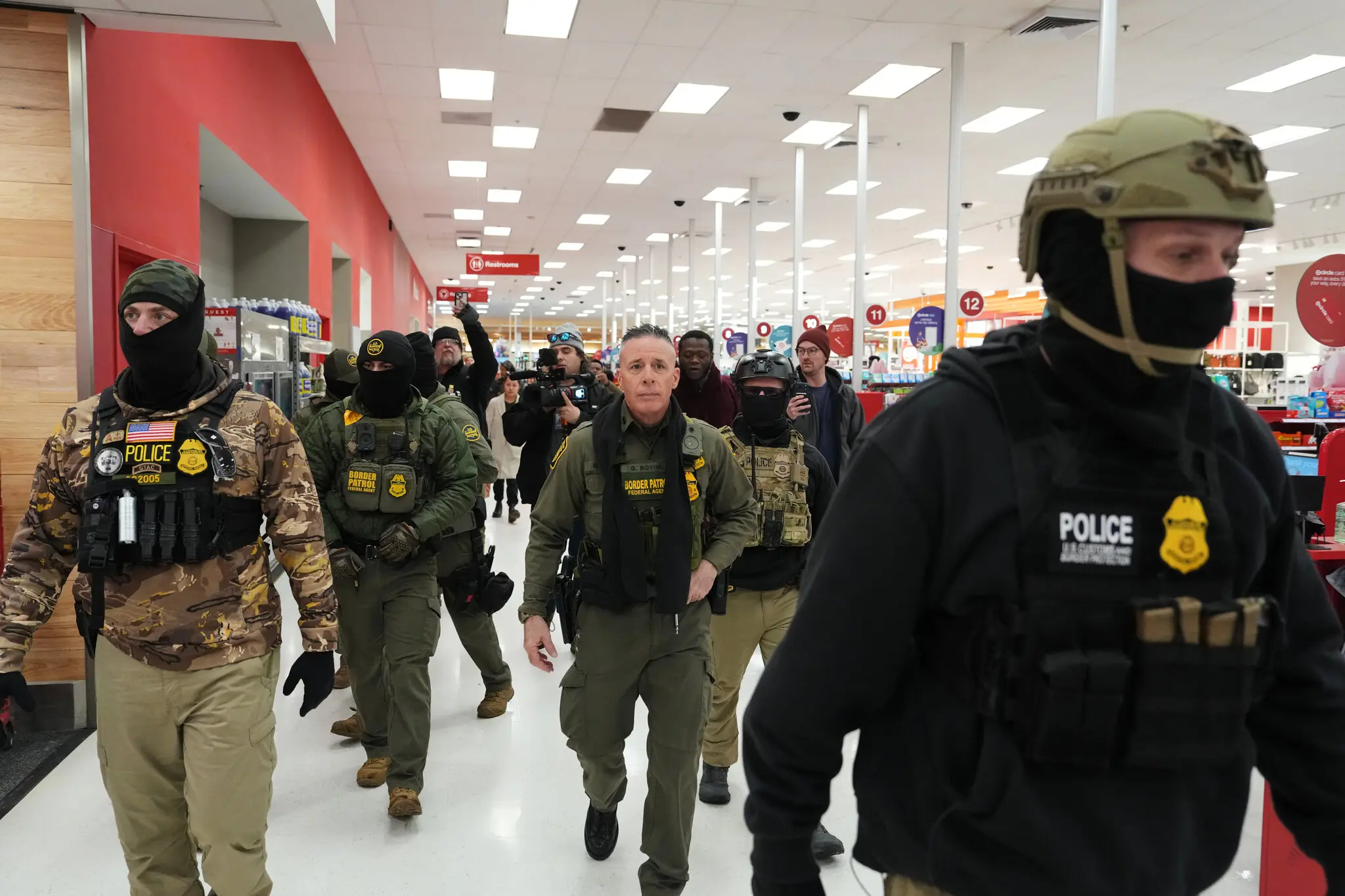
The incident took place last week at a Target store in Richfield, Minnesota, where cellphone videos captured Border Patrol agents detaining two store workers in the parking lot and pushing one of them into a sport utility vehicle. Both employees appeared to be filming the agents during the encounter, and at least one was shouting angrily as the situation escalated.
“I’m a U.S. citizen,” one of the workers yelled repeatedly as agents forced him toward the vehicle.
The footage spread quickly online, and in the days that followed, residents of Richfield, located just south of Minneapolis, expressed mixed reactions about continuing to shop at the store.
“It’s awful,” said DeAnthony Jones, a local shopper who had watched the videos. “Honestly, I probably shouldn’t even be here spending my money.”
For Target, public backlash has become an all-too-familiar pattern. Over the years, the retailer has repeatedly found itself the target of petitions, protests, and viral campaigns, as activists from across the political spectrum urge the company to take positions on divisive issues ranging from racial justice and LGBTQ rights to corporate diversity initiatives.
Now, immigration enforcement has been added to that list.
Target declined to comment on the Richfield incident, and as of now, the company has not released a public statement addressing what happened outside its store.
Jones noted that this was not the first time he had reconsidered shopping at Target. Last year, he briefly stopped visiting the store after the company announced it was scaling back its diversity, equity, and inclusion goals. In the end, convenience won out.
“They sell things I can’t really get anywhere else,” he said. “So I came back.”
From a legal standpoint, Target’s options may be limited. John Medeiros, a corporate immigration attorney at the Minnesota law firm Nilan Johnson Lewis, explained that federal agents are generally allowed to operate in public spaces such as store parking lots and retail aisles, where there is no reasonable expectation of privacy.
“They can be asked to leave,” Medeiros said, “but simply being there usually isn’t a constitutional violation because of the location.” He added that private areas of the store, such as offices behind closed doors, would typically require a warrant to search.
The episode unfolded against a tense backdrop in the Twin Cities. Target’s headquarters are located in Minneapolis, a city still reeling after weeks of protests following the fatal shooting of Renee Good, 37, by an immigration officer on January 7. Federal officials, including President Trump, defended the shooting as an act of self-defense, but the incident has further inflamed local anger.
As one of the most high-profile corporations based in the region, alongside companies like 3M and UnitedHealth Group, Target has often found itself symbolically linked to broader social unrest. Its Minneapolis-area stores were used as rallying points during protests after the 2020 killing of George Floyd by a city police officer.
More recently, Target became the focus of a major national boycott after rolling back DEI programs it had previously promoted, including initiatives supporting Black-owned businesses. Last February, demonstrators gathered outside the company’s headquarters carrying signs calling for a nationwide boycott. The Rev. Jamal Bryant, a prominent pastor from Georgia, urged supporters to take part in a 40-day pause from shopping at Target.
The effects were swift. In May, Target CEO Brian Cornell acknowledged that while economic pressures played a role, the backlash over the DEI changes was weighing on sales. “We’re not satisfied with this performance,” he told analysts during an earnings call.
Cornell later announced that he would step down, and in the fall the company revealed plans to cut 1,800 corporate jobs, its largest round of layoffs in a decade. It also reduced its profit outlook for the year. Michael Fiddelke, a longtime Target executive who previously led operations, is scheduled to take over as CEO on February 1.
Trying to push corporations into political action has always been a risky strategy, since taking any stance can alienate large segments of their customer base. In 2016, conservative groups organized boycotts against Target over its policy allowing transgender employees and customers to use bathrooms that matched their gender identity.
Years later, in 2023, anti-LGBTQ activists called for boycotts over the retailer’s Pride Month merchandise. When Target later removed some of those products from certain stores, progressive groups responded with boycotts of their own.
According to Dorothy Crenshaw, founder of the public relations firm Crenshaw Communications, Target now faces an unenviable dilemma. “If you try to retreat or satisfy everyone, it usually backfires,” she said. While staying silent may reduce legal risk, she warned that it can seriously damage a company’s reputation.
On Thursday, dozens of clergy members gathered outside Target’s headquarters, calling on the company to prevent immigration agents from operating on its properties and to push Congress to hold enforcement agencies accountable.
“This isn’t about attacking Target,” said the Rev. Laura Messer, who attended the gathering. “It’s about asking them to use the influence they have for the greater good.”
Meanwhile, the Department of Homeland Security stated that one of the Target employees shown in the videos was arrested on suspicion of assaulting or obstructing federal officers. Officials did not clarify whether formal charges had been filed. State Representative Michael Howard, whose district includes Richfield, said both workers are U.S. citizens and have since been released.
Video footage suggests that just before the arrests, the agents were walking alongside Border Patrol official Gregory Bovino. Since the shooting of Renee Good, tensions in Minneapolis have remained high, with larger protests and more frequent confrontations between residents and heavily armed federal agents.
At the Richfield Target store, several employees said the incident left them shaken and concerned about their own safety. They were unsure whether the two detained coworkers would return to work. Speaking anonymously, they said managers had been supportive but feared retaliation if they spoke publicly.
For shoppers like Jones, the situation reflects a deeper sense of unease across the city.
“Things feel bad everywhere right now,” he said. “If I didn’t have a family to think about, I’d probably be out there protesting too.”




Leave a Reply