
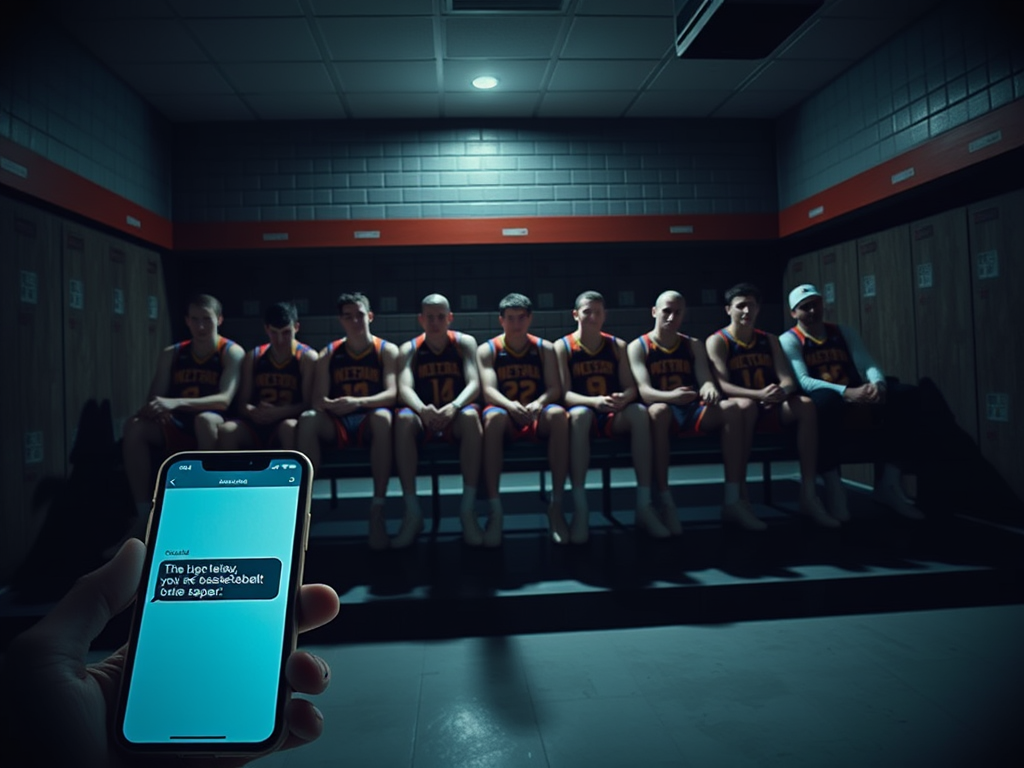

In late February 2024, during halftime of a men’s college basketball game between DePaul University and Georgetown, a basketball trainer based in North Carolina sent a text message to a DePaul player. The message appeared harmless on the surface. The trainer said he was satisfied with how two of the player’s teammates were performing. One of those teammates, however, had failed to score a single point. DePaul itself had played poorly in the first half and entered the locker room trailing by 13 points.
Despite the disappointing performance, the trainer was pleased for a very different reason. According to federal prosecutors, the trainer was part of a gambling operation that had placed $27,000 on Georgetown leading by at least three points at halftime. The bet paid off exactly as planned. Investigators later revealed that the outcome was not a matter of chance. Prosecutors allege that four DePaul players were secretly involved in a coordinated point-shaving scheme designed to ensure Georgetown covered the first-half betting line. The following day, those four players reportedly received a combined payment of $40,000.
DePaul’s struggles during the 2023–24 season were already severe. The team failed to win a single Big East conference game, finishing 0–16 and winning only three games overall. Federal authorities now say the team’s on-court failures were worsened by off-court corruption. On Thursday, prosecutors announced sweeping indictments that sent shockwaves through college athletics. A total of 26 individuals were charged for their roles in a large-scale conspiracy to bribe and manipulate college basketball games involving active student-athletes.
According to the indictment, the gambling operation reached far beyond DePaul. Prosecutors described a betting syndicate that recruited at least 39 players across primarily low- and mid-major Division I programs. Of those players, 20 were formally charged. The U.S. Attorney’s Office for the Eastern District of Pennsylvania stated that the ring was operated by individuals with deep connections within the basketball world, allowing them to identify vulnerable athletes and expand the scheme rapidly.
The 70-page indictment detailed how four DePaul players allegedly helped manipulate outcomes in three games. Beyond DePaul, investigators identified compromised games involving players from Abilene Christian, Alabama State, Buffalo, Coppin State, Eastern Michigan, Fordham, Kennesaw State, La Salle, New Orleans, Nicholls State, North Carolina A&T, Northwestern State, Robert Morris, Saint Louis, Southern Mississippi, and Tulane.
Several players named in the indictment were still active during the current season. Those include Simeon Cottle of Kennesaw State, Carlos Hart of Eastern Michigan, Camian Shell of Delaware State, Oumar Koureissi of Texas Southern, and Corey “CJ” Hines of Temple. Following the announcement, Kennesaw State suspended Cottle indefinitely, Texas Southern removed Koureissi from its roster, and Eastern Michigan suspended Hart from all team activities. Delaware State did not immediately issue a public response.
Two alleged organizers of the gambling ring, Shane Hennen and Marves Fairley, were also charged. Both men had already been indicted in a separate federal case involving alleged NBA insider betting, a case that also named Miami Heat guard Terry Rozier. In the college basketball case, Hennen and Fairley face multiple federal charges, including sports bribery and wire fraud. Fairley’s attorney stated that he was still reviewing the charges and declined to comment.
Prosecutors also accused Hennen of participating in a separate illegal poker operation. That investigation previously led to charges against former Portland Trail Blazers head coach and Hall of Fame player Chauncey Billups. In addition, former NBA player and LSU standout Antonio Blakeney was charged in the current case for conspiracy to commit wire fraud.
Federal officials framed the case as a serious threat to the integrity of sports. The U.S. Attorney for the Eastern District of Pennsylvania described the scheme as a fundamental corruption of college athletics, emphasizing that public trust in fair competition is a core value in American society.
Investigators said the operation generated millions of dollars in wagers and began as early as 2022. Initially, the focus was not on college basketball but on professional games in China. Prosecutors allege that Fairley and Hennen recruited Antonio Blakeney, who was then playing for the Jiangsu Dragons in the Chinese Basketball Association, to deliberately underperform in certain games. By doing so, the organizers could place large bets in the United States with inside knowledge of the expected outcome. Blakeney reportedly received $200,000 at the end of the season for his cooperation.
In one March 2023 game, Jiangsu entered as an 11.5-point underdog. Fairley and Hennen allegedly wagered nearly $200,000 on the game at a Pennsylvania casino. Blakeney, who averaged over 32 points per game that season, scored only 11 points. Jiangsu lost by 31. Prosecutors also allege that Blakeney arranged for a substitute player to assist the scheme in another game later that month, prompting additional bets totaling around $100,000.
As profits grew, confidence within the group increased. According to the indictment, Hennen once texted an associate that nothing in life was guaranteed except death, taxes, and Chinese basketball.
During the 2023–24 season, the syndicate shifted its attention to Division I college basketball. The organizers built a network of players spanning multiple states, from Texas to New York. Players were allegedly paid between $10,000 and $30,000 per game to influence outcomes, particularly first-half point spreads and full-game margins in matchups that received little national attention. In some cases, recruited players were encouraged to bring in teammates or players from other schools. Fairley and Hennen then placed hundreds of thousands of dollars in bets, either directly or through intermediaries.
In February 2024, the group reportedly wagered approximately $424,000 on Kent State to cover an 8.5-point first-half spread against Buffalo. The following month, they bet about $124,000 that Butler would cover a 6.5-point first-half spread against DePaul. According to prosecutors, the organizers consistently bet on favored teams, relying on players from the underdogs to shave points and ensure the spread was covered.
Text messages cited in the indictment reveal how casually some participants discussed fixing games. After a February 2024 game involving Robert Morris, in which the opposing team successfully covered the first-half spread, a Robert Morris player allegedly messaged his contact expressing eagerness to repeat the scheme. The player wrote that the manipulation had been easy and suggested doing it again.
That player, forward Markeese Hastings, was later charged with sports bribery and conspiracy to commit wire fraud. Prosecutors allege he shaved points in two games. Hastings was one of 20 players charged, though not all were named in the same indictment. Some players had already left college basketball. Others, including Jalen Terry, Da’Sean Nelson, and Shawn Fulcher, were allegedly involved at multiple schools after transferring.
Despite the scale of the operation, not every attempt succeeded. The indictment outlines several failed bets. In February 2024, members of the group allegedly attempted to pay La Salle players to influence a game against St. Bonaventure. La Salle unexpectedly led by eight points at halftime, causing the syndicate to lose approximately $247,000. In other cases, games ended tied at halftime or margins were too small to cover the spread, leading to additional losses. Messages included in the indictment show players apologizing for failing to control outcomes, citing poor play by opponents or teammates.
The indictments announced Thursday represent the second major federal crackdown on sports-related corruption this basketball season. Three months earlier, prosecutors in New York charged 34 individuals in separate investigations involving insider betting. Hennen and Fairley now face charges in two federal districts. Hennen was also arrested in connection with the 2024 Jontay Porter case, which resulted in the former NBA center pleading guilty to a federal charge.
Federal officials emphasized that while there are overlapping defendants, the college basketball case is distinct. Unlike insider betting based on non-public information, this scheme allegedly involved manipulating outcomes directly.
The scandal has intensified scrutiny of legalized sports gambling. In response to earlier cases, the NBA adjusted its injury reporting rules and began reviewing additional safeguards. The NCAA is also confronting the challenges posed by widespread legal betting. At its recent convention, NCAA officials highlighted how players at smaller programs with losing records are particularly vulnerable to recruitment by gambling groups.
The NCAA has pushed for bans on prop bets involving college athletes, arguing that such wagers create incentives for manipulation. While several states have restricted these bets, many still allow them. NCAA President Charlie Baker warned that the pursuit of profit by sportsbooks is placing student-athletes at risk and undermining fair competition.
In the past year, the NCAA has permanently ruled more than a dozen Division I men’s basketball players ineligible for gambling-related violations, including manipulating games, betting on sports, and failing to cooperate with investigations. Federal authorities say additional cases may still be forthcoming as investigations continue.
Protecting the integrity of competition, NCAA leadership stated, remains a top priority, and cooperation with law enforcement is essential to addressing the growing intersection between sports and gambling.




Leave a Reply