
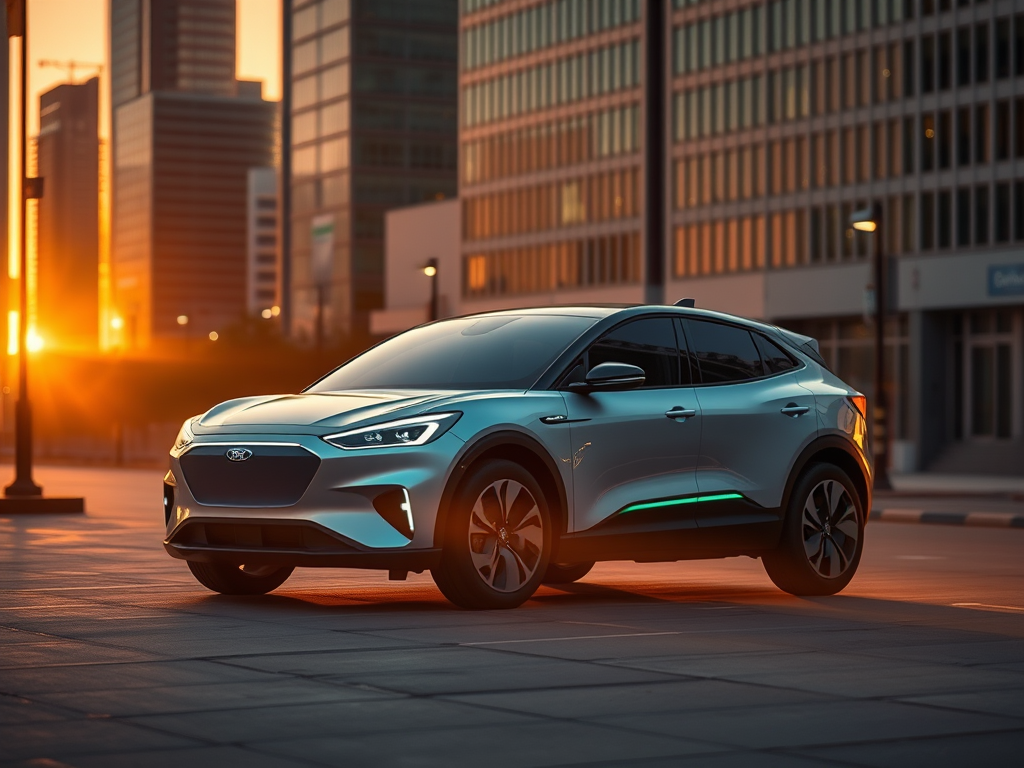

When Apple quietly abandoned its long-running attempt to build a self-driving electric car in 2021, Doug Field — one of the project’s most respected leaders — decided it was time for a new mission. He left Silicon Valley’s most secretive tech giant and returned to a company where he had once launched his career: Ford Motor.
This time, his challenge was monumental. He was tasked with helping a century-old Detroit titan reinvent itself fast enough to remain relevant in an era dominated by Chinese electric-vehicle manufacturers posting record-breaking sales and winning over global consumers.
Field immediately recognized that Ford could not rely on its traditional playbook. Progress needed to be rapid, bold and unconstrained by legacy corporate habits. So instead of trying to overhaul the entire organization at once, he carved out a separate innovation hub — a “skunk works” operation hidden away near Los Angeles, with another outpost in Silicon Valley.
There, he assembled a select group of engineers, designers and technologists recruited from Tesla, Lucid, Rivian and leading battery-technology start-ups. He promised them an environment that felt like a tech start-up, not a legacy carmaker: full creative freedom, no bureaucratic interference and a mandate to rethink electric-vehicle design from scratch. Access to the lab was so restricted that even Ford executives not assigned to the project were barred from entering.
“They needed a chance to start from zero,” Field said, referencing Tesla’s advantage in building an EV ecosystem without legacy constraints. “Ford needed a place where people could create with that same freedom.”

This push comes at a pivotal moment. The auto industry has not faced such dramatic transformation since Henry Ford introduced the moving assembly line and mass-produced Model T in the early 1900s. Just as that innovation rendered horse-drawn transportation obsolete, today’s shift toward battery-powered cars is threatening to sideline traditional carmakers — particularly as companies like BYD and Geely already produce the majority of the world’s EVs.
For Ford and other Western manufacturers, the only viable path forward is to leapfrog the competition through better batteries, more efficient motors and continuous technological breakthroughs. The people leading this charge — Field included — must reshape corporate cultures built on incremental change into organizations capable of rapid reinvention.
Yet the challenge grows more urgent by the day. Some of the most promising electric models from American and European automakers won’t reach showrooms for several years. Field’s first clean-sheet Ford vehicle is not expected until 2027. Meanwhile, millions of jobs in auto manufacturing, parts supply, maintenance and dealerships depend on whether companies like Ford can transform quickly enough.
Complicating matters further is a political environment marked by sharp policy swings. President Trump has moved to roll back fuel-efficiency standards that previously encouraged EV adoption, even as global markets pivot away from gasoline engines. For Ford, which sells the majority of its vehicles outside the United States, the shift is impossible to ignore.
“We’re already competing directly with Chinese automakers around the world,” said Ford CEO Jim Farley. “There’s no option to step back.”

Innovation on the Outside
Fortunately for Western automakers, the EV field still offers substantial opportunities for technical improvement, and many American start-ups are racing to seize them.
In Massachusetts, AM Batteries is developing machines that can drastically reduce the cost of battery production by replacing the wet slurry process used in conventional factories with a dry-powder method. This eliminates toxic by-products, shortens production time and slashes costs — benefits that could dramatically reduce EV prices if scaled successfully.
AM’s CEO, Lie Shi, says the global competition is fierce. “Engineers in China and Japan are working just as fast,” he noted.
Across the United States, dozens of young companies are pursuing similar innovations. Daqus Energy is researching organic battery materials to avoid dependence on costly metals like cobalt and nickel. Estes Energy Solutions is developing lighter ways to package battery cells. Niron Magnetics, working with Stellantis, is designing motor magnets that avoid rare earth materials sourced largely from China.
“There is still a huge frontier of untapped efficiency,” said structural engineer Brian Potter, author of “The Origins of Efficiency.”
But even the most groundbreaking technologies cannot change the industry unless established automakers learn to adopt them quickly. And that is where Field’s California team hopes to make a difference. Their first major project is a medium-size electric pickup built with a radically simplified assembly process. Instead of welding hundreds of metal pieces, Ford will cast the vehicle’s front and rear sections in giant aluminum molds — a method that reduces complexity and allows core components to be installed earlier.
The result is a more efficient factory workflow and a vehicle that Ford expects to sell for around $30,000 — only slightly higher than its popular gasoline-powered Maverick.
Elon Musk, whom Field once worked for, reportedly approved of Field’s decision to join Ford. “When I told him I was going to Ford,” Field recalled, “he said, ‘That’s good.’”
The future of the American auto industry may hinge on whether such innovations can scale.
A Race Against Time
Even though Chinese models are largely blocked from the U.S. market by tariffs, Ford faces intense pressure abroad. In Thailand, a Ford Everest gasoline SUV starts at about $37,700, while BYD offers a six-seat electric M6 for roughly $26,000. Similar dynamics are playing out in Europe and Latin America.
“This is the biggest fight of my career,” Farley said.
Meanwhile, the EV adoption gap continues to widen. Battery-powered vehicles represent about 10 percent of U.S. new-car sales, nearly 30 percent in Europe and more than half in China. Western manufacturers must also contend with unpredictable federal support. The United States pioneered much of the research behind lithium-ion batteries, yet China’s CATL — founded only in 2011 — is now the world’s largest automotive battery supplier.
“We need to stop inventing here and scaling somewhere else,” said Gene Berdichevsky, CEO of Sila Nanotechnologies, which recently began producing a new silicon-based battery material in Washington state.
Start-ups face disadvantages, too. China provides long-term industrial support for domestic automakers, while U.S. programs fluctuate with political priorities. As a result, American firms rely heavily on private capital to advance EV technology.
Western companies also move significantly slower. Launching a new vehicle platform can take up to seven years in the United States and Europe, compared to three or four years in China. BMW is trying to change that. To accelerate development of its upcoming iX3 electric SUV, executives met directly with engineering teams every month and urged cross-department collaboration. Seat-design specialists even helped find foam materials to improve battery safety.
The iX3 will arrive in the United States in 2026, with an estimated 400-mile range and ultrafast charging capability. Yet China’s Xiaomi has already released a similar panoramic display, and BYD’s newest EVs can recharge in under 10 minutes at the company’s new ultrafast stations.
Rethinking the Blueprint
Inside Ford’s Long Beach innovation center, Field and his team dismantled the traditional organizational chart. Designers, aerodynamic engineers and materials specialists share space, working together from the earliest concept stages. Field credits his upbringing — with a chemical-engineer father and an artist-musician mother — for his belief in blending aesthetics and technical performance.
His path took him through Texas, Indiana, Canada and Connecticut before studying engineering at Purdue and earning dual master’s degrees from MIT. Now, his mission is to combine Ford’s manufacturing strength with Silicon Valley-level experimentation.
Other automakers — including Honda, Mercedes-Benz and General Motors — have also ordered clean-sheet EV programs, free from past constraints. But American companies face unique hurdles. Large gas-powered trucks and SUVs remain extraordinarily profitable, while large EVs become disproportionately expensive due to battery costs.
“As EVs get bigger and less efficient, you need much larger batteries,” Field said. “The economics don’t scale.”
Some analysts argue that U.S. automakers should partner directly with Chinese companies rather than trying to outpace them alone. Shay Natarajan of Mobility Impact Partners believes collaborations may be the only realistic path to competitiveness.
Others remain optimistic about American ingenuity. Dan Cook, CEO of Lyten, is developing low-cost lithium-sulfur batteries that offer higher energy density while relying on materials abundant in the United States.
“Silicon Valley exists because people are free to innovate, experiment and fail,” Cook said. “That’s the engine of progress.”
As Field’s electric pickup moves closer to production, Ford has begun integrating more employees into the once-secret project. The team now maintains a satellite office near Ford’s headquarters in Dearborn, Michigan.
“Combining the scale and precision of a global manufacturer with the speed and creativity of a start-up,” Field said, “would make Ford a force that’s very difficult to compete with.”




Leave a Reply