
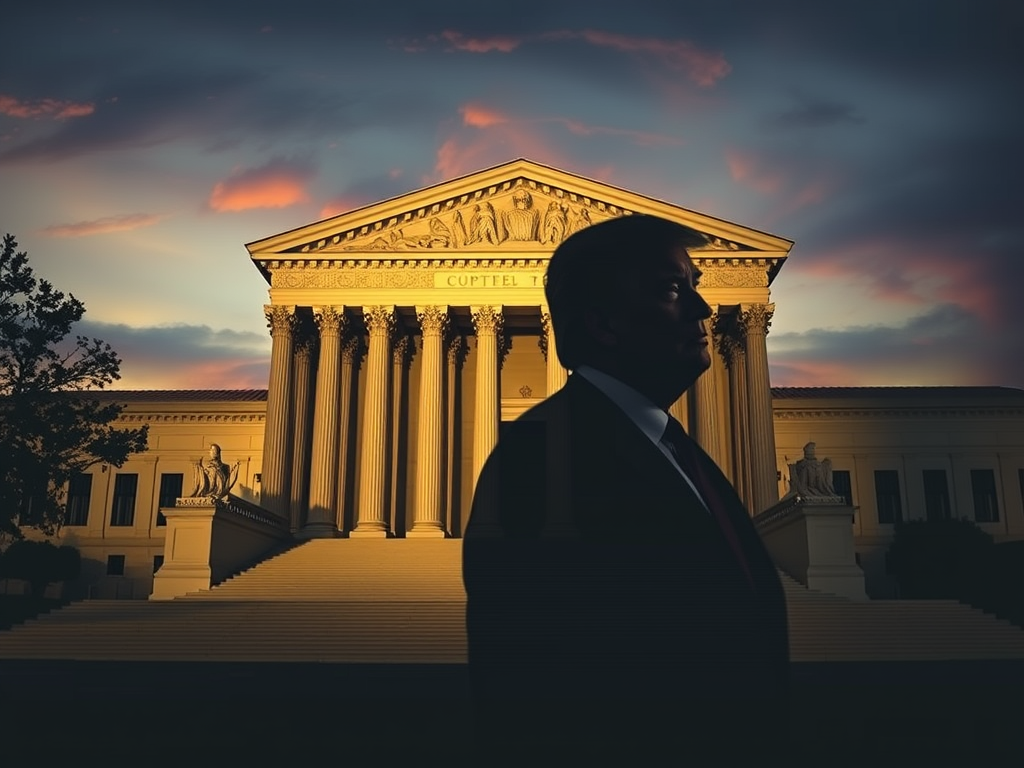

As a young lawyer in the Reagan administration, John G. Roberts Jr. was among those pushing for greater presidential influence over agencies traditionally insulated from political pressure. In a 1983 memo, Roberts urged the White House counsel to reconsider the very existence of independent government agencies, calling them a “constitutional anomaly” and suggesting they be brought under executive control.
Decades later, as chief justice, Roberts has consistently aligned with conservative colleagues in rulings that erode Congress’s ability to prevent presidents from dismissing independent regulators. That long-running legal effort reaches a critical moment this Monday, when the Supreme Court hears a case that could dramatically expand presidential authority.
At the center of the dispute is former President Trump’s effort to remove officials across multiple agencies, despite statutory protections designed to shield them from political retaliation. Recent Supreme Court decisions suggest that the conservative majority is inclined to side with Trump, potentially shifting significant power away from Congress and transforming the structure of the federal government.
Deepak Gupta, an attorney representing an agency official fired by the president in a related case, cautions against viewing the issue as a passing controversy. Many justices, he said, have long favored the argument advanced by the Trump administration — a perspective that stretches far beyond any single presidency.
This week’s case specifically examines whether Trump can remove Rebecca Slaughter, a Democratic commissioner at the Federal Trade Commission, simply because she does not support his policy goals. Under existing law, the president may only dismiss commissioners for “inefficiency, neglect of duty, or malfeasance,” a standard dating back nearly a century.
The administration is urging the court to overturn that 90-year-old precedent, arguing that Congress cannot limit the president’s ability to dismiss officials within the executive branch. A decision is expected by the end of June, and it will have sweeping effects on more than two dozen independent agencies responsible for consumer protection, labor rights, environmental oversight, and nuclear safety.
Since returning to office, Trump has repeatedly removed Democratic leaders from independent agencies—including the National Labor Relations Board, the Merit Systems Protection Board, and the Consumer Product Safety Commission—in order to install allies aligned with his agenda. Several of those officials have pursued legal challenges. While the Supreme Court has allowed many of the dismissals to stand temporarily, the Slaughter case will produce a final ruling that defines the limits of presidential power going forward.
The Court will also hear a separate case in January regarding whether Trump has the authority to dismiss Federal Reserve Board governor Lisa Cook. In that instance, the justices have permitted Cook to remain in her role for now, suggesting that the Federal Reserve’s unique history may warrant special protection from presidential interference.
The administration’s argument builds on the “unitary executive theory,” a concept championed since the Reagan era. Under that theory, all executive authority is vested solely in the president, who must therefore be able to control the actions of every officer within the executive branch.
Some conservative justices have long signaled their interest in overturning the 1935 precedent that upheld protections for independent agency leaders. In a 2010 decision, Chief Justice Roberts wrote that the president generally must have the authority to remove those who assist him, or he cannot be held accountable for their actions. A decade later, in 2020, the Court held that the structure of the Consumer Financial Protection Bureau was unconstitutional because its director could not be removed without cause. That ruling focused on agencies led by a single individual, leaving questions unresolved about multi-member commissions like the FTC.
Recent emergency orders from the Court — now with three Trump-appointed justices — suggest that the majority is prepared to extend presidential removal power even further. In a May order, the Court stated that because executive power belongs to the president, he may remove executive officers without cause, with only narrow exceptions.

The liberal justices have issued sharp dissents, accusing the majority of rushing toward a dismantling of the long-standing system that protects agency independence. Justice Elena Kagan has warned that the Court appears determined to eliminate the bipartisan foundations of several major agencies.
Founded in 1914, the FTC was intentionally designed to operate independently from presidential politics. It is governed by five commissioners, no more than three of whom may belong to the same political party. Slaughter, first appointed by Trump in 2018 and later renominated by President Biden, was confirmed unanimously to a term ending in 2029. Trump dismissed her in March, stating her work did not align with his administration’s priorities. She filed suit soon afterward.
Trump also removed another Democrat, Alvaro Bedoya, who initially challenged his dismissal but later stepped down due to financial concerns. Since March, the FTC has been composed entirely of Republican commissioners.
Lower courts have ruled in Slaughter’s favor, with a district judge calling her removal unlawful and noting that Supreme Court precedent supports her protections. Solicitor General D. John Sauer countered that such job protections violate the Constitution by impeding the president’s ability to oversee the executive branch. Agency heads, he argued, serve as extensions of the president, and the power to remove them is essential to maintaining control. He also maintained that courts lack authority to reinstate Slaughter even if the firing were found improper.
The administration’s stance is backed by former Republican attorneys general and conservative legal groups, who argue that Congress cannot delegate executive power to unelected officials beyond presidential reach.
Slaughter’s legal team, led by former Justice Samuel Alito clerk Amit Agarwal, disputes the administration’s reading of history and constitutional text. They argue that both Congress and past presidents have consistently respected limits on removal power for decades. Since the 1935 ruling, presidents from both parties — fifteen in total — have operated under the same framework, and Congress has created numerous additional independent agencies with similar protections.

Overturning the precedent now, Agarwal wrote, would destabilize core institutions that have become integral to American governance.
Former FTC chairs appointed by both Republican and Democratic presidents support Slaughter’s position, noting that presidents already have substantial influence over agency direction without needing unilateral removal authority. Additional support comes from former high-ranking officials in Republican administrations who highlight historical evidence that Congress has long possessed broad power to structure the executive branch — an argument tailored toward conservative justices who emphasize original constitutional meaning.
University of Chicago law professor David Strauss, who served in the solicitor general’s office during the Reagan years, said the case poses a real challenge for self-described originalists because the historical evidence from the founding era is ambiguous.
Though the debate among scholars continues, recent dissents by the Court’s liberal justices indicate they believe the outcome is all but certain. Justice Kagan wrote that the majority has already given the president sweeping control over several agencies and appears eager to finish the job. Until the Court formally overturns the 1935 precedent, she noted, it technically remains in force — but the direction of the Court is unmistakable.




Leave a Reply