

In Washington, scrutiny intensified this week over the legality of U.S. military strikes on boats in the Caribbean after a report alleged that American commanders ordered a follow-up attack specifically to kill survivors. The allegations have prompted rare bipartisan concern, with senior Republicans and Democrats signaling that the actions described could amount to a war crime.
The controversy stems from a Washington Post investigation published Friday. According to the report, Defense Secretary Pete Hegseth allegedly issued a verbal directive instructing military forces to kill everyone aboard vessels suspected of smuggling drugs. This guidance reportedly influenced a commander overseeing a September 2 operation to authorize a second strike aimed at eliminating those who had survived the initial missile attack.
Members of Congress, responding on multiple Sunday news programs, warned that if the reporting is accurate, the conduct of the operation may have violated U.S. and international law.
Representative Mike Turner, a Republican from Ohio and former chairman of the House Intelligence Committee, said on CBS’s “Face the Nation” that such an action, if confirmed, “would be very serious” and “illegal.” Senator Tim Kaine, a Virginia Democrat, echoed the sentiment on CBS, arguing that the allegations rise “to the level of a war crime.” On CNN, Senator Mark Kelly of Arizona was asked whether ordering a second strike to kill survivors constituted a war crime. “It seems to,” he replied.
Their remarks followed an unusual weekend of coordinated statements from both parties. Leaders on the House and Senate Armed Services Committees vowed to intensify oversight of the Caribbean operations after months of growing unease about the scope of President Trump’s escalating military campaign against drug traffickers. Turner emphasized that the Post’s reporting only deepened Congress’s concerns.
“There are very serious concerns in Congress about the attacks on what are being called drug-smuggling boats in the Caribbean and the Pacific,” Turner said. “The legal justifications provided so far have been insufficient, and this new information falls well outside anything that has been shared with Congress. There is an ongoing investigation.”
The investigations launched by both committees represent the most aggressive congressional oversight effort to date regarding the Trump administration’s maritime strikes. The operations, carried out without explicit congressional authorization, have expanded sharply since early September, killing more than 80 people. Administration officials have defended the campaign as part of a broader effort to pressure Venezuela and disrupt drug trafficking networks. They have also argued—controversially—that the actions form part of a legally recognized armed conflict with drug cartels.
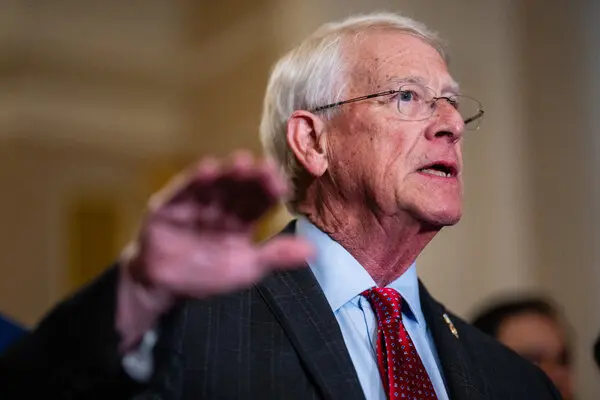
Senator Roger Wicker of Mississippi, the Republican chair of the Senate Armed Services Committee, and Senator Jack Reed of Rhode Island, the panel’s top Democrat, said late Friday that they had already issued formal inquiries to the Defense Department. “We will be conducting vigorous oversight to determine the facts,” they wrote in a joint statement.
The House Armed Services Committee soon followed. Chairman Mike Rogers, an Alabama Republican, and Representative Adam Smith of Washington, the committee’s senior Democrat, said they were committed to “rigorous oversight” and to assembling a “full accounting” of the disputed operation.
Even prior to the recent revelations, lawmakers across both chambers had questioned the legal foundation for the attacks. The Post reported that during the September 2 strike, some passengers survived the initial hit and were in the water when a second strike was ordered, allegedly in accordance with Hegseth’s directive for lethal force. The Intercept previously reported similar claims in September, noting that U.S. forces had conducted follow-up strikes to kill survivors.
Hegseth rejected the Post’s account in a Friday statement, describing it as “fabricated and inflammatory.” He defended the military’s conduct, saying officials had been transparent from the outset that the operations were designed as “lethal, kinetic strikes.” He did not, however, directly refute the allegation that he ordered the killing of survivors.
Speaking with reporters on Sunday, President Trump stood by his defense secretary. The president suggested he “wouldn’t have wanted” a second strike on survivors but repeated that Hegseth had denied the account. Trump praised his defense secretary while acknowledging the tension around the issue.
Senate Minority Leader Chuck Schumer called on Hegseth to release “full, unedited tapes” of the strikes to ensure public transparency. Several Democrats have compared the boat attacks to extrajudicial killings, arguing that such actions violate both domestic and international norms. Senator Kelly, who appears in a video released this month reminding military personnel of their obligation to refuse unlawful orders, is currently being reviewed by the Pentagon for his remarks. On Sunday, he reiterated his concerns, saying he worried about “anybody in that chain of command stepping over a line that they should never step over.” He also suggested Congress may demand sworn testimony from defense officials as part of its inquiry.
The growing willingness of some Republicans to question the legality of the operations marks a significant shift. For much of the year, congressional Republicans largely avoided challenging Trump’s defense policies. The new investigations, along with the measured criticism from figures like Turner, Wicker, and Rogers, indicate a deepening unease inside the party.

This shift also coincides with rising tension within the Republican Party itself. A small but vocal group of hard-right lawmakers, including Representative Marjorie Taylor Greene, have criticized the administration’s foreign policy undertakings, arguing they conflict with Trump’s stated “America First” philosophy. Their objections, while not directly tied to the boat strikes, reflect broader divisions over how far the U.S. military should extend its reach.
Still, many Republicans continue to back the administration’s approach. Senator Markwayne Mullin of Oklahoma, a close Trump ally and member of the Senate Armed Services Committee, dismissed the Post’s reporting outright in a Sunday interview. He characterized the president’s actions as strong leadership. “The president is protecting the United States by being very proactive,” Mullin said.
As congressional investigations advance, the dispute over the boat strikes is likely to intensify. Lawmakers in both parties say they intend to examine the full operational chain of command, the legal reasoning behind the strikes, and whether the military engaged in actions that exceeded the boundaries of lawful warfare. With bipartisan concern now firmly in the spotlight, the administration may face the most significant examination yet of its expanding use of lethal force in the Caribbean.




Leave a Reply