
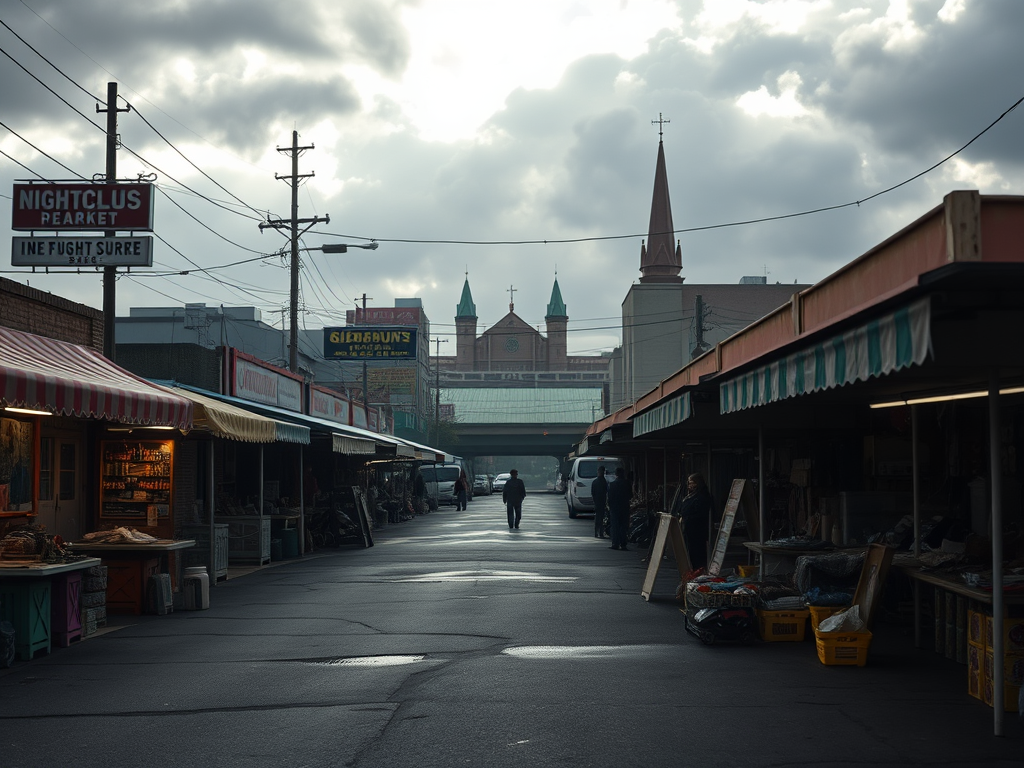

Across Charlotte, familiar weekend rhythms were abruptly disrupted. A flea market known for its vibrant community of Hispanic vendors did not open. Nightclubs that typically draw crowds with reggaeton music on Saturday nights stayed dark. Even Catholic churches, where many immigrant families regularly gather, saw unusually sparse attendance on Sunday morning.
The sudden change came after a large-scale immigration enforcement operation by the Trump administration swept through North Carolina’s largest city. The push began on Saturday, when federal agents arrested 81 people, and continued into Sunday as Border Patrol teams moved through neighborhoods, parking lots and business districts.
According to an immigrant rights organization, the figure—publicized by a senior Border Patrol official on social media—represents the largest single-day immigration arrest total in recent North Carolina history.
The operation has rattled residents across Charlotte, one of the fastest-growing metropolitan areas in the United States. Much of the city’s expansion in recent years has been fueled by immigration, particularly from Latin America. With major companies in finance, retail and manufacturing headquartered there, Charlotte has become a hub for international workers and families seeking opportunity.
This influx has placed the city squarely on the radar of Trump administration officials, who have pledged stringent enforcement in communities with significant immigrant populations.
The North Carolina initiative, informally named “Charlotte’s Web,” has already drawn controversy. Modeled after similar operations this year in Chicago and Los Angeles, it is led by Gregory Bovino, a senior Border Patrol official from western North Carolina. Local officials and advocacy groups have urged residents to document their interactions with agents amid growing concerns about aggressive tactics.
Bovino quickly labeled the operation a success, confirming the arrest count on the platform X. He also shared photos of several detainees, noting their criminal records. However, neither he nor the Department of Homeland Security has clarified how many of the 81 people arrested on Saturday had prior convictions.
Past sweeps in other major cities have shown that most detainees did not have serious criminal backgrounds. Still, the Trump administration has repeatedly emphasized that anyone living in the country without legal status is considered a criminal under federal law, and the administration has used that stance to justify wide-ranging enforcement actions.
Charlotte attorneys and immigrant support organizations say they are seeing similar patterns emerge. Those detained on Saturday included a man helping with church maintenance, employees at a Home Depot, a landscaper installing Christmas decorations and even a Hispanic U.S. citizen whose truck window was reportedly shattered by an agent.
“This is a day of shame,” said Nikki Marín Baena, co-director of Siembra NC, an immigrant advocacy group. “It is shameful for the North Carolina Republican Party to celebrate the arrival of officers carrying out what can only be described as terrorizing operations, all while repeating claims that they are targeting criminals.”
Siembra NC noted that before Saturday, the largest one-day arrest numbers in the state were 30 in June and 27 in February 2019.
North Carolina Republican Party spokesperson Matt Mercer issued a statement expressing gratitude to federal authorities, saying their actions fulfilled President Trump’s promise to remove “violent criminal illegals,” and criticized those who “stoke fear” about these operations.
For local businesses, the consequences have been immediate. Peter Han, whose family runs the Super G Mart chain of international grocery stores, said that more than half of the 80 employees at the Pineville location did not report to work on Sunday. Their absence followed a confrontation with agents in the store’s parking lot the day before.
Han recounted that around midafternoon on Saturday, five employees were collecting carts outside when several SUVs pulled up. Intimidated by armed officers, some employees ran. Han said two agents dragged a young employee to the ground, pinned his face to the concrete and placed him in a Border Patrol vehicle. Two more employees were detained. Customers shouted in alarm, and several teenage cashiers hid in the restroom out of fear.
On Sunday morning, Han saw federal vehicles passing the store again. “Everyone is on edge,” he said. “It’s already affecting our business.”
Charlotte officials and Mecklenburg County leaders had anticipated the operation and urged residents to remain calm, particularly those planning demonstrations. North Carolina Governor Josh Stein, a Democrat, expressed concern about the federal presence and reminded the public to document any misconduct.
“When we see injustice, we bear witness,” Stein said. “If you encounter inappropriate behavior, record it and contact local law enforcement, who will continue protecting our communities long after these federal agents leave.”
The arrival of Border Patrol units in a city far from the nation’s borders has left many residents confused. Federal law restricts the agency’s jurisdiction primarily to national borders and a 100-mile zone surrounding them. Charlotte lies roughly 170 miles from the nearest coastline, raising questions about the legal boundaries of the operation.
How long the enforcement effort will continue remains unclear. Federal agents are reportedly expected to head next to New Orleans. Asheville Mayor Esther Manheimer noted that her city could also be targeted in future operations.
As the week begins, Charlotte’s immigrant communities—along with employers, faith organizations and civil rights advocates—are left grappling with the aftermath of a weekend that upended daily routines and instilled a deep sense of uncertainty.




Leave a Reply