
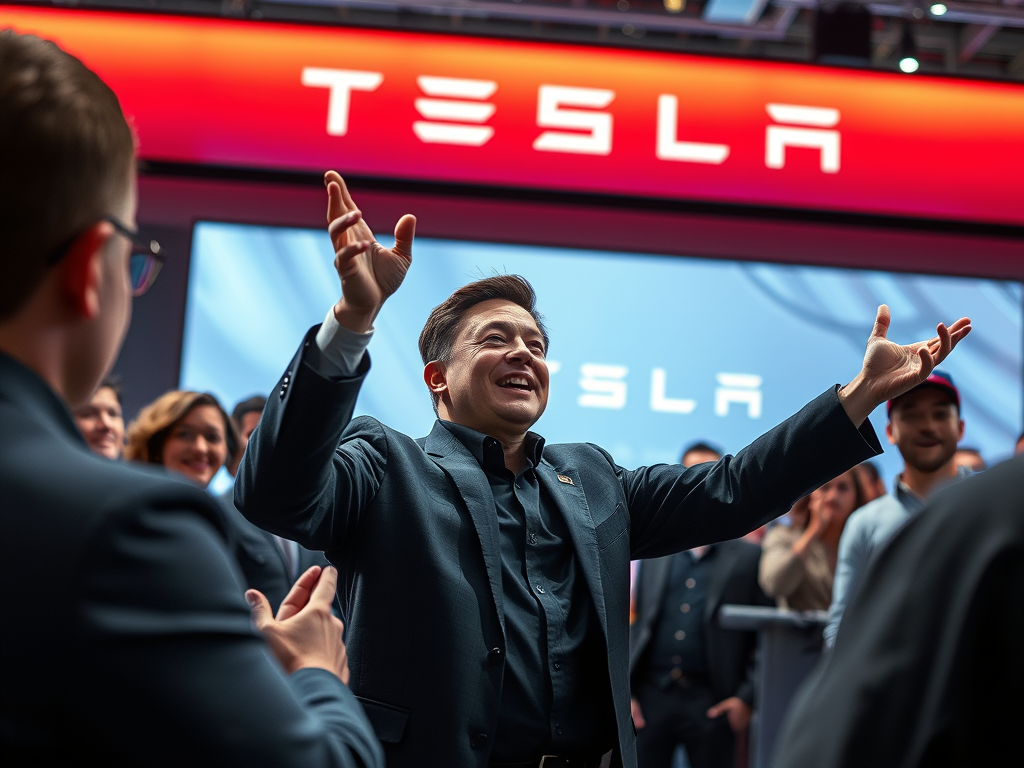

In a week that highlighted deep contradictions in America’s economic conversation, Tesla shareholders approved a compensation plan that could turn Elon Musk into the world’s first trillionaire — just days after New York voters embraced a mayoral candidate who campaigned on taxing the wealthy.
Although these events played out thousands of miles apart, they revealed a sharp divide in how Americans view wealth, power, and the future of the economy.
At Tesla’s headquarters in the Austin, Texas region, investors voted overwhelmingly in favor of a massive incentive package. If Musk meets a sweeping set of performance milestones over the next decade, he stands to receive stock awards worth nearly a trillion dollars. The company’s supporters see this as a bold bet on innovation — a belief that extraordinary vision deserves extraordinary reward.
Meanwhile, across the country in New York City, voters elevated Zohran Mamdani, a democratic socialist who ran on promises to tax large corporations and the wealthy to fund social programs like universal child care and free public transportation. His victory reflected the anxieties of many Americans struggling with rising living costs and limited economic security.
These contrasting outcomes underscore a broader national split. On one side are those who view billionaire-led innovation as essential to economic growth, including former President Donald Trump and many of Musk’s supporters, who see him as a model of bold entrepreneurship. On the other side is a growing progressive movement calling for a European-style social welfare system to address inequality.
The compensation package approved for Musk resembles a 2018 plan that was later challenged in court. It includes twelve phases of performance targets, requiring Tesla to grow its market value from roughly $1.4 trillion to $8.5 trillion and meet ambitious operational goals. Among them: selling one million humanoid robots and signing up ten million customers for Tesla’s self-driving software subscriptions.
After the vote, Musk described the moment as the start of a new era for Tesla, thanking shareholders before declaring that the company was opening not just a new chapter, but an entirely new book. Tesla shares dipped slightly in after-hours trading.
Supporters of the compensation plan argue that Musk’s leadership has already transformed Tesla from a near-bankrupt startup into a global leader in electric vehicles and clean-energy technology. To them, the scale of the rewards reflects the scale of the company’s ambitions.
One example came from Florida’s public pension authority, which publicly backed the package. The group described the incentive plan as a mechanism for “moonshot performance,” pointing to Tesla’s past success under similarly aggressive compensation structures. Others, like fund manager Cathie Wood, argued that investors would benefit immensely if the company were to achieve its goals.
Critics, however, warn that the plan concentrates too much power and too much wealth in Musk’s hands. Public pension officials in New York and California were among those opposing the proposal, expressing concerns about corporate governance and economic inequality.
New York State Comptroller Thomas DiNapoli called the plan an example of “unchecked power,” arguing that tying such an enormous payout to one individual risks creating outsized influence over the company and its future. Even Pope Leo XIV commented on the news, suggesting the plan reflected a growing moral and financial divide in society. Tesla filings show the median company employee earned around $57,000 in 2024, underscoring the vast pay disparity at play.
Musk brushed aside concerns by pointing to Optimus — Tesla’s humanoid robot project — claiming it could dramatically reshape society, eliminate poverty, and lead to breakthroughs in healthcare access. The company has not yet released the robot commercially, and Musk framed the technology as something out of a science-fiction future that he believes is within reach.
Voting results were not especially surprising, given that similar executive compensation proposals at other companies in recent years have passed, though typically with far smaller dollar values at stake. Musk also had a unique advantage: under Texas law, he was able to vote his own shares, representing about 15 percent of Tesla’s stock, potentially increasing his stake to nearly 29 percent if he achieves the performance benchmarks.
Many retail investors, who have stood by Tesla through financial ups and downs, also supported the plan. For them, Musk remains a visionary leader despite his forays into politics and controversies that alienated others.
Some large institutional investors remained silent leading up to the vote. Vanguard, Tesla’s second-largest shareholder after Musk, did not comment. BlackRock and State Street also declined to share how they would vote ahead of the meeting. Norway’s sovereign wealth fund, a major investor, publicly opposed the plan, citing concerns about excessive dilution and the company’s reliance on a single leader.
Critics additionally warned that the plan gives Tesla’s board too much flexibility to award Musk the compensation even if certain product goals fall short. Tesla’s board rejected that argument, stating that the plan was carefully designed to ensure Musk only benefits if he meets clearly defined growth and performance criteria.

This compensation debate follows a Delaware court ruling that struck down Musk’s 2018 pay plan, determining that the approval process was flawed. Tesla has appealed the decision to the state’s Supreme Court, and the legal battle continues even as this new plan moves forward.
The political implications are also significant. Musk has become an increasingly visible political figure, supporting conservative candidates and causes. Some Democrats have seized on the trillion-dollar valuation tied to Musk’s future compensation as a symbol of rising inequality and corporate power. Party strategists suggested the vote could fuel calls for progressive taxation and corporate reform.
As a separate matter, Tesla shareholders also supported — though not bindingly — a proposal encouraging the company to consider investing in xAI, Musk’s artificial-intelligence startup. The company’s legal team said the board will review the idea, noting that many votes abstained.
The week’s events illustrated two competing visions for America’s economic future: one driven by entrepreneurs pursuing technological frontiers with unprecedented personal wealth at stake, and another centered on government-supported social investment funded by higher taxes on the richest individuals and corporations. How those visions clash — or coexist — may shape the country’s economic and political landscape for years to come.




Leave a Reply