
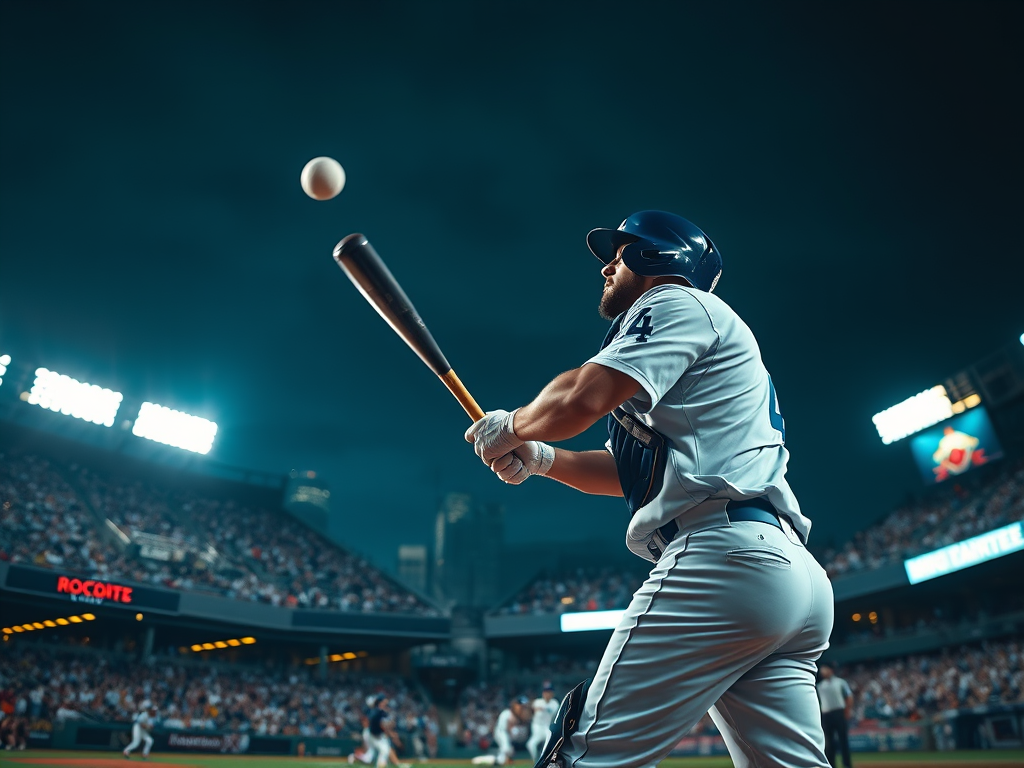

Toronto — The Rogers Centre stood still at six minutes past midnight. You could almost hear a pin drop as Los Angeles Dodgers catcher Will Smith sent a high drive sailing deep into the Toronto night. Moments later, the ball landed with a sharp thunk in the Blue Jays’ bullpen, silencing the once-raucous crowd. That swing sealed the Dodgers’ 5–4 win in Game 7 of the World Series — and their place in history as the first team since the late-1990s New York Yankees to win back-to-back championships.
Manager Dave Roberts could hardly hide his satisfaction afterward. “What this team has done is truly remarkable,” he said. “Call it a dynasty or don’t — I’m just proud of this group.”
The victory came only after the Dodgers clawed back from multiple deficits and faced the brink of elimination more than once. Yoshinobu Yamamoto, who had pitched the previous night, returned on short rest to secure the final eight outs, earning himself World Series MVP honors. Will Smith’s decisive home run and a game-saving double play from Mookie Betts finally broke the Blue Jays’ resistance.

Late-Inning Heartbreak for Toronto
Toronto’s hopes collapsed in painful slow motion. In the ninth inning, with his team just two outs away from a championship, Blue Jays closer Jeff Hoffman hung a slider that Miguel Rojas smashed over the left-field wall. A building that moments earlier pulsed with anticipation went eerily silent, replaced by the echoing cheers of the Dodgers’ dugout.
Manager Dave Roberts pressed his palms to his temples. Players streamed out of the dugout in disbelief, Rojas thumping his chest as he pointed skyward.
Yet the Blue Jays refused to surrender quietly. Bo Bichette’s single and Addison Barger’s walk brought the winning run to the plate in the bottom of the ninth. Desperate, Roberts turned again to Yamamoto — less than 24 hours after his 96-pitch outing. The Japanese ace looked shaky, hitting Alejandro Kirk to load the bases. But Rojas’s quick reflexes saved the Dodgers as he snared a sharp grounder and fired home for a critical force-out. Then Andy Pages, a defensive substitute, made a leaping catch at the wall to rob Ernie Clement of a potential game-winner.
The tension never eased. The Dodgers loaded the bases in the tenth but failed to score. Toronto’s Vladimir Guerrero Jr. doubled in the bottom of the eleventh, advancing to third before Kirk grounded out to Betts, who flipped his cap into the air as his teammates poured onto the field. The Dodgers had survived.

A Battle of Exhaustion and Willpower
Both teams had reached their physical and emotional limits. The Dodgers, with baseball’s oldest lineup, were visibly fatigued. The Blue Jays were battered by injuries — George Springer grimaced through every swing, Bichette limped the bases, and catcher Alejandro Kirk played through a hand injury from Game 6.
That earlier contest, ending in a controversial double play, had already drained both clubs. The 18-inning marathon in Game 3 left bullpens depleted and nerves frayed. Yet, after a few hours’ rest, both teams returned for one final showdown — a true test of endurance, experience, and nerve.
By early afternoon, the Dodgers tried to act as if it were just another game. First-base coach Chris Woodward quietly set up drills under a hushed stadium, while fans lined up outside. In the Blue Jays’ clubhouse, Springer rallied teammates, urging them to treat Game 7 as a privilege, not a burden. Manager John Schneider offered words of encouragement, even as veteran pitcher Max Scherzer stalked the room, his expression intense and unreadable.
Legends on the Mound: Ohtani vs. Scherzer
The night’s marquee matchup added another layer of intrigue. Shohei Ohtani, fresh off pitching in Game 4, volunteered to take the mound again, taking advantage of MLB’s two-way player rule that allowed him to stay in the lineup as designated hitter. On the other side stood Max Scherzer, the fiery 41-year-old who had pitched in the 2019 World Series Game 7 for Washington and now sought one last shot at glory.
When Ohtani and Scherzer emerged from their dugouts — Ohtani to boos, Scherzer to cheers — it felt like an old-school duel. Ohtani opened with a single at the plate but was stranded on base as Scherzer escaped the inning unscathed. Ohtani’s first pitches on the mound were erratic; his off-speed offerings missed their marks, though his fastball still touched triple digits.
In the second inning, Ohtani’s control wavered further. A walk to Bichette and consecutive singles loaded the bases, but the Blue Jays couldn’t capitalize. By the third, the tension broke. Springer led off with a single, Guerrero was intentionally walked, and Ohtani hung a slider over the plate. Bichette launched it deep into center — a no-doubt, three-run home run that sent the crowd into a frenzy. Guerrero greeted Bichette at home plate, embracing him as the stadium roared.

The Middle Innings: Chaos and Clashes
Scherzer worked through traffic, saved repeatedly by his defense. Guerrero’s diving stop at first base and Daulton Varsho’s diving catch in center kept the Dodgers from breaking through. In the fourth inning, tempers flared when a fastball struck Andrés Giménez on the wrist. The benches and bullpens emptied as players exchanged words, the chaos briefly halting the game.
The atmosphere remained charged through the late innings. Both bullpens labored under exhaustion. In the seventh, rookie Trey Yesavage — who had struck out 12 Dodgers in Game 5 — returned to the mound. He walked Ohtani but induced a double play from Freeman, igniting the crowd once more. For a moment, it felt like destiny was on Toronto’s side.
A Storybook Ending for Los Angeles
But destiny had other plans. In the ninth, Hoffman’s fateful pitch and Rojas’s home run rewrote the night. Smith’s 11th-inning blast delivered the final blow, a soaring arc that ended in stunned silence. The Dodgers’ dugout erupted; the Blue Jays, hearts broken, watched as their dream slipped away.
As Betts tossed his cap skyward and the Dodgers celebrated at center field, exhaustion gave way to elation. Players hugged, some collapsing to their knees, others simply staring upward in disbelief.
For Toronto, the pain was immediate and deep. They had come within a single pitch — a single perfect slider — of their first championship in more than three decades. Instead, they will be remembered as valiant opponents in a classic series that showcased baseball’s raw emotion and unpredictability.
A Triumph Beyond Numbers
For the Dodgers, the victory was more than a repeat title. It was a statement — proof that their blend of star power, resilience, and international talent could withstand anything. Yamamoto’s heroics, Betts’s composure, Smith’s clutch swing, and Ohtani’s relentless drive combined to create a moment that will be retold for generations.
As Roberts put it, “We’ve been through everything — injuries, doubt, pressure — and yet, this group never stopped believing. That’s what champions do.”
In a sport often accused of losing its magic, these seven games between Los Angeles and Toronto reminded fans of why baseball endures. It was unpredictable, emotional, and human — a game of inches, courage, and heart.
And when Will Smith’s ball disappeared into the bullpen just past midnight, it wasn’t just the end of a game. It was the sound of history being made — clear as the ring of a bat and the echo of a dream fulfilled.




Leave a Reply