

URBANA-CHAMPAIGN, October 2025 — In a twist that underscores the growing intersection of artificial intelligence and higher education, dozens of undergraduates at the University of Illinois Urbana-Champaign recently attempted to apologize for alleged cheating and attendance violations—only to reveal they had not written the emails themselves. Instead, AI had composed the messages on their behalf, according to the professors overseeing the course.
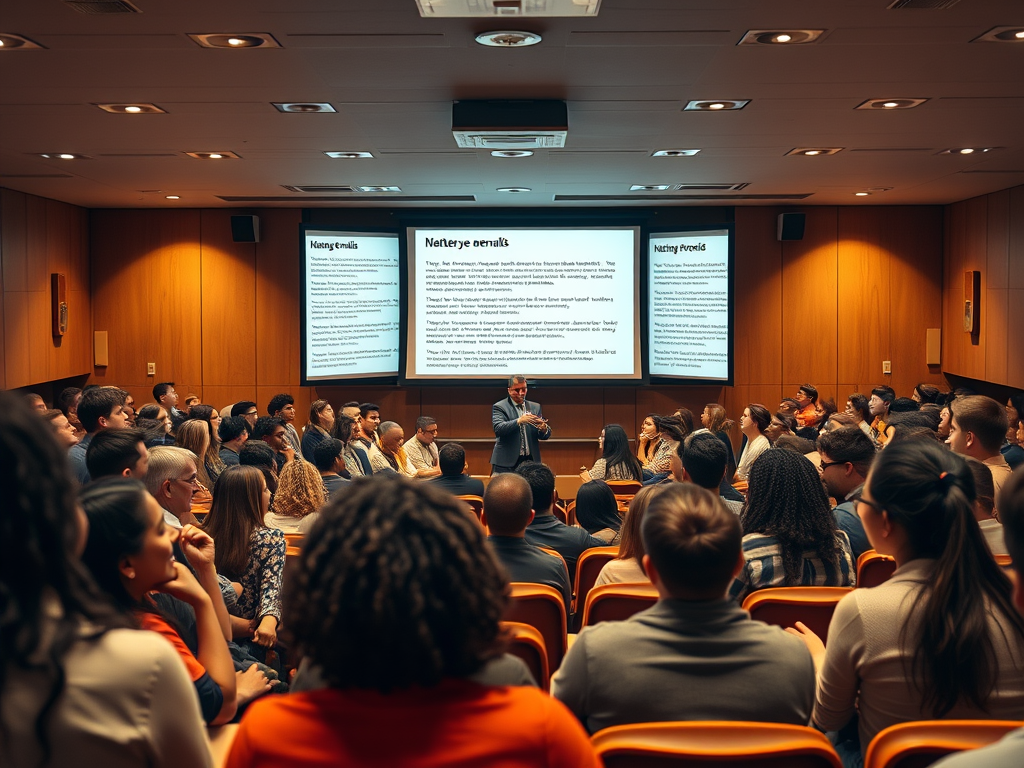
The professors, Karle Flanagan and Wade Fagen-Ulmschneider, known to their students and social media followers as the Data Science Duo, discovered the situation when they received multiple identical emails that appeared, at first glance, to be sincere admissions of wrongdoing. The revelation came to light dramatically on October 17, when the professors projected the emails onto a screen in a large lecture hall and read them aloud to the class, much to the amusement of students and observers.
“They all started with, ‘Dear Professor Flanagan, I want to sincerely apologize,’” Professor Flanagan recalled. “At first, it seemed like they were taking responsibility. Then the second, third, and fourth emails came in, and suddenly the apologies felt less genuine. They all looked exactly the same.”
The incident has captured attention not only for its humorous aspects but also because it raises significant questions about academic integrity in the age of AI. Educational institutions nationwide are increasingly confronting the challenges posed by machine learning tools that can generate essays, homework, and, in this case, email correspondence.
Instead of punishing the students, the professors opted to turn the episode into a learning opportunity. They emphasized the importance of genuine accountability and honesty in academic work. Videos from the lecture show students laughing as the emails are displayed, reflecting their awareness of the absurdity of the situation.
“They were laughing in the background, knowing full well this was something they might have done themselves,” Professor Fagen-Ulmschneider said.
Currently, the university’s student code addresses traditional forms of cheating and plagiarism, but it does not explicitly govern the use of AI for academic or personal communications. Allison Copenbarger Vance, a deputy associate chancellor, explained in an email that disciplinary action was not warranted in this case.
“At the University of Illinois Urbana-Champaign, it is up to faculty to clearly define the boundaries for AI use in their syllabi,” Vance wrote. “In this instance, the students’ actions did not violate any policies outlined in Professor Flanagan’s syllabus, so no disciplinary measures were taken.”
The introductory data science course in question is one of the largest at the university, with roughly 1,200 students split across two sections meeting on Monday, Wednesday, and Friday. Attendance and participation make up four percent of the final grade, which largely affects first-year students.
To encourage engagement, Professors Flanagan and Fagen-Ulmschneider developed the Data Science Clicker, an application that requires students to log in on their devices and answer a multiple-choice question within a limited time, usually around 90 seconds, when prompted by a QR code. The tool is intended to monitor participation in real time and encourage students to attend lectures consistently.
However, suspicions arose in early October when the professors noticed that students absent from class were still providing correct responses. Further investigation revealed unusual patterns: frequent page refreshes and multiple IP addresses linked to single student accounts. Upon reviewing server logs, it became evident that some students had circumvented the system, likely receiving tips about when to answer questions.
“Some students might travel to Chicago on Fridays, yet they were still logging answers from afar,” Professor Fagen-Ulmschneider, 40, explained. “We wanted to verify engagement, so we began checking server data and IP addresses to see what was really happening.”
More than 100 students received warning emails from the professors, making it clear that academic integrity standards were not being met. “We take this very seriously and wanted to provide a warning before it escalated further,” said Professor Flanagan, 36, who is a teaching associate professor in the Department of Statistics.
Not all students were surprised by the turn of events. Alex Von Holten, 20, a sophomore who took the class in the spring semester, suggested that the structure of a large introductory lecture could encourage disengagement.
“It’s easy to just sleepwalk through this class,” Von Holten said. “It’s hard not to get an A unless you genuinely skip every lecture and stop caring about the material.”
Vinayak Bagdi, 21, who completed the course as a freshman four years ago and graduated in May with a degree in statistics, recalled the lasting impact the professors had on his understanding of data science. He praised their teaching methods, noting that they made the subject approachable without overwhelming students.
“The professors really invested in our success. They never made you feel lost or buried under assignments,” Bagdi said. “Which is why it’s especially disappointing to see students using AI to bypass even the basic act of apologizing.”
Bagdi expressed frustration that the students could not even compose a sincere message to the professors. “You’re not attending class, and then you can’t even write an honest email to apologize? Out of all classes at the university, why skip that one?”
The incident highlights a broader challenge facing educators: how to integrate AI responsibly in academic settings while maintaining integrity. As machine learning tools become more sophisticated, students may increasingly rely on them for assignments, emails, or communications in ways that blur the line between assistance and misrepresentation.
For the University of Illinois professors, the episode served as both a cautionary tale and a teaching moment. By sharing the experience publicly, they have sparked conversation about the responsible use of AI and the value of authenticity in academic life. Students left the lecture hall with a clear, if slightly humorous, lesson: genuine accountability cannot be outsourced to a machine.

The story also raises questions for higher education policy-makers. While AI has the potential to enhance learning, automate routine tasks, and assist students in managing coursework, there are no standardized guidelines on its use across universities. Individual faculty discretion currently dictates what is acceptable, creating a patchwork of rules and expectations.
For students navigating this new landscape, the message is clear. AI can be a helpful tool, but it cannot replace personal responsibility. As the University of Illinois example shows, when the digital meets the ethical, the consequences—even if humorous—can serve as a memorable reminder of the principles underlying academic work.
In the end, the professors’ approach avoided punishment but reinforced accountability. The incident has become a touchpoint for discussions on AI in education, highlighting both its possibilities and its pitfalls. For students and educators alike, the challenge is finding a balance between innovation and integrity, ensuring that technology serves learning rather than undermining it.
The October 17 lecture and the ensuing online attention may become a case study for universities nationwide as they confront the rapid integration of AI into classrooms, assignments, and student communications. While some may laugh at the absurdity of AI-generated apologies, the underlying message is serious: authenticity matters, even—or perhaps especially—in a digital age.




Leave a Reply