

Israel on Sunday carried out its most intense wave of attacks on Gaza since a fragile cease-fire came into effect a week ago, temporarily halting humanitarian aid after accusing Hamas of breaching the truce by attacking Israeli soldiers, killing two in the process.
According to a statement issued by the Israeli military after nightfall, forces had “begun the renewed enforcement of the cease-fire” following a series of substantial strikes against Hamas targets. The military said these actions were in accordance with directives from the government and represented a measured response to the escalating violence.
Sunday’s surge in hostilities marked the most serious challenge to the cease-fire, negotiated under significant international pressure and formally signed with the participation of former President Donald Trump. The temporary suspension of aid reflected the heightened intensity of Israel’s military operations, though officials indicated it would resume once the strikes concluded. An Israeli official, speaking on condition of anonymity due to the sensitivity of the matter, clarified that while aid was initially halted “until further notice,” authorities later appeared to temper that stance.
The escalation began early Sunday when Palestinian militants attacked Israeli troops stationed in areas designated under the cease-fire. The assault resulted in the deaths of two Israeli soldiers, prompting an immediate and forceful response from the Israeli military. Gaza’s health authorities reported 44 Palestinian fatalities throughout the territory on Sunday, highlighting the devastating human cost of the renewed hostilities.
Both Israel and Hamas accused each other of violating the cease-fire, reflecting tensions that have escalated over the past three days. Despite the clashes, both parties publicly affirmed their commitment to maintaining the agreement, signaling a precarious balance between adherence and confrontation.

The Israeli military reported that Palestinian fighters had fired an anti-tank missile and gunfire at Israeli troops in the Rafah area of southern Gaza, which remains under Israel’s partial control. The military described these actions as “a blatant violation” of the truce, justifying its subsequent strikes aimed at neutralizing threats, dismantling tunnel networks, and targeting other military infrastructure.
Throughout Sunday afternoon, Israeli forces intensified operations, targeting dozens of Hamas positions across the Gaza Strip. Military statements also noted that a group of individuals identified as armed militants was struck while attempting to cross the cease-fire line in northern Gaza.
Israeli Prime Minister Benjamin Netanyahu attributed the surge in violence to Hamas. After consulting with his defense minister and security officials, Netanyahu instructed the military to act decisively against militant targets in Gaza. Meanwhile, Hamas’s military wing released a statement asserting that it had “no knowledge of events or clashes in the Rafah area” and that it had lost contact with fighters in the region months ago.
Hamas further reported that a delegation of its leaders arrived in Cairo on Sunday to follow up with mediators and Palestinian groups regarding the implementation of the cease-fire. In a separate statement, Hamas official Izzat al-Rishq accused Israel of repeatedly violating the agreement and manufacturing “flimsy pretexts” to justify its attacks.
The current escalation follows an incident on Friday when the Israeli military fired on a vehicle in northern Gaza, resulting in at least nine deaths, including four children, according to Gaza’s rescue services affiliated with the Hamas-run Interior Ministry. Israel stated that the vehicle had crossed a demarcation line where its forces had withdrawn under the cease-fire and had ignored warning shots, prompting military action.
The Israeli military has repeatedly warned civilians to avoid restricted zones, but many Gazans, affected by infrastructure collapse, lack of internet access, or unclear maps, have inadvertently entered areas under Israeli control, further complicating enforcement of the cease-fire.
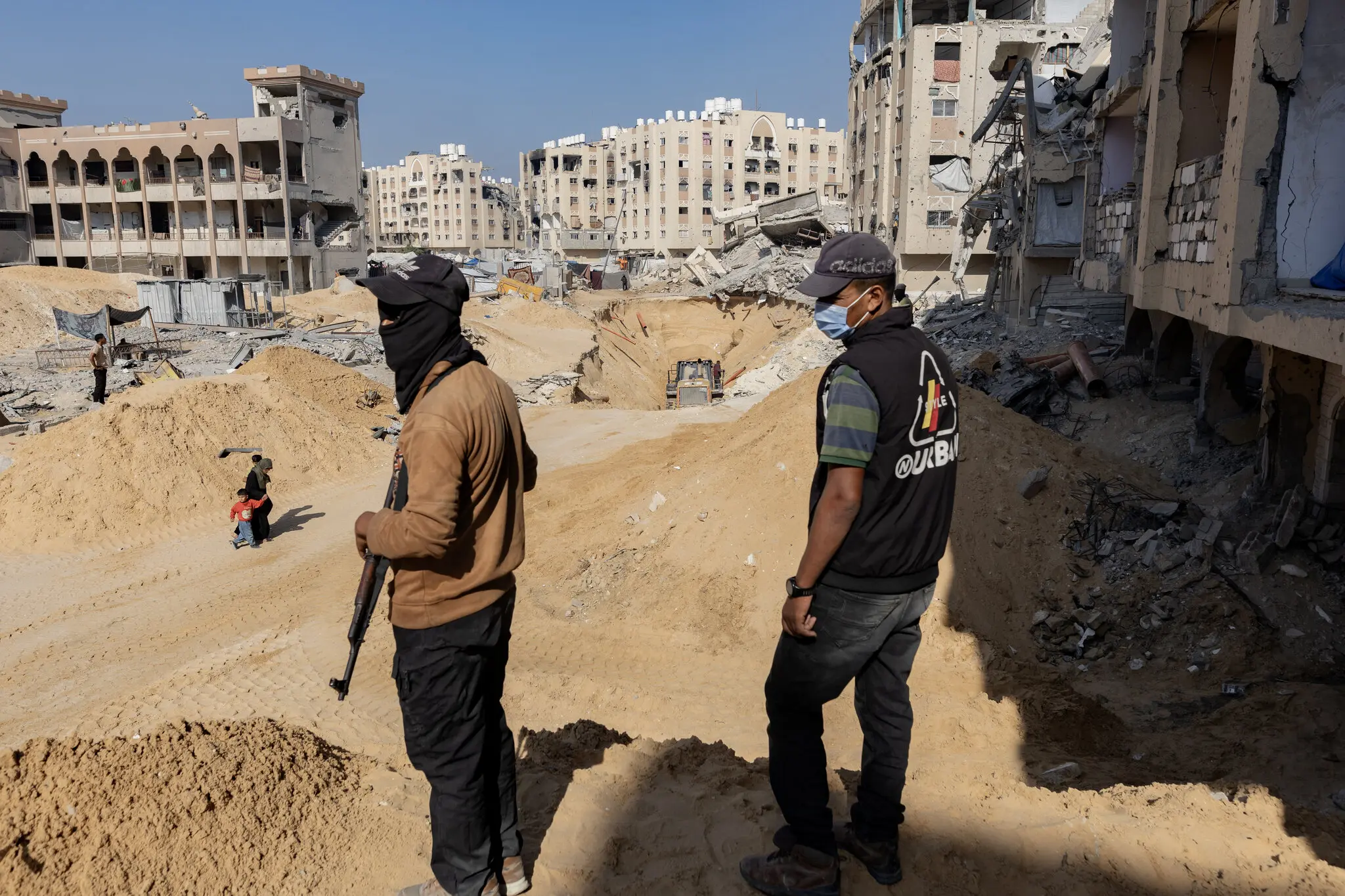
A key component of the cease-fire agreement was a substantial increase in humanitarian aid, with trucks entering Gaza expected to rise from 300 to 600 daily. The enclave, home to roughly two million people, faces severe food shortages, widespread displacement, and extensive destruction of homes and infrastructure. Many neighborhoods remain flattened, leaving residents without adequate shelter.
Following Sunday’s violence, hardline members of Netanyahu’s government called for a full resumption of offensive operations against Hamas, the militant group responsible for the October 7, 2023, attacks that ignited the current war. Itamar Ben-Gvir, Israel’s ultranationalist Minister of National Security, urged that combat be resumed “at full strength,” warning that any assumption of Hamas compliance with the cease-fire could jeopardize Israeli security. Ben-Gvir had previously opposed the cease-fire, advocating for continued operations until Hamas was fully neutralized.
Israel maintains control over approximately half of Gaza and has accused Hamas of using tunnels beneath these areas to conduct military activities. Israeli officials have also expressed frustration over the slow return of deceased captives’ remains, a key stipulation of the cease-fire.
Over the past week, Hamas released the last 20 living Israeli hostages and handed over the bodies of 12 captives, according to the Israeli government. One additional body provided by Hamas was found by forensic experts not to match any of the known captives. Meanwhile, Israel has freed nearly 2,000 Palestinian prisoners and returned the remains of over 100 Palestinians to Gaza.
Two hostages whose bodies were delivered late Saturday have been identified as Ronen Engel, 54, and Sonthaya Oakkharasri, 30, a Thai national working in agriculture in the Israeli border community of Be’eri. Engel was killed in Nir Oz, another border area affected during the Hamas attacks in 2023, and his remains were transferred to Gaza. Sixteen other captives’ bodies remain in the enclave, with Hamas indicating that recovery will be challenging due to rubble and the need for heavy equipment.
Sunday’s events underscore the fragility of the cease-fire and the complex humanitarian and security challenges facing Gaza. While both sides assert their commitment to peace, repeated violations and military actions highlight the tenuous nature of the agreement. The humanitarian situation remains critical, with the population enduring shortages, displacement, and ongoing violence, reflecting the urgent need for both adherence to the truce and accelerated delivery of aid.
The situation continues to evolve, with Israeli authorities maintaining that they will act decisively to protect their troops and territory, while Hamas navigates the delicate task of implementing cease-fire commitments amidst ongoing hostilities and internal challenges.




Leave a Reply