
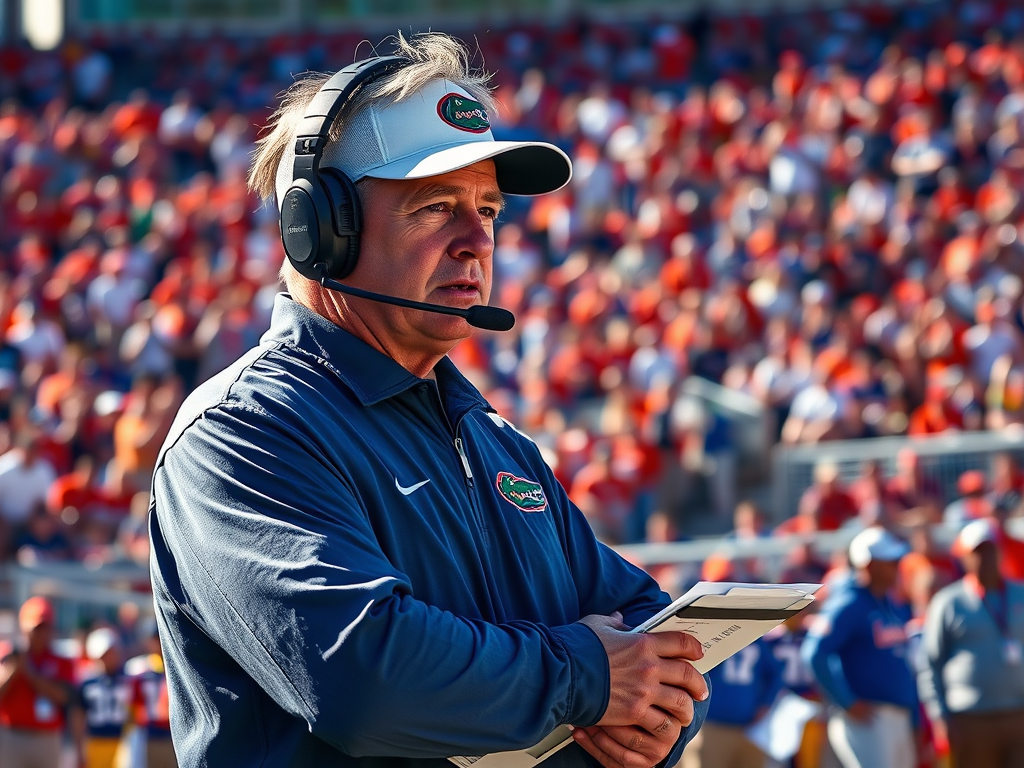

No one was taken aback when the University of Florida decided to part ways with head coach Billy Napier on Sunday. While Napier managed to save his job last year despite a rocky start, the Gators’ early struggles this season ultimately sealed his fate. Even though Florida secured a victory over Mississippi State on Saturday, Napier’s overall record of 22-23 across four seasons failed to inspire confidence. The team currently sits at 3-4 and will enjoy a bye week before taking on Georgia, leaving fans and analysts alike to ponder the future direction of the program.
The question of whether Florida is a more desirable position than Penn State depends largely on perspective. Historically, the Gators have captured three national championships since the Nittany Lions’ last title, and the state of Florida provides a fertile recruiting ground, offering access to a wealth of high-caliber talent. However, the path to the College Football Playoff in the Southeastern Conference is arguably steeper than in the Big Ten. The SEC boasts a greater concentration of elite programs, making it a more challenging environment for any head coach aiming for consistent national success.
Florida now has a variety of compelling options from within the FBS coaching ranks, particularly those with an offensive mindset and, in some cases, strong ties to the state. Lane Kiffin, currently leading Ole Miss, is among the top candidates. His brash personality will inevitably draw comparisons to Florida legend Steve Spurrier, though Kiffin’s outspoken nature tends to manifest more on social media than during press conferences. Since his tenure at Florida Atlantic University, where he captured two conference titles, Kiffin has successfully reinvented his coaching image. Settled comfortably with his family in Oxford, the 50-year-old has guided the Rebels to three top-11 finishes in the past four seasons. With Ole Miss standing at 6-1 and possessing a legitimate playoff opportunity this year, timing could complicate any potential move, should Kiffin express interest in the Florida position.
Another high-profile candidate is Jedd Fisch, the 49-year-old head coach of Washington and a Florida alumnus. Fisch first entered the coaching world as a student assistant under Spurrier and has maintained deep connections within the state ever since. He has experience coaching at Miami and with the Jacksonville Jaguars, and he orchestrated a remarkable turnaround at Arizona, leading the Wildcats from a struggling program to a 10-3 record and a No. 11 ranking in 2023. In less than two years at Washington, Fisch has demonstrated his ability to elevate a team’s performance, currently guiding the Huskies to a 5-2 record behind the promising sophomore quarterback Demond Williams Jr. Fisch’s strong affinity for Florida makes him an especially intriguing candidate.
Missouri head coach Eli Drinkwitz, while not directly connected to Florida, has established a strong reputation over six seasons in Columbia. At 42, Drinkwitz has compiled a 27-6 record over the past three years, a level of sustained success that raises questions about whether he might be tempted to move to a program with Florida’s national title pedigree. The Tigers have experienced only four top-15 seasons in nearly half a century, making Florida’s history and resources potentially very appealing for a coach looking to compete at the highest level.
Louisville’s Jeff Brohm is widely regarded as one of the best offensive play callers in college football. Fresh off a notable victory over unbeaten Miami, Brohm has amassed a 4-4 record against top-five competition, an impressive feat for someone coaching outside traditional powerhouse programs. At 54, he has led his alma mater to a 24-9 record, yet questions remain about whether he would leave a stable position with a manageable path to the College Football Playoff for a more challenging assignment in Gainesville. Nevertheless, the potential to work with more talented recruits could make the Florida opportunity enticing.
Former Penn State head coach James Franklin also enters the conversation. Recently dismissed from his position, Franklin is eager to return to coaching and has a strong track record in the SEC. At Vanderbilt, he led a program that had not appeared in the AP Top 25 for over six decades to two top-25 finishes in three years. At Penn State, he posted a 104-45 record and stabilized a program recovering from NCAA sanctions, achieving five top-10 finishes over a decade. Although hiring a recently fired coach is unusual for a high-profile program, Franklin’s experience and familiarity with SEC competition make him a viable candidate, particularly given the advantage of potentially starting earlier than other contenders.
Rhett Lashlee, who led SMU to a College Football Playoff appearance last year, is another name to consider. While his alma mater, Arkansas, represents a tempting SEC position, Florida offers greater resources and a higher ceiling for sustained success. At 42, the former Miami offensive coordinator faces a decision between returning home or embracing an opportunity in Gainesville, though it is not guaranteed he would leave Dallas given his current achievements.
USF head coach Alex Golesh also warrants attention. The 41-year-old guided his Bulls to a victory over Florida earlier this season and brings prior SEC experience as Tennessee’s offensive coordinator under Josh Heupel. Golesh has transformed a struggling USF program, previously 4-29 over three years, into a 6-1 team this season, compiling a 20-13 record overall. Despite his offensive acumen, Florida may exercise caution in hiring another coach from the mid-major ranks after Napier’s tenure ended without producing consistent results.
The Gators’ coaching search underscores the complex balancing act between proven experience and the allure of promising, innovative talent. Florida’s administration faces a series of strategic decisions, weighing candidates with strong local and national connections, extensive SEC experience, or demonstrated ability to revitalize programs. Each option comes with inherent risks and potential rewards, from Kiffin’s national prominence and flair to Fisch’s deep personal ties to the university, Drinkwitz’s sustained success in a mid-tier SEC program, Brohm’s offensive mastery, Franklin’s proven SEC credentials, Lashlee’s recent playoff achievement, and Golesh’s mid-major resurgence.
Beyond individual qualifications, the broader context of college football’s current landscape influences the selection process. Florida’s recruitment pipelines, the challenges of navigating the SEC, and the increasing pressure to compete in a playoff-driven system all factor into the decision. The next head coach must possess not only tactical acumen but also the ability to energize the fan base, develop talent, and maintain program stability.
The Gators’ choice will likely reverberate across the SEC and beyond. A strong hire could restore Florida’s prominence, positioning the team for consistent playoff contention and deep runs in bowl games. Conversely, a misstep could prolong instability, leaving the program mired in mediocrity. With the bye week providing a brief pause, speculation will continue to intensify, and the pressure mounts on Florida’s administration to identify the right candidate to lead the program forward.
Ultimately, Florida’s coaching decision will define the next chapter of Gators football. The program’s rich history and national title pedigree present both an opportunity and a challenge. Selecting a coach capable of navigating the rigorous SEC schedule, leveraging Florida’s recruiting advantages, and achieving sustained success will be critical. As the search unfolds, fans, analysts, and college football enthusiasts will closely monitor each development, knowing that the right hire could reshape the SEC landscape and influence the national championship conversation for years to come.




Leave a Reply