
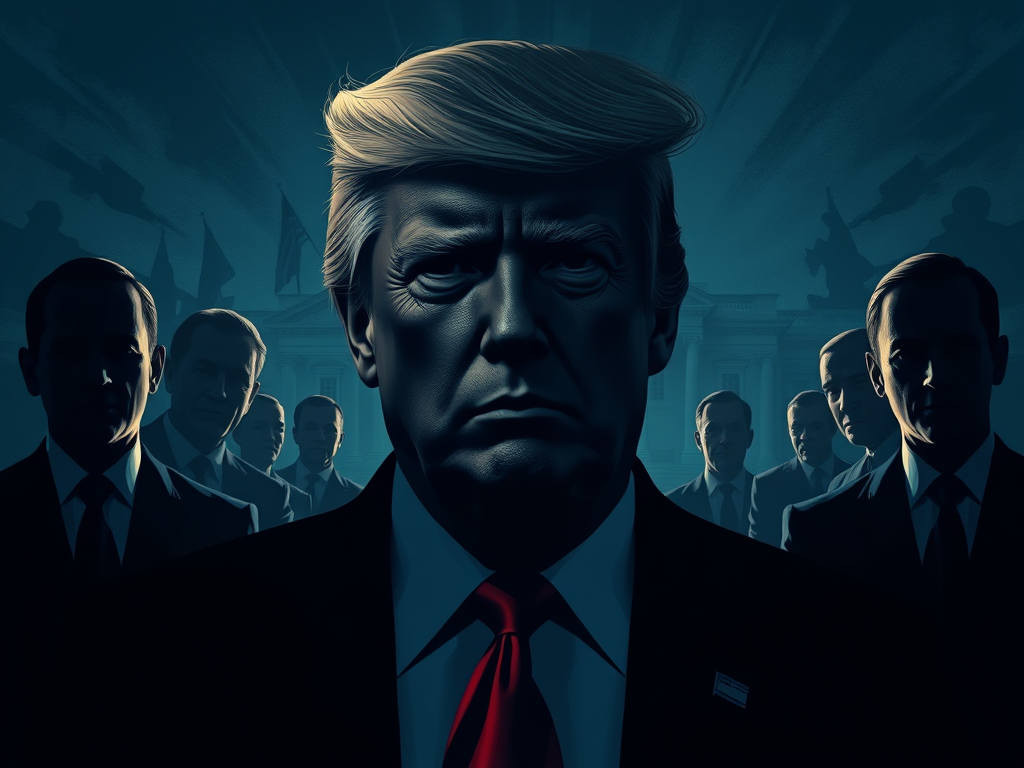

The demand by former President Donald Trump to indict ex-FBI Director James B. Comey sent a ripple of unease across Washington. Those who have found themselves on Trump’s unofficial “enemies list” now watch closely, knowing the precedent being set could be used against them in the future. Yet in an ironic twist, even the current FBI Director, Kash Patel—one of Trump’s most loyal allies—may not be immune from the very tools of retaliation that the former president has unleashed.
A Dangerous New Standard in American Politics
Historically, American presidents respected long-standing democratic norms, avoiding overt attempts to criminalize political rivals. Trump’s campaign to prosecute opponents, punish dissenting voices, and leverage government agencies against critics has shattered that restraint. These actions are reshaping the boundaries of presidential power, leaving many Republicans and Democrats alarmed about what comes next.
The risk is straightforward: once one political party pushes the limits of executive power, the opposition is tempted to respond in kind. The very instruments of retaliation that Trump employs today may be wielded tomorrow by his adversaries. Power, once claimed, is rarely relinquished.
Sarah Matthews, a former White House deputy press secretary who resigned after the January 6th Capitol attack, underscored the risk: “If a Democrat wins in 2028, what stops them from unleashing the Department of Justice on Trump officials or using the FCC to silence Fox News? Trump is setting a precedent that will come back to haunt conservatives.”
Her warning echoes a broader concern among legal scholars and policymakers: America may be entering an era of tit-for-tat governance, one where every incoming administration seeks revenge on its predecessor—a cycle more common in authoritarian regimes than in Western democracies.

Free Speech Under Pressure
One flashpoint for this debate came after the assassination of right-wing activist Charlie Kirk. Trump threatened to investigate left-leaning groups and reportedly pressured the Federal Communications Commission (FCC) to punish late-night host Jimmy Kimmel for his commentary. These moves sparked outrage, even among conservative allies.
Senator Ted Cruz, a Republican from Texas, condemned such tactics, likening them to mafia-style intimidation. “If we normalize this, Democrats will silence us ruthlessly when they get the chance,” Cruz warned.
Former Fox News host Tucker Carlson added his voice, cautioning that Trump’s campaign against so-called “hate speech” could erode fundamental free speech protections. “If they can dictate what you say, they’re dictating what you think,” Carlson argued.
The implications are stark: if one president can silence media figures or weaponize regulatory agencies, future presidents may feel entitled to do the same.
Expanding Presidential Power
Beyond the pursuit of political enemies, Trump has asserted sweeping executive powers. He has challenged Congress’s authority over spending, threatened to fire leaders of independent agencies, and even hinted at using federal troops within American cities. These claims of unilateral power are not temporary; they reshape the office of the presidency itself.
Brendan Nyhan, a government professor at Dartmouth College, highlighted the bipartisan danger: “Do Republicans really want to give a future President Alexandria Ocasio-Cortez the same unchecked powers? We shouldn’t trust any administration with these extraordinary tools.”
His point reflects a hard truth: today’s power grab may become tomorrow’s weapon in the hands of political rivals.

Will Democrats Follow the Same Path?
While it remains uncertain whether a future Democratic administration would fully embrace such tactics, frustration is already rising on the left. A survey by Bright Line Watch, a nonpartisan democracy watchdog, found that support among Democrats for restricting outlets like Fox News has jumped from 37% in 2021 to 50% today.
That shift reflects a growing appetite for retribution among Democratic voters, fueled by Trump’s continued defiance of democratic norms. If one side abandons restraint, can the other be expected to hold back?
The Trump Defense: Retaliation as Justification
Trump and his allies argue that Democrats “weaponized government first,” pointing to the four criminal indictments he faced after leaving office in 2021. In their view, prosecuting Trump justifies his campaign to pursue political rivals.
“Democrats went after me for four years,” Trump said in a recent interview. “Now we’re doing the same.”
White House spokeswoman Abigail Jackson reinforced this message, framing Trump’s actions as a correction to Biden-era overreach: “Democrats have no right to complain. Biden politicized the Justice Department first. President Trump is restoring fairness.”
But critics counter that Biden’s administration never directly pressured prosecutors the way Trump has openly done. While Trump personally demanded prosecutions and dismissed officials who resisted, Biden largely kept his distance—even when Attorney General Merrick Garland’s caution frustrated the White House.
A Tale of Two Justice Departments
Under Biden, the Department of Justice prosecuted Democrats as well as Republicans, including a New Jersey senator, the mayor of New York, multiple lawmakers, and even the president’s son, Hunter Biden.
Trump, by contrast, has targeted only his adversaries. His Justice Department revoked security clearances, stripped personal protection from critics, and ordered investigations into former aides who spoke against him. Career FBI agents and prosecutors were purged if they were seen as disloyal.
This difference highlights the crux of the debate: is Trump defending democracy, or reshaping it into a tool of personal power?
The Authoritarian Playbook
Ruth Ben-Ghiat, a historian at New York University and author of Strongmen, argues that Trump’s actions fit a familiar authoritarian pattern. Leaders like Trump, she said, “transform institutions into instruments of personal vengeance.”
The distinction is crucial. An FCC review of disinformation networks that endanger public health is legitimate governance. But silencing comedians who mock the president is an abuse of power. The former is policy; the latter is vendetta.

Kash Patel in the Spotlight
Even Trump’s allies may not escape scrutiny. Kash Patel, the current FBI director, assured Congress that he would not politicize the bureau. Yet Democrats accuse him of lying under oath, pointing to his sweeping purge of FBI personnel.
“You lied to us,” Senator Richard Blumenthal told Patel during a hearing. Patel denied wrongdoing, claiming he merely removed agents who “failed to uphold their constitutional duties.”
But Patel’s insistence may not protect him if political power changes hands. The same precedents he defends today could be turned against him tomorrow.
A Nation at a Crossroads
The broader concern is not just about Trump or Biden, but about the health of American democracy itself. If each administration treats government institutions as weapons of retribution, public trust will erode, and democratic checks and balances will weaken.
Once broken, these norms are difficult to restore. As history shows, authoritarian systems rarely emerge overnight; they develop gradually, as small acts of retaliation and concentration of power become normalized.
The United States now faces a defining question: will it continue down a path of escalating political revenge, or will it reestablish the boundaries that safeguard democratic institutions?
The answer may not only shape Trump’s legacy but also determine the resilience of American democracy for decades to come.




Leave a Reply