
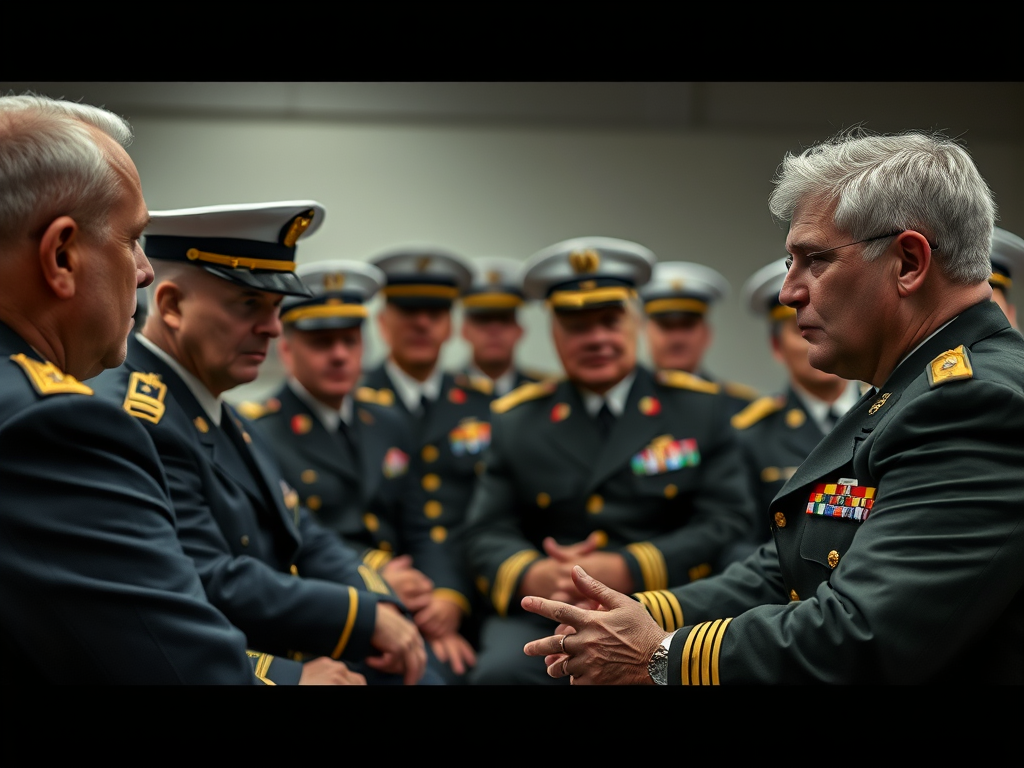

Defense Secretary Pete Hegseth has issued an unexpected directive calling together scores — and potentially hundreds — of generals and admirals from across the United States armed forces for a sudden, closed-door gathering next week at the Marine Corps base in Quantico, Virginia. While such large-scale convocations are rare, what has stirred even greater speculation is the fact that the Pentagon has not explained the purpose of this urgent meeting, according to four U.S. officials familiar with the matter.
A Sudden Call to Gather
Military sources confirmed that the meeting is scheduled for next Tuesday, though the exact number of attendees remains unclear. Among the nearly 800 general and flag officers currently serving in the U.S. military, 44 hold the highest rank of four-star general or admiral. While senior officers do meet periodically, usually in smaller groups, the size and secrecy of this particular summit is virtually unprecedented.
The unusual nature of the summons has left many officers uneasy, particularly given Secretary Hegseth’s recent history of removing senior leaders from their posts. Over the past several months, he has overseen sweeping reductions at the highest levels of command, signaling a sharp shift in how he intends to reshape the Pentagon’s leadership structure.
Confusion at the White House
When reporters pressed President Donald Trump for details about the gathering, he initially appeared unaware of the defense secretary’s plans. He suggested, mistakenly, that the event might involve foreign military officers visiting for consultations.
“I think it’s great; let him be friendly with generals and admirals from all over the world,” Trump said. “Remember, I’m the president of peace.”
Vice President JD Vance quickly intervened, clarifying that the meeting was specifically for U.S. generals and admirals. He attempted to downplay concerns, insisting that it was routine for senior officers to meet directly with the defense secretary.
“It’s not particularly unusual that generals who report to the secretary of war and then to the president of the United States are coming to speak with the secretary of war,” Vance noted. “I think it’s odd that you guys have made it into such a big story.”
Despite these assurances, the mystery surrounding the summit has fueled speculation about its purpose.
Hegseth’s Leadership Style and Recent Shakeups
Since taking office, Pete Hegseth has adopted a combative approach toward military leadership, with an emphasis on restructuring and downsizing the Pentagon’s command system. In May, he ordered a 20 percent reduction in four-star officers and a 10 percent cut in all general-level officers. These measures continued a broader campaign of dismissals and consolidations that have defined his tenure.
Among those removed were some of the most visible and historic figures in the U.S. armed forces. Hegseth dismissed Gen. Charles Q. Brown Jr., the chairman of the Joint Chiefs of Staff and the first Black officer to hold the role. He also fired Adm. Lisa Franchetti, who had been the first woman to command the U.S. Navy. In addition, Vice Adm. Shoshana Chatfield, the military’s representative to NATO, was forced out, along with Gen. David W. Allvin, the Air Force chief of staff, and Lt. Gen. Jeffrey A. Kruse, who headed the Defense Intelligence Agency.
Critics argue that the disproportionate removal of women and officers of color raises concerns about equity and diversity within the highest ranks of the armed forces.
Pentagon Response and Lack of Transparency
Sean Parnell, the Pentagon’s chief spokesman, released a brief statement confirming that Hegseth would address senior military leaders “early next week,” but declined to provide any additional information about the agenda or rationale for the meeting. Congressional leaders also admitted they were caught off guard by the announcement, further underscoring the opaque nature of the directive.
Traditionally, America’s four-star combatant commanders and the chiefs of the military branches convene at least twice a year in Washington, often engaging with the president directly. However, the possibility of calling not just those top leaders but also dozens — potentially hundreds — of lower-ranking generals and admirals who oversee active operations in regions like the Middle East, Africa, and Europe is extraordinary and raises logistical and security concerns.
According to military officials, the generals and admirals are expected to be joined by their senior enlisted advisers. Including enlisted perspectives in such a high-level gathering could provide valuable insight into the challenges faced by rank-and-file troops, but it also complicates the already sensitive logistics of organizing such a massive summit on short notice.
Security and Logistical Challenges
While the Pentagon frequently uses secure video conferences to manage urgent matters, bringing this many top officers together in one place introduces potential risks. Large assemblies of military leadership are rare precisely because they present attractive targets and require significant security resources.
Moreover, pulling generals and admirals from operational commands around the globe could temporarily disrupt the chain of command in volatile regions. Military experts note that even a short absence of senior leadership in areas like the Middle East or Eastern Europe could affect real-time decision-making during crises.
Tightening Control Over Military Communications
The summons arrives at a time when Secretary Hegseth has tightened restrictions on how Pentagon officials engage with the media and public. Just last week, he issued a directive requiring written approval from the Pentagon press office for participation in most outside events. The only exceptions apply to Pentagon-hosted industry conferences and certain meetings with foreign governments.
Critics argue this new policy risks cutting the military off from broader public accountability, while supporters claim it ensures a more disciplined and unified communication strategy during a turbulent period.
A New Defense Strategy in the Works
Behind the scenes, Hegseth’s top aides are finalizing a draft of the Pentagon’s new national defense strategy. According to reports, the document prioritizes homeland security and the defense of the Western Hemisphere above other objectives, aligning with President Trump’s push to rebrand the Department of Defense as the “Department of War.”
This reorientation suggests a more inward-looking defense posture, with an emphasis on protecting domestic and regional security rather than pursuing expansive overseas missions.
Broader Implications
The upcoming meeting at Quantico could prove to be a pivotal moment in defining Hegseth’s approach to military leadership. His aggressive reshaping of the Pentagon’s hierarchy has already generated tension within the ranks, and the secrecy surrounding the summit risks further alienating officers who value transparency and predictability.
For now, uncertainty reigns. Neither the White House nor the Pentagon has clarified whether President Trump will personally attend the summit, or what specific outcomes are expected. Until details emerge, speculation will continue to swirl across Washington and within the military itself.
What is clear, however, is that the stakes are high. A gathering of this magnitude, convened under such unusual circumstances, suggests that Secretary Hegseth is preparing to announce major changes — possibly restructuring commands, issuing new directives, or laying the groundwork for the next phase of his defense strategy.
Whether these changes will strengthen the armed forces or further destabilize military leadership remains to be seen. But one thing is certain: the eyes of Congress, the media, and America’s allies will be closely watching what unfolds at Quantico next week.




Leave a Reply