
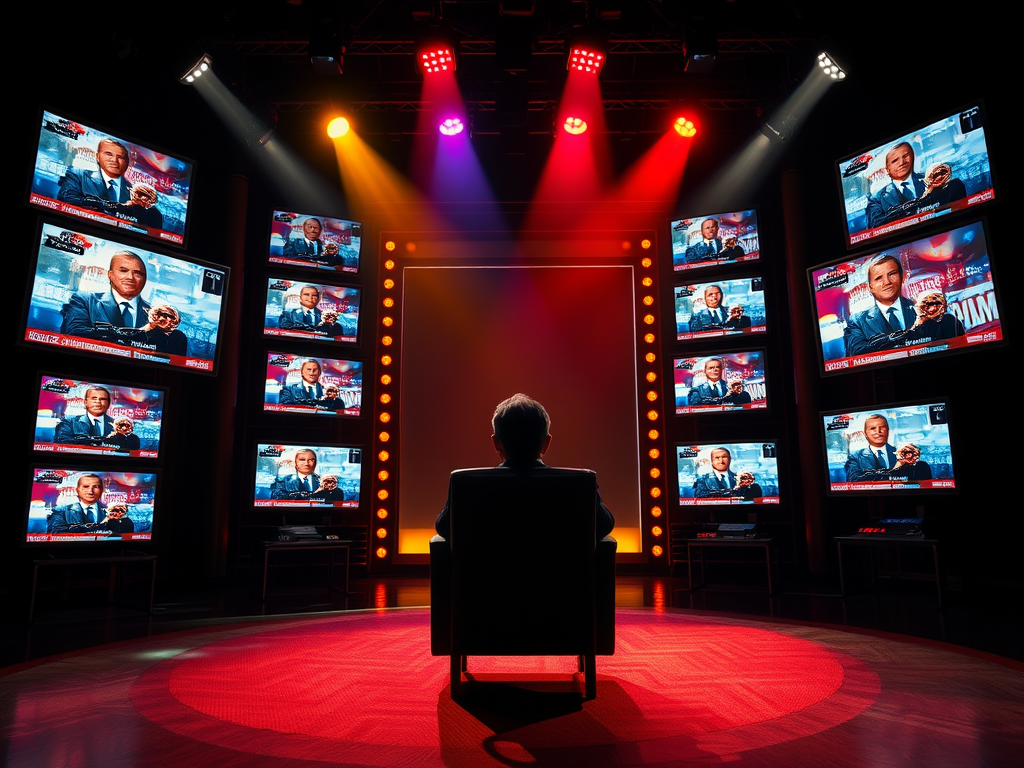

Jimmy Kimmel’s late-night talk show made its highly anticipated return to ABC this week after a brief suspension, but not all viewers across the United States will be able to watch it. What should have been a routine comeback for Jimmy Kimmel Live! has instead turned into a media firestorm involving some of the country’s largest local station owners, raising difficult questions about free speech, political pressure, and the delicate relationship between Disney and its affiliate partners.
Affiliates Refuse to Air Kimmel’s Return
While Disney confirmed that Kimmel would resume hosting on Tuesday night, two powerful station groups — Nexstar Media Group and Sinclair Broadcast Group — have announced they will not air the show on their ABC affiliates for the foreseeable future. Together, these companies control a large portion of ABC stations nationwide, meaning that millions of households will be blocked from watching one of late-night television’s most recognizable programs.
Nexstar said it would indefinitely pre-empt the program in favor of news broadcasts “pending further discussions with ABC.” Sinclair issued a similar statement late Monday, only hours after Disney publicized Kimmel’s comeback. The rare move puts both companies on a collision course with Disney, which relies on affiliate distribution for significant advertising revenue and brand reach.
Why Affiliates Are Taking This Risk
Replacing a high-profile entertainment program like Jimmy Kimmel Live! is not a decision local affiliates typically make lightly. Viewership habits in broadcast television are notoriously sticky, and Kimmel has developed a loyal fan base. By denying viewers access to him, affiliates risk alienating audiences who may switch to digital platforms such as YouTube, Hulu, or Disney+.
Still, affiliates argue they are protecting the interests of their local communities. Nexstar and Sinclair’s decisions came in response to Kimmel’s recent on-air remarks criticizing the Trump administration’s handling of the killing of conservative activist Charlie Kirk. Kimmel suggested that “the MAGA gang” was trying to deflect blame in the case, remarks that drew sharp condemnation from conservatives and eventually a response from Federal Communications Commission chairman Brendan Carr.
Carr accused Kimmel of spreading misinformation and hinted that federal remedies might be considered. Although Disney has denied that political pressure influenced its suspension of Kimmel last week, the fallout has pulled local TV stations into the middle of a heated national debate about the First Amendment, political bias, and corporate responsibility.
Political Pressures and Business Complications
For Nexstar, politics may play an especially large role in this decision. The company is in the process of finalizing a $6.2 billion merger with Tegna, another major station owner, a deal that requires FCC approval. Maintaining a cooperative relationship with regulators aligned with the Trump administration could prove strategically important. Nexstar insists that it did not consult the FCC before deciding to block Kimmel’s program, but critics believe politics weighed heavily.
Meanwhile, Disney is balancing its own business challenges. According to research firm Yipit, the controversy has fueled the trending #CancelDisneyPlus campaign, resulting in a noticeable rise in subscriber cancellations. This mirrors previous industry incidents — such as the backlash against Netflix over its controversial film Cuties — and underscores how quickly political disputes can impact the bottom line of major media companies.
The Role of Free Speech in Broadcasting
The escalating dispute highlights the tension between editorial independence and business interests in American broadcasting. The National Association of Broadcasters released a statement this week defending the editorial freedom of local stations while cautioning against “veiled threats” of government involvement.
Broadcast contracts typically include a “right to reject” clause, which allows affiliates to decline airing content they believe conflicts with community standards or public interest. However, this clause is rarely invoked for long-running national programs. The last notable case dates back to 2006 when a Utah station owned by a Mormon group refused to air a Madonna special.
Whether Nexstar and Sinclair intend to permanently exclude Jimmy Kimmel Live! remains unclear. Yet their coordinated action has few precedents in modern broadcasting, suggesting the decision is as much political as it is cultural.
Industry Experts Warn of Risks
Media analysts warn that the affiliates’ decision could backfire. Andrew Schwartzman, senior counselor at the Benton Institute for Broadband & Society, said pulling Kimmel’s show “undermines the network’s business model.” He added that audiences today have alternatives, and by depriving fans of their preferred content, affiliates could inadvertently drive them toward streaming services and away from local broadcast television altogether.
John Chachas, head of Methuselah Advisors, echoed these concerns, noting that while network-affiliate disputes have historically been rare due to high costs for both sides, the industry is shifting. “Politics is blending in and complicating an already changing set of network-affiliate relationships,” Chachas said, suggesting the industry may be on the verge of more frequent breakups between networks and their local partners.
What This Means for Disney and ABC
For Disney, which owns ABC, the ongoing feud is more than just a late-night television issue. Affiliate relationships are crucial for maintaining broad national reach, particularly in smaller markets where streaming adoption lags. If groups like Nexstar and Sinclair maintain their boycott, Disney may eventually face the difficult decision of shifting partnerships to other station owners like Gray Television or Hearst, both of which confirmed they will continue airing Kimmel’s program.
Such moves would be costly and disruptive, but Disney does have leverage when contracts come up for renewal. By demonstrating a willingness to move shows elsewhere, Disney could pressure affiliates into compliance.
Still, the reputational damage may be harder to repair. Disney now finds itself in the middle of an increasingly partisan media environment where every programming choice is scrutinized for political meaning.
Broader Implications for Media and Politics
The controversy illustrates how entertainment programming can quickly become entangled in larger cultural and political battles. Late-night television, traditionally seen as a blend of comedy and commentary, has grown increasingly political in recent years. Jimmy Kimmel, like his peers Stephen Colbert and Seth Meyers, has not shied away from mocking politicians or weighing in on divisive issues. That commentary now appears to carry serious business risks.
At the same time, the dispute highlights the fragility of legacy broadcast television. Viewers frustrated by affiliate decisions can easily migrate to streaming platforms, undermining the relevance of local stations. Disney, for example, could theoretically bypass affiliates altogether by pushing more aggressively toward digital distribution.
But that shift also comes with challenges. While streaming continues to grow, broadcast TV remains influential in shaping national conversations, particularly among older audiences who rely on local stations for news and entertainment. Affiliates know this, which is why they continue to wield significant bargaining power in disputes with networks.
Conclusion: A Turning Point for Broadcast Television
Jimmy Kimmel’s return to ABC was supposed to be a simple relaunch after a weeklong controversy. Instead, it has become a flashpoint in the larger battle over free speech, political influence, and the future of American television. Nexstar and Sinclair’s refusal to air Jimmy Kimmel Live! represents a rare but significant challenge to Disney’s authority as a network owner.
For viewers, the controversy underscores the growing divide between broadcast and digital platforms, as well as the difficulty of separating entertainment from politics in today’s climate. For Disney, the outcome of this dispute could determine not only the future of its late-night programming but also the stability of its relationships with affiliates nationwide.
As one industry expert noted, “We may be entering an era where these disputes are no longer the exception but the rule.”




Leave a Reply