
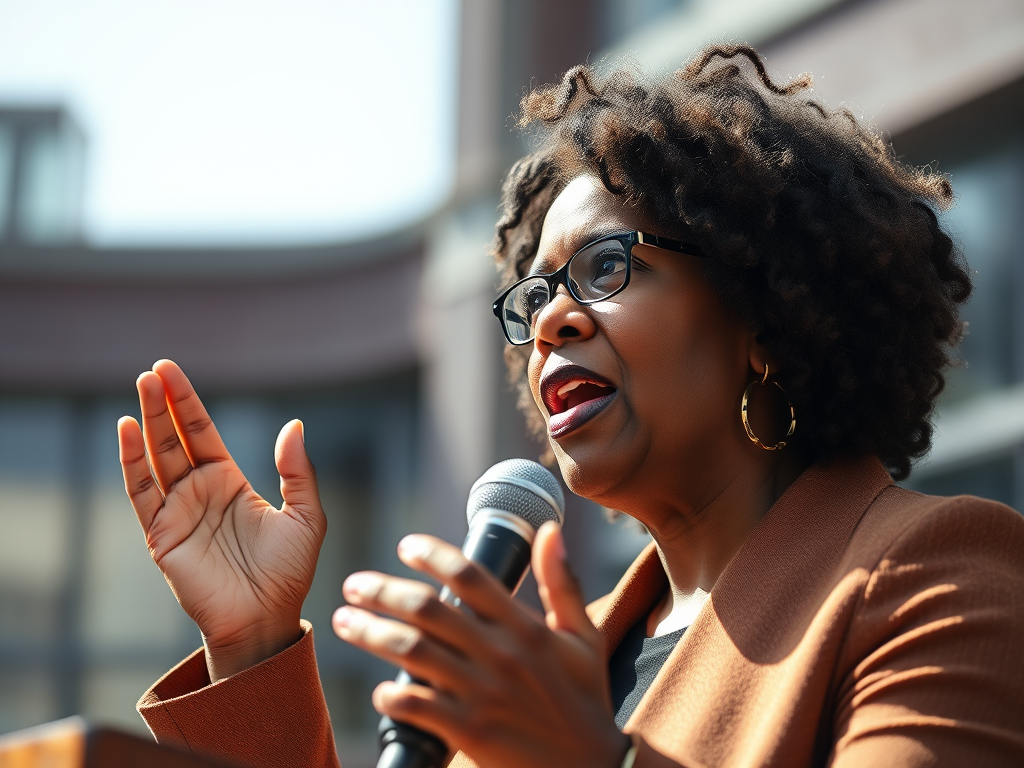

Harvard University once again finds itself at the center of national controversy, as former president Claudine Gay delivered sharp criticism of the institution’s current leadership. Speaking earlier this month at the Netherlands Institute for Advanced Study in Amsterdam, Dr. Gay accused the administration of showing compliance toward demands from the Trump White House—remarks that many observers interpreted as a direct critique of her successor, Alan Garber.
Dr. Gay, who stepped down in January 2024 following accusations of plagiarism and criticisms that she did not strongly denounce antisemitism on campus, offered a candid assessment of Harvard’s direction. Her words, reported first by The Harvard Crimson, were notable not only for their blunt tone but also for the fact that they highlighted internal disagreements at the top of one of the world’s most influential universities.

Claudine Gay’s Sharp Rebuke
“The posture of the institution seems to be one of compliance,” Dr. Gay said on September 3, during a public address and question-and-answer session. “This is distressing, not only for those of us who are on campus and facing the consequences directly, but also for all of those in higher education who look to Harvard for leadership and guidance.”
Her comments underscored deep tensions about how universities should respond to political pressure. Harvard, often viewed as a bellwether in American higher education, is under intense scrutiny not just from policymakers, but also from faculty, students, and alumni who worry about the erosion of academic freedom and institutional independence.
Dr. Gay also criticized the possibility of a $500 million settlement that Harvard has reportedly been willing to negotiate with the White House. “The number of $500 million is arbitrary, and it will solve nothing. There is no justification,” she said, implicitly criticizing President Garber’s leadership style.
A spokesperson for the Netherlands Institute later confirmed the accuracy of her remarks. Neither Harvard nor Dr. Gay offered further comment in the days following the speech.

Alan Garber’s Balancing Act
Alan Garber, who previously served as Harvard’s provost, assumed the presidency after Dr. Gay’s departure. His leadership has been praised in some circles for taking a defiant stance against the Trump administration’s pressure, particularly by filing a lawsuit alleging that the federal government violated Harvard’s free speech rights.
At the same time, however, Garber’s administration has engaged in behind-the-scenes negotiations with federal officials. These talks aim to restore billions of dollars in frozen federal research funds—critical resources for Harvard’s many cutting-edge projects in science, medicine, and technology.
This dual strategy has created confusion and frustration. On one hand, Garber is celebrated for resisting government overreach; on the other, critics like Dr. Gay accuse him of ceding too much ground to political demands.
Policy Shifts Reflecting White House Pressure
Harvard has already made visible changes that critics argue align closely with the Trump administration’s agenda. These include actions to dismantle or restructure offices associated with diversity, equity, and inclusion.
For instance, the Office of Equity, Diversity, Inclusion, and Belonging was renamed the Office for Community and Campus Life. The change, while symbolic, has been interpreted by many as a sign of Harvard bowing to external political pressure rather than standing firmly by its previous commitments.
The university also shut down websites for its Foundation for Intercultural and Race Relations, as well as offices dedicated to gay and female students. Harvard maintains that these functions are being consolidated into a single center, but critics view the move as part of a broader rollback of diversity initiatives.
In addition, Harvard altered the leadership structure of a Middle Eastern studies center and suspended a partnership with a Palestinian college in the West Bank. These steps further fueled concerns that the university was reshaping its policies and partnerships to avoid conflict with Washington.
Federal Funding Battles
At the heart of the dispute is federal research funding—a lifeline for Harvard’s expansive research ecosystem. Last year, the Trump administration froze billions in funding for universities it claimed were not cooperating with its policy directives. Harvard, with its $53 billion endowment, is the wealthiest university in the world, but even it cannot easily absorb the loss of federal support for large-scale research projects.
Recently, there has been a partial breakthrough. On September 20, Harvard announced that $46 million in funding from the U.S. Department of Health and Human Services had been released. This followed a ruling by a federal judge that the broader freeze was illegal. In a statement, Harvard described the development as “an initial step” and expressed hope that all agencies would soon restore funding.
Despite this, new demands from the White House quickly reignited tensions. On September 21, the Trump administration requested documentation of Harvard’s financial stability and guarantees that it would pay off federal debts in the event of closure or termination of classes—an unusual move given Harvard’s massive endowment and global reputation.
The Broader Higher Education Debate
Harvard’s struggle is not occurring in isolation. Universities across the United States face growing political pressure, particularly on issues related to race, gender identity, and free speech. The current climate has sparked debates about whether academic institutions should resist government influence more strongly or seek compromise to secure funding and stability.
As one of the world’s most prestigious universities, Harvard’s choices are closely watched. The institution’s decisions set precedents that may shape how other colleges and universities navigate the fraught intersection of education and politics.
Dr. Gay’s comments in Amsterdam highlight the tension between institutional leadership and academic values. For critics, Harvard’s recent actions represent a dangerous shift toward political compliance. For supporters of Garber’s strategy, they represent pragmatic steps to safeguard the university’s financial and academic future.
Looking Ahead
The controversy shows no signs of fading. As federal negotiations continue and internal divisions deepen, Harvard must walk a fine line between defending its autonomy and ensuring the continuation of vital research funding.
Claudine Gay’s intervention adds another layer of complexity, drawing attention to the moral and symbolic weight of Harvard’s decisions. Whether her critique strengthens opposition to Garber’s approach or simply highlights the unavoidable dilemmas facing higher education remains to be seen.
What is clear is that Harvard’s path forward will reverberate far beyond Cambridge. As debates about free speech, diversity, and academic independence intensify nationwide, Harvard will continue to serve as both a target and a touchstone in America’s culture wars.




Leave a Reply