
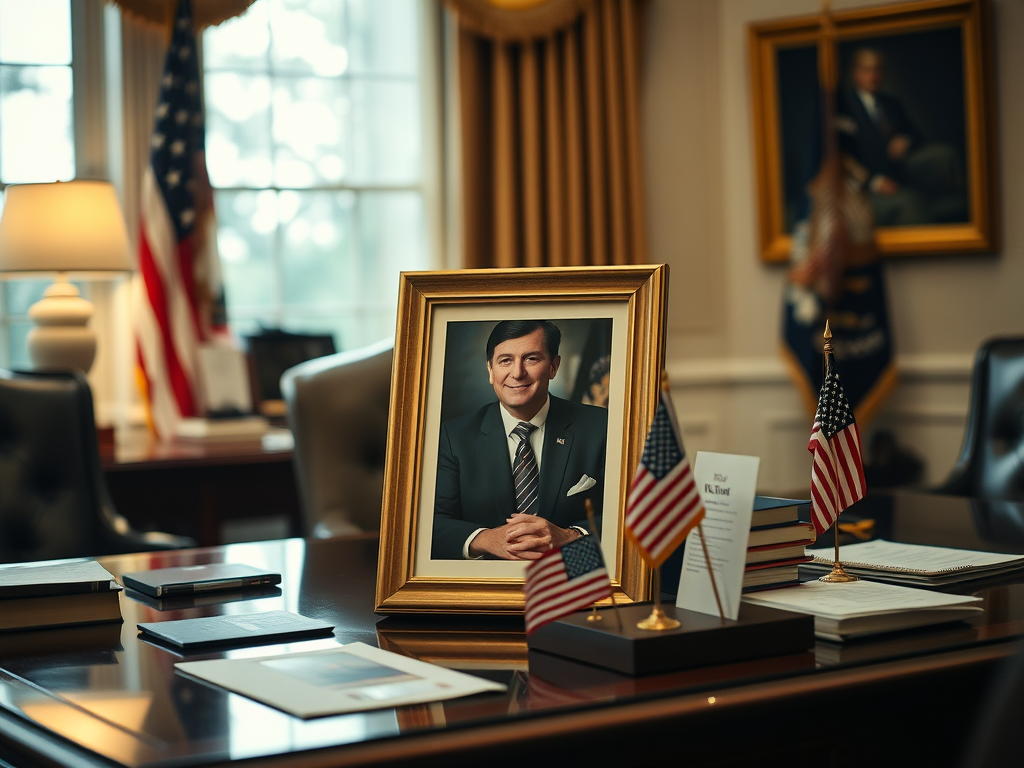

When former President Donald Trump addressed the nation from the Oval Office, his voice carried a rare mixture of grief and anger. His remarks came only hours after the shocking assassination of conservative activist Charlie Kirk. The moment underscored how deeply the 31-year-old had influenced the Trump family and how central he had become in the larger Trump political orbit.
On social media, Trump’s eldest son, Donald Trump Jr., made his feelings clear. Posting on X, he wrote simply: “I love you, brother.” It was a short but powerful statement that reflected not just friendship but a genuine sense of loss.
Perhaps the most striking sign of Kirk’s importance came from Trump himself. In an unusual move, it was the former president — not law enforcement officials, not family members, and not Kirk’s own team — who publicly confirmed the activist’s death. On Truth Social, Trump wrote: “He was loved and admired by ALL, especially me, and now, he is no longer with us.” For a leader known more for confrontation than for lament, it was a moment that revealed both his vulnerability and his personal connection to Kirk.
The Rise of a Conservative Operative
Charlie Kirk was more than just a familiar face on conservative platforms. He was a political strategist who built a reputation for connecting with younger voters and building networks of donors. That talent quickly earned him a place inside the Trump circle.
His closest connection was with Donald Trump Jr., who not only valued Kirk’s charisma but also his ability to execute. “He wasn’t just a loud online presence,” Trump Jr. once said. “Charlie got things done, whether it was rallying students on campuses or building relationships with donors who wanted to invest in the movement.”
Their partnership began in the summer of 2016. At only 22, Kirk managed to secure a meeting with Trump Jr. at Trump Tower. He offered advice on how candidate Trump could strengthen his appeal among young conservatives. The meeting ended with Trump Jr. hiring him as a personal campaign assistant, a move that would reshape Kirk’s future.

Within a year, Kirk was sitting beside the president at Mar-a-Lago during private conversations that stretched nearly an hour. By then, he was no longer just a rising activist — he was a trusted voice inside the White House.
Trusted but Cautious
According to Jared Kushner, Trump’s son-in-law and former senior adviser, Kirk knew how to balance his influence carefully. “He was a professional, easy to deal with. Nothing ever leaked to the press. He just got things done,” Kushner recalled earlier this year. That professionalism allowed Kirk to maintain access without appearing opportunistic, a rare achievement in Trump’s often volatile inner circle.
After the 2020 election, Kirk became even more prominent. He was one of the most vocal supporters of Trump’s unfounded claims of voter fraud. Far from distancing himself, Kirk leaned into the narrative and amplified it to his wide network of followers. By February 2021, weeks after the Capitol riot, he was back at Mar-a-Lago meeting with the former president. He even used photos from that meeting to impress potential donors, proudly noting how easily he secured access when others were hesitant.
An Adviser Who Knew When to Push
Unlike many political operatives who risked alienating Trump with overconfidence, Kirk knew when to advise and when to step back. He played an influential role in encouraging Trump to support JD Vance’s Senate run in 2022. Later, he pushed again, this time successfully, for Trump to consider Vance as a running mate in the 2024 election cycle.
Kirk also managed to secure positions for allies within Trump’s administration. Notably, he supported Stacey Feinberg, a major donor to his organization, who was later appointed U.S. ambassador to Luxembourg.
Yet Kirk wasn’t afraid to disagree with Trump when he believed the stakes were high. For example, when Trump authorized strikes on nuclear facilities in Iran, Kirk outwardly supported the decision but voiced private concerns in the Oval Office about the risk of sparking another drawn-out conflict in the Middle East. His approach was less confrontational than advisory — he framed his concerns as protecting Trump’s political base rather than challenging Trump’s authority directly.
Controversy and Compliance
Kirk’s career was not without controversy. On his podcast, he once pressed for the release of government files related to Jeffrey Epstein, a figure with past ties to Trump. The move quickly drew Trump’s ire, leading Kirk to backtrack publicly. “I’m done talking about Epstein for the time being,” he told his listeners. The reversal frustrated his audience, prompting his communications director to clarify that Kirk was not abandoning the issue, but was waiting for the administration to act.
This moment illustrated both the risks and limitations of being close to Trump. While Kirk enjoyed rare access and influence, he also had to navigate the delicate balance of maintaining loyalty without appearing disloyal to Trump’s base or his personal expectations.
Final Days and Last Words
Charlie Kirk remained a staunch supporter of the Trump-Vance ticket until the end. Just one day before his assassination outside a university in Salt Lake City, he posted on X celebrating Trump’s decision to assume greater control over Washington law enforcement. His message was clear and defiant: “We’re taking our country back.” The post ended with two fire emojis — a symbolic exclamation of his political passion.
Less than 24 hours later, his life was cut short. The tragedy sent shockwaves through conservative circles and left the Trump family grappling with the loss of a man who had been more than an activist — he was a confidant, strategist, and loyal companion.
The symbolism of his final journey was powerful. Senator JD Vance, now Trump’s running mate, personally flew to Salt Lake City on Air Force Two to accompany Kirk’s body back to Phoenix. It was a gesture that signaled both respect and recognition of Kirk’s role in shaping the future of the movement.
Legacy and Influence
Charlie Kirk’s legacy is complicated but undeniable. He was admired by allies for his organizational talent and criticized by opponents for his combative rhetoric and unyielding loyalty to Trump. Still, within the conservative movement, his influence stretched far beyond his years. At just 31, he had built Turning Point USA into a powerhouse organization capable of mobilizing young voters nationwide.
For Donald Trump and his family, Kirk’s death was not just the loss of a supporter but the loss of a trusted ally who had become woven into the fabric of their political lives. His presence at Mar-a-Lago, his advice during pivotal campaigns, and his tireless work to energize the MAGA base all ensured his place in Trump’s political history.
Trump’s rare public lament highlighted this bond. For a figure often reluctant to show vulnerability, his words revealed just how much Kirk had mattered — not only as a political asset but as a friend. In the end, Charlie Kirk’s story is one of ambition, loyalty, and tragedy. His rise within American politics reflected both the opportunities and dangers of moving too close to power, and his untimely death leaves behind unanswered questions about what role he might have played in the next chapter of the conservative movement.




Leave a Reply