
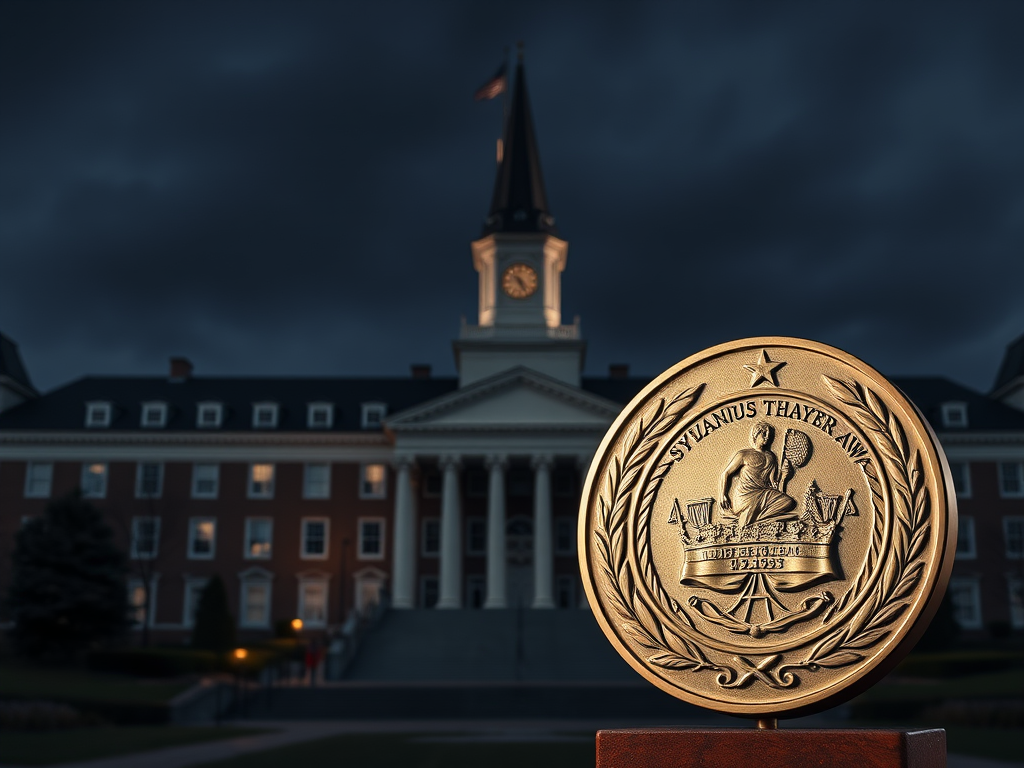

An alumni organization at the United States Military Academy at West Point has unexpectedly canceled a high-profile event that would have honored acclaimed actor Tom Hanks with one of its most prestigious awards. The decision, announced by email from the group’s president, was framed as a way to ensure the academy remains focused on preparing cadets for their future responsibilities as military leaders.
Tom Hanks, 69, had been selected to receive the Sylvanus Thayer Award, an annual honor presented by the West Point Association of Graduates. This award is given to American citizens who embody the academy’s celebrated motto: “Duty, Honor, Country.” Named after Sylvanus Thayer, known as the “Father of the Military Academy,” the award has historically recognized individuals whose achievements and character reflect West Point’s highest ideals.
A Sudden Change of Plans
The ceremony, originally scheduled for September 25, will no longer take place. Mark Bieger, the president of the alumni group and a retired U.S. Army colonel, confirmed the cancellation in a message distributed last Friday. He emphasized that the academy’s “core mission of preparing cadets to lead, fight, and win as officers in the world’s most lethal force—the United States Army—must remain the central focus.”
The announcement was first reported by The Washington Post and quickly drew national attention. The cancellation is significant not only because of Hanks’s stature as an actor and humanitarian, but also because the Thayer Award has long been regarded as one of the academy’s most meaningful recognitions.
Prestigious Company
Past recipients of the Sylvanus Thayer Award include towering figures in American history such as Presidents Dwight D. Eisenhower and Ronald Reagan, astronaut Neil Armstrong, General Colin Powell, former Senator Elizabeth Dole, Supreme Court Justice Sandra Day O’Connor, and actor Gary Sinise. To join this list is often considered a profound acknowledgment of service to the nation, whether through politics, the military, public service, or cultural contributions.
The alumni association had announced in June that Hanks would be the 2024 honoree, highlighting both his artistic achievements and his long-standing support for military causes. The group praised his career for showcasing respect toward veterans, active-duty personnel, and the broader ideals of service.
Why Tom Hanks Was Chosen
Hanks has frequently been associated with roles that resonate deeply with themes of American history, courage, and sacrifice. His portrayals in Forrest Gump, Saving Private Ryan, and Apollo 13 are regarded as cinematic tributes to resilience, patriotism, and the human spirit. He has also been instrumental in the production of acclaimed military miniseries such as Band of Brothers, The Pacific, and Masters of the Air. Each of these works has played a part in shaping how the public understands the sacrifices of U.S. service members.
Beyond Hollywood, Hanks has demonstrated tangible commitment to causes benefiting veterans. He served as a national spokesman for the World War II Memorial in Washington, D.C., and actively participated in fundraising for the Dwight D. Eisenhower Memorial. He also chaired the D-Day Museum Capital Campaign, efforts that further highlight his dedication to preserving the legacy of military service.
More recently, in 2023, Hanks launched Hanks for Our Troops, a coffee company designed to support active-duty soldiers and veterans through donations and profits. This initiative has been widely praised for blending entrepreneurship with philanthropy.
Robert A. McDonald, a former Secretary of Veterans Affairs and the current board chairman of the alumni association, lauded Hanks in June, stating: “Tom Hanks has done more for the positive portrayal of the American service member, more for the caring of the American veteran, their caregivers and their families, and more for the American space program and all branches of government than many other Americans.”
Hanks’s Reaction
When the award was announced earlier this year, Hanks expressed both humility and excitement. He noted that it was “simply astounding” that his first-ever visit to West Point would have been for such an honor. “To be recognized by an institution whose graduates have shaped our country’s history through selfless service is both humbling and meaningful,” he said.
For now, however, that visit appears indefinitely postponed, with neither the West Point Association of Graduates nor Hanks’s representatives providing further public comment following the cancellation.
Political Undercurrents
The timing of the cancellation has fueled speculation about broader political dynamics surrounding military academies. Hanks has previously been critical of former President Donald Trump and faced criticism for a satirical portrayal of a Trump supporter during a Saturday Night Live skit celebrating the show’s 50th anniversary.
In recent years, U.S. military academies, including West Point, have faced political scrutiny and controversy under the Trump administration. Earlier this summer, Army Secretary Daniel P. Driscoll ordered West Point to rescind a job offer to a cybersecurity expert and veteran who had served in the Biden administration. Additionally, military academies have been pressured to remove books on diversity, equity, and inclusion (DEI) from their libraries, aligning with broader efforts by the administration to limit DEI initiatives in federal institutions.
The political climate has also influenced faculty decisions. Graham Parsons, a longtime professor at West Point, resigned earlier this year after 13 years at the academy. In a New York Times guest essay, he accused the institution of allowing political forces to dictate curriculum, undermining academic independence.
What the Cancellation Signals
The abrupt decision to cancel the Thayer Award ceremony for Tom Hanks illustrates the delicate balance West Point must maintain between honoring cultural figures and maintaining its central mission. While the alumni association praised Hanks’s career and service-oriented initiatives, the academy’s leadership appears determined to avoid distractions during a time of political and institutional pressure.
For cadets, the emphasis remains on readiness: leadership training, military preparedness, and academic rigor. For alumni and the broader public, however, the cancellation may raise questions about how much external politics and cultural debates are influencing decisions at one of the nation’s most respected military institutions.

A Larger Conversation
At its core, this story is not only about Tom Hanks or a canceled award ceremony. It also highlights the intersection of culture, politics, and military tradition. The Thayer Award has always been about recognizing contributions that embody the values of “Duty, Honor, Country.” Whether those contributions come from the battlefield, the courtroom, the White House, or the big screen, the award carries symbolic weight.
Canceling the event sends a message that West Point is choosing to narrow its focus strictly on cadet training, but it also risks appearing to sideline broader cultural and historical figures who have meaningfully supported the armed forces.
For Tom Hanks, the missed opportunity may not diminish his reputation as one of America’s most respected actors and advocates for veterans. But for West Point and its alumni, the decision underscores a tension that is likely to remain in the public eye: how to balance tradition with the pressing political realities of the moment.




Leave a Reply