

The Centers for Disease Control and Prevention (CDC) has placed the United States’ official death toll from Covid-19 at nearly 1.2 million. Yet Robert F. Kennedy Jr., now serving as Secretary of Health and Human Services, continues to question his own department’s numbers.
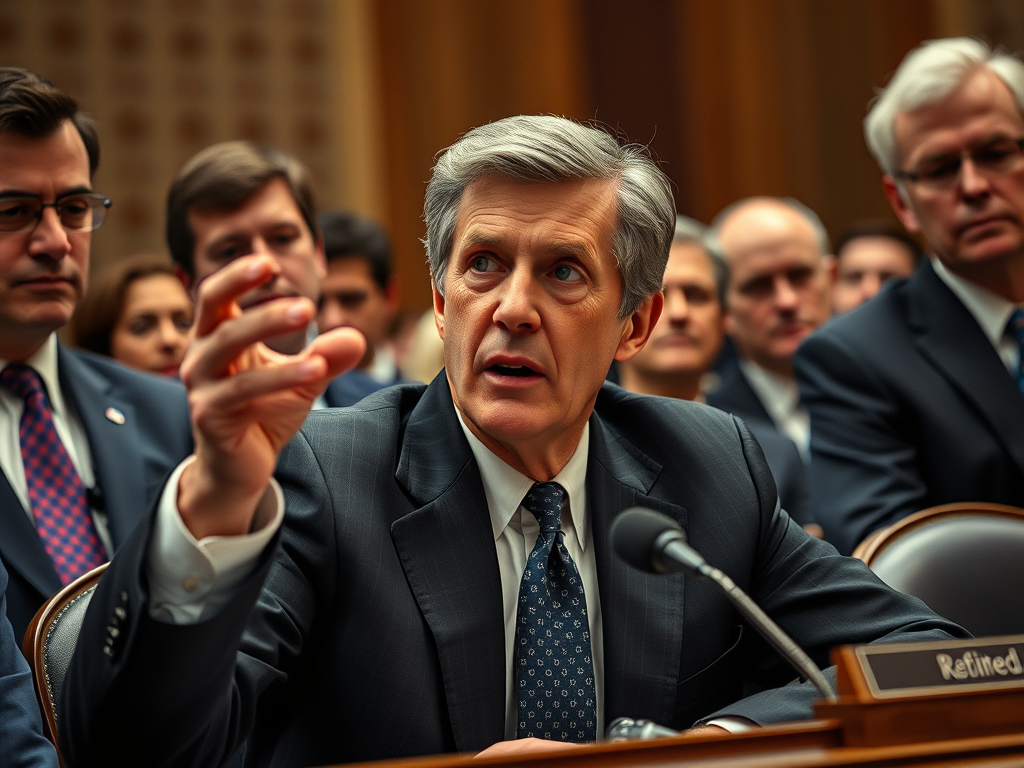
In a tense Senate Finance Committee hearing, Kennedy told lawmakers, “I don’t know how many died. I don’t think anybody knows, because there was so much data chaos coming out of the CDC.” His remarks immediately sparked controversy, not only because of the staggering human loss but because the nation’s leading health official appeared to cast doubt on the fundamental credibility of the institutions he oversees.

When Senator Elizabeth Warren, Democrat of Massachusetts, pointed out that Americans were finding it harder to access Covid-19 vaccines at local pharmacies, Kennedy pushed back, insisting that “everyone can get access to them.” He also repeated his longstanding claim that mRNA vaccines “cause serious harm, including death, particularly in young people.” This assertion directly contradicts CDC findings, which show no increased risk of death linked to Covid-19 vaccination.
A Public Health Chief at Odds With Science
Kennedy’s combative testimony underscored what many critics have described as the dangerous consequences of placing someone with no formal scientific or medical training in charge of national health policy. Rather than shaping policy through research-based analysis, Kennedy has often dismissed evidence that contradicts his views and sidelined experts unwilling to align with his positions.
Since assuming office, Kennedy has overseen sweeping changes at federal health agencies. The CDC, once regarded as a cornerstone of global public health, has undergone mass firings and structural shake-ups that many observers say have stripped the agency of decades of expertise. Kennedy dismissed the entire panel of independent vaccine advisers and fired the CDC’s newly appointed director, despite having previously praised her as a “brilliant microbiologist and tech wizard.”
In defense of his actions, a Health and Human Services spokeswoman argued that Kennedy was “debunking false claims and advocating for full transparency,” framing his leadership as a commitment to “evidence-based science.”

Distrust and Upheaval Inside Public Health Agencies
Kennedy insists that his reforms are designed to rebuild trust in government. On national television, he has accused CDC scientists of hiding information about vaccine side effects and ignoring requests for critical safety data. Calling this alleged behavior “malpractice,” Kennedy portrays himself as a whistleblower challenging entrenched interests.
His narrative taps into widespread skepticism about the pharmaceutical industry, a sector that does indeed generate tens of billions of dollars in quarterly profits. Many Americans harbor concerns that profits sometimes take precedence over patients, and Kennedy has leveraged these anxieties to amplify his calls for reform.
But health experts argue that Kennedy’s framing distorts reality. While vaccines, like all medical treatments, can occasionally produce serious side effects, large-scale data shows that such cases remain rare. Moreover, the CDC has publicly acknowledged shortcomings in its data collection during the pandemic and has since moved to strengthen transparency.
By highlighting real flaws but spinning them into conspiratorial claims, Kennedy has fueled an erosion of trust that experts fear could destabilize public health. According to Joseph Uscinski, a political scientist at the University of Miami who studies conspiracy theories, Kennedy is “accusing powerful people of acting in secret for their own benefit against the public good.” That approach, Uscinski warned, risks undermining the very institutions society relies on to distinguish truth from falsehood.

A Divided Public Response
Kennedy’s leadership has alarmed not only scientists but also members of his own family. His sister Kerry Kennedy and his nephew Joe Kennedy III recently called on him to resign. Three former U.S. Surgeons General — including Jerome Adams, who served under President Trump — co-authored an op-ed warning that Kennedy’s decisions were compromising the CDC’s credibility.
Interestingly, Trump himself, who once promised to “let Bobby go wild on health” and has frequently challenged mainstream science, has distanced himself from Kennedy on certain issues. When asked about Florida’s decision to eliminate all vaccine mandates, Trump countered that “vaccines work, pure and simple,” stressing that routine vaccinations should remain in use.
The divergence highlights a new political battleground: vaccine policy. For decades, the CDC’s recommendations were treated as national standards. Today, states are increasingly forging their own paths. Republican-led states such as Idaho and Florida have rolled back vaccine requirements, while Democratic states like California, Oregon, and Massachusetts are doubling down on stricter vaccination policies.

Declining Confidence in Health Institutions
Public trust in health agencies is wavering. A recent poll by KFF, a nonpartisan health policy research group, found that just half of Americans express confidence in agencies like the CDC and FDA to ensure vaccine safety. Only 37 percent believe these agencies act independently without outside political or financial influence.
Notably, the same poll found that Kennedy is “the least trusted source of information on vaccines,” with only 37 percent of respondents saying they have even “a fair amount” of trust in him.
This trust deficit has practical consequences. Kennedy’s announcement that Covid-19 vaccines are no longer recommended for healthy children or adults under 65 has created confusion across the country. Pharmacies in some states now require prescriptions for vaccines, while others have stopped carrying them altogether.
Conflicting Data and Clashing Narratives
Kennedy has also been accused of selective use of statistics. For instance, he has cited in national op-eds that the U.S., with 4.2 percent of the world’s population, suffered 19 percent of global Covid-19 deaths — a calculation that suggests he does, in fact, accept official death counts when they support his argument.
At Senate hearings, he has also accused nearly all CDC vaccine advisers of financial conflicts of interest, claiming the figure stood at 97 percent. Independent research published in the Journal of the American Medical Association put the number closer to 6 percent. Kennedy dismissed the journal as “corrupt.”
He has extended his skepticism to the American Academy of Pediatrics, calling the organization “gravely conflicted” due to partnerships with vaccine makers. The Academy has defended itself, noting that its vaccine guidance is based on child health, not financial incentives, and that administering vaccines often creates financial burdens for pediatric practices.
The Rise of Parallel Institutions
As trust in federal agencies falters, outside groups are stepping in. At the University of Minnesota, epidemiologist Michael Osterholm launched the Vaccine Integrity Project, designed to provide independent, transparent data to guide state vaccine policies. Funded by a health philanthropy foundation, the project aims to serve as a stopgap while the CDC grapples with credibility challenges.
Osterholm emphasized that his team does not issue vaccine recommendations but instead provides evidence. Still, he acknowledged concern about whether the CDC and its Advisory Committee on Immunization Practices can survive Kennedy’s restructuring. “We see ourselves as a temporary solution,” he said. “But we can’t wait for the public health system to collapse before stepping in.”

The Larger Consequences
Kennedy’s critics argue that his tenure has become a test of how misinformation and distrust can reshape national institutions. By casting doubt on long-established systems of scientific consensus, he has energized a populist base but fractured confidence in the agencies tasked with protecting public health.
Brendan Nyhan, a government professor at Dartmouth College who studies misinformation, warned that when the country’s leading health official embraces conspiracy-driven thinking, “it becomes nearly impossible to conduct evidence-based policymaking.”
The U.S. public health system has long relied on the CDC’s ability to set the gold standard for vaccine policy and disease control. As Kennedy continues to challenge that foundation, the stakes extend far beyond Covid-19 — affecting the nation’s ability to respond to future health crises, restore public confidence, and maintain the balance between skepticism and science.




Leave a Reply