
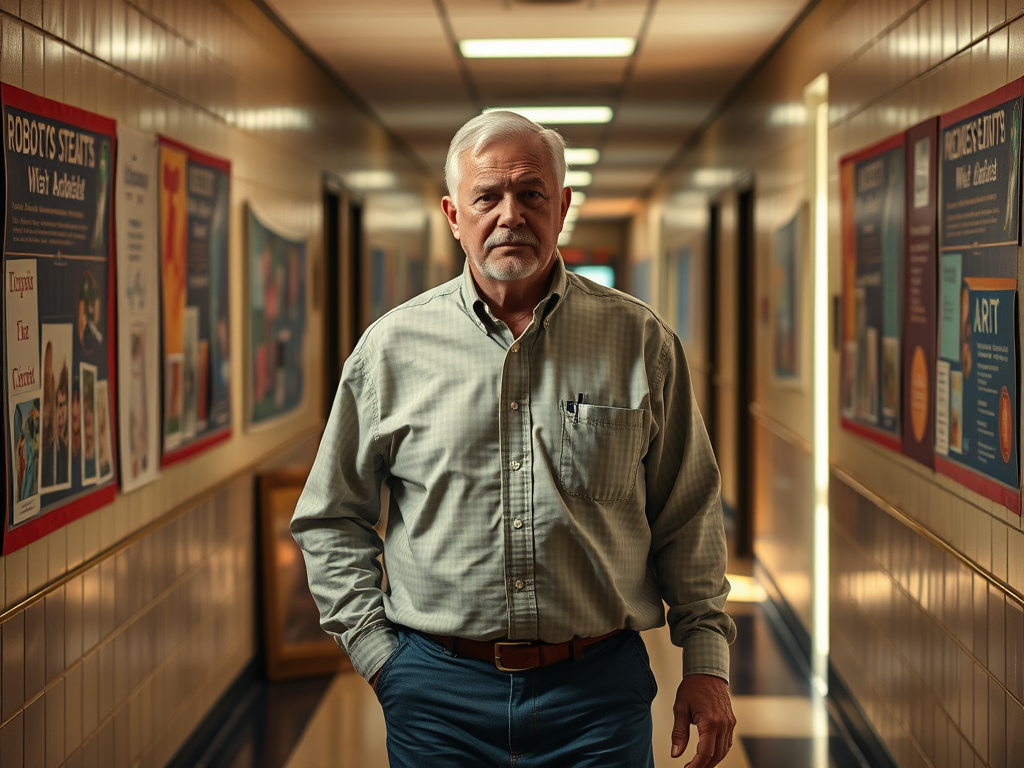

When Dennis Willingham accepted the role of superintendent in Walker County, Alabama, he understood that running schools in a rural, working-class community would never be easy. With limited property taxes to collect and nearly 70 percent of students coming from low-income households, financial struggles were a given.
But this year, a new challenge emerged. The White House temporarily froze federal funding for schools and later proposed reducing education spending in the next budget cycle. For Dr. Willingham, the move was alarming. Federal money had long been the invisible backbone of his district, covering after-school programs, robotics clubs, college-credit courses, and teacher mentorship. “The federal dollars are our lifeline,” he explained, walking through hallways filled with programs supported by Washington.

A Rural District at the Center of the Debate
Walker County, located northwest of Birmingham, is a predominantly white, Republican-voting district with 6,700 students. Once known for coal mining, the county has also been heavily impacted by the opioid epidemic. Today, its largest employers are a poultry company and the school district itself. With few businesses and no luxury vacation homes to inflate property values, local tax revenues remain limited. That is why federal dollars — though just a fraction of the budget — make a disproportionate difference.
Nationally, only about 8 percent of public education funding comes from the federal government. However, that money is deliberately directed to vulnerable populations, especially students living in poverty and those with disabilities. Programs such as Title I and the Individuals with Disabilities Education Act (IDEA) have been in place since the 1960s, born from the Civil Rights movement and the War on Poverty, to ensure that disadvantaged children are not left behind.
Yet President Trump, in his second term, has argued that Washington adds red tape without improving outcomes. His administration has already laid off over 1,000 Department of Education employees, ordered the department to be dismantled, and pushed a budget that would slash funding by 15 percent. While Title I and IDEA remain untouched for now, dozens of smaller federal programs are on the chopping block.

What Is at Stake for Local Schools
In Walker County, the threatened programs bring in around $1.1 million annually — about 1 percent of the district’s total budget. That might sound minor, but the impact is far-reaching. Federal money currently pays for:
- Two part-time art teachers who rotate among schools.
- Travel costs that allow robotics teams to compete at state and national levels.
- Stipends for experienced teachers to mentor new hires.
- Fees and textbooks that let high school students take college-level courses at the local community college.
In a county where only 16 percent of adults hold a bachelor’s degree, those opportunities are invaluable. “It’s about breaking cycles,” Dr. Willingham said, stressing the importance of making higher education attainable.
Federal aid also funds after-school programs at two schools, costing about $600,000 a year. These programs are more than just academic enrichment. They keep children safe until 5:30 p.m., provide meals, and expose students to experiences they might never otherwise have.
At Carbon Hill Elementary/Junior High School, for instance, students rotate between chess, pickleball, embroidery, and cooking. On one day, preschoolers created “sushi” out of Rice Krispies treats, bananas, and Fruit Roll-Ups. For some families, the program ensures that children eat dinner. For others, it provides supervision while parents work.
Tiffany Lawrence, a nurse, values the program for her two sons, ages 9 and 13. “They’re not sitting in front of video games all afternoon,” she said. “Their homework is done, and we get more family time in the evening.”


Principal Amy Atkins recalled one moment that captured the stakes: a student proudly sewed a pillowcase in class, only to admit he didn’t own a pillow. Staff quickly bought him one. “These programs go beyond academics — they meet basic human needs,” she said.
Summer field trips funded by federal money also make a difference. Students visit Birmingham’s zoo, aquarium, and science center. For sixth-grader Marian Nash-McCollum, whose mother works long factory shifts, the trips are a rare chance to explore the world outside her small town. “We get to go different places and see things we wouldn’t normally see,” she said.
Conservative Push and Local Resistance
Supporters of the White House’s proposal argue that consolidating 18 federal programs into one flexible $2 billion fund would reduce bureaucracy and give states more control. Conservative think tanks such as the Heritage Foundation, through their “Project 2025,” have even recommended phasing out Title I over the next decade, claiming that decades of spending have not closed the achievement gap between low- and high-income students.
“When can we ask, ‘Please show me the results?’” asked Jonathan Butcher, a senior fellow at the foundation, pointing to persistent disparities in test scores.
But education advocates warn that cuts would hit the poorest districts hardest, stripping away programs with the highest return on investment. Anne Hyslop of All4Ed, an education equity group, noted that federal funding has historically represented a national commitment to lifting children out of poverty.
Dr. Willingham, himself a Republican, sees no contradiction in opposing cuts. “We don’t care if the Department of Education is dissolved,” he said. “What we care about is losing funding that directly helps our children.”

The Difficult Choices Ahead
Without federal support, Walker County schools would face painful trade-offs. Keeping the after-school program alive would require eliminating the equivalent of eight teaching positions. Smaller adjustments might mean cutting mental health therapists or reducing the number of school resource officers, a risky move in today’s climate.
Closing schools could save money, but in a rural county where campuses are already miles apart, such a decision would devastate communities. Meanwhile, enrollment continues to decline due to lower birth rates and a rise in homeschooling since the pandemic. Dr. Willingham has already trimmed $1 million from administrative costs but says more drastic cuts are not sustainable.
Looking to Washington for Answers
Later this month, Dr. Willingham will travel to Washington to press lawmakers on the importance of maintaining federal education funding. Congress faces a September 30 deadline to finalize a budget, and while Senate Republicans have rejected the administration’s proposed cuts in committee, the House remains uncertain.
In meetings with lawmakers like Senator Tommy Tuberville, Alabama superintendents have delivered the same message again and again: “Please don’t take away our federal funding. We can’t function without it.”
A National Question with Local Consequences
The debate over federal education funding may seem like a policy dispute in Washington, but in districts like Walker County, it translates into real consequences for children, parents, and teachers. From after-school meals to robotics competitions, from teacher mentoring to college readiness, federal dollars stretch far beyond their numerical share of the budget.
As the political battle continues, families in Alabama — and in similar rural, low-income districts across the country — wait anxiously to see whether their children’s opportunities will shrink. For them, the stakes are not abstract. They are measured in homework help, safe spaces, hot meals, and the hope of a brighter future.




Leave a Reply