
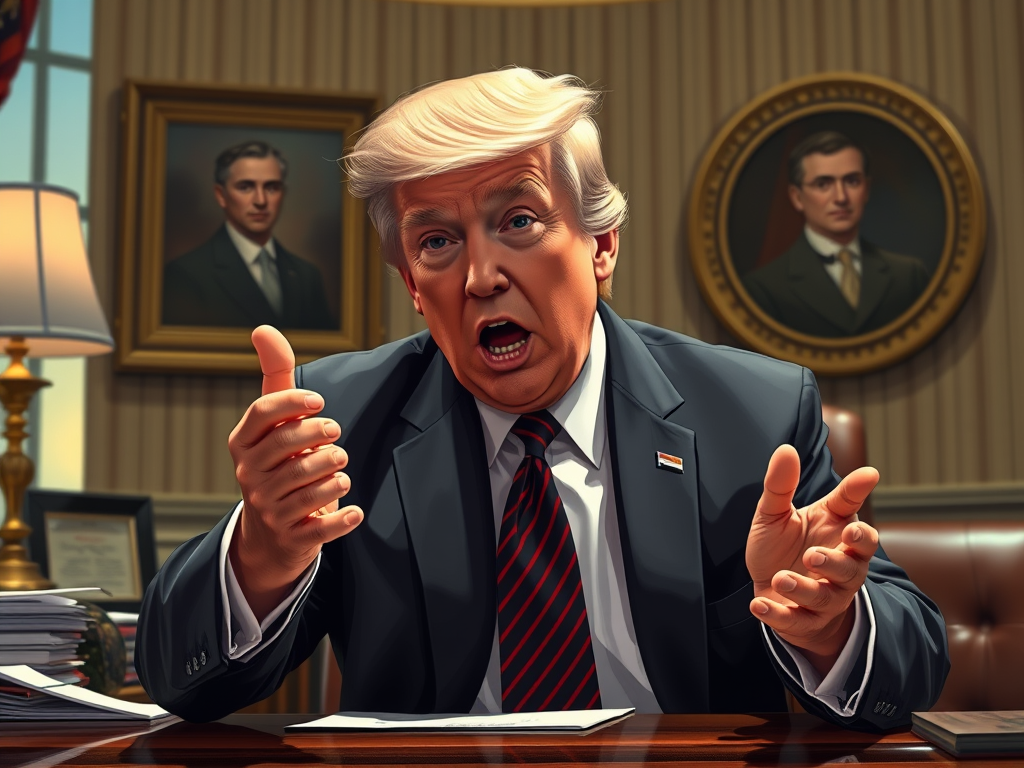

For months, President Donald Trump has been waging an aggressive campaign to reshape the Federal Reserve. His tactics have ranged from public insults to attempts at humiliation, but until now, he had avoided the one move that many experts warned could destabilize global markets—removing a sitting Fed official. On Monday evening, that boundary was crossed when Trump announced he was firing Federal Reserve Governor Lisa Cook, citing allegations of mortgage fraud.
The announcement shocked political leaders, economists, and financial observers worldwide, not only because Cook has not been charged with any crime, but also because it revealed Trump’s deeper ambition: to secure control over the world’s most influential central bank.
Trump Targets Cook, But Eyes the Fed as a Whole
While Trump’s criticism of Fed Chair Jerome Powell has been highly visible for years, Cook became the first direct target of a removal effort. The president’s letter claimed she was being dismissed “for cause,” pointing to accusations that she falsified mortgage applications in 2021, before joining the Fed. The allegations were first raised online by Bill Pulte, a Trump ally, and later referred to the Justice Department for review.
Legal experts, however, argue the case for dismissal is weak. Cook has not been convicted of any wrongdoing, and the accusations relate to personal financial matters, not her performance as a Fed governor. Her attorneys have already announced plans to challenge the firing in court, calling it an “illegal action.” A drawn-out legal battle now seems inevitable, raising questions about how the central bank can function while one of its members fights to keep her seat.
Historic Threat to Central Bank Independence

Janet Yellen, Powell’s predecessor and later Treasury Secretary under President Joe Biden, condemned the move as “utterly alarming.” She warned that Trump’s actions represent a full-scale assault on Federal Reserve independence—an institution long protected from direct political influence.
Experts echoed this concern. Peter Conti-Brown, a governance scholar at the University of Pennsylvania, said the dismissal attempt could mark “the end of central bank independence as we know it.” Since its founding more than a century ago, the Federal Reserve has operated with fixed-term governors to prevent presidents from reshaping monetary policy for short-term political gain. Cook’s term was scheduled to run until 2038, well beyond Trump’s time in office. By forcing her out early, Trump could create a precedent that allows future presidents to threaten or remove officials who do not align with their economic agenda.
A Path to Reshaping the Fed Board
Trump has made no secret of his frustration with the Fed, particularly its reluctance to cut interest rates as quickly as he has demanded. His broader goal appears to be building a loyalist majority on the seven-member board of governors. Cook’s seat, along with the recent resignation of Governor Adriana Kugler, provides Trump with an unexpected opportunity.
If Trump successfully replaces both Cook and Kugler with allies, he would secure a majority on the board even before Powell’s term as chair expires next spring. During a marathon cabinet meeting, Trump celebrated this prospect, telling reporters: “We’ll have a majority very shortly, so that’ll be great.”
Names already being floated include Stephen Miran, Trump’s current Council of Economic Advisers chair. Originally considered for Kugler’s seat, Miran could now be positioned to replace Cook if the Senate confirms him. A Cook replacement would serve a term lasting into the 2030s, ensuring Trump’s influence on the Fed long after he leaves office.
Legal and Market Repercussions
The legal showdown between Cook and the White House could stretch on for months, with no clear resolution before the Fed’s September policy meeting. This uncertainty places monetary policy decisions under a cloud of political interference. The Senate, under Republican control, could also vote to confirm a replacement even while Cook challenges her removal, creating an unprecedented standoff.
Markets, surprisingly, have not reacted dramatically to the news—at least not yet. Yields on the 10-year Treasury note actually fell following the announcement, suggesting investors are not yet pricing in major disruption. But economists caution that this calm may not last. Alan Blinder, a former Fed vice chair, warned that undermining the Fed’s independence could erode investor confidence, destabilize the bond market, and lead to higher long-term inflation.
“If the Fed is seen as making decisions to please the White House rather than follow economic data, businesses and consumers will lose trust in monetary policy,” Blinder said. “That means worse economic performance and higher inflation. Who benefits from that?”
Timing With Jackson Hole
The timing of Trump’s move added another layer of controversy. The firing attempt came just as global central bankers were gathering in Jackson Hole, Wyoming, for one of the most closely watched economic conferences of the year. Fed Chair Powell had intended to focus on U.S. economic conditions and signal the Fed’s readiness to consider rate cuts as soon as next month.
Instead, Powell and his colleagues were forced to field questions about the president’s attack on their institution. Though Powell emphasized that the Fed would “continue to carry out its duties as established by law,” the political backdrop threatened to overshadow policy discussions.
Ironically, Trump’s latest move comes at a moment when the Fed appeared close to delivering what he has been demanding all along—lower interest rates. In his Jackson Hole speech, Powell gave his strongest hint yet that rate cuts may resume soon. Yet Trump seems unwilling to wait for the Fed to act on its own timetable, opting instead to push aggressively for control.
A Pattern of Pressure
Trump’s friction with the Fed is not new. During his first term, he repeatedly criticized Powell, whom he himself had appointed, for resisting rapid rate cuts. Since returning to office, his frustration has only grown as the Fed paused its easing campaign out of concern that Trump’s economic policies were fueling inflation.
Beyond the Fed, Trump has also shown a willingness to target other independent economic institutions. Earlier this month, he fired Erika McEntarfer, head of the Bureau of Labor Statistics, after the agency reported weaker-than-expected job numbers. As Mark Spindel, co-author of a book on central bank independence, observed: “Look at August. How did August start? He fired the head of the BLS. How is August ending? He fired a sitting governor.”

Risks to the Global Economy
Economists emphasize that tampering with the Fed carries global consequences. The Federal Reserve sets policies that influence not only U.S. borrowing costs, but also capital flows, currency stability, and financial confidence worldwide. Investors, particularly in bond markets, rely on the Fed to act independently of political cycles. If that perception changes, markets could quickly turn volatile.
Lev Menand, a Columbia Law professor, warned that Trump’s true strategy is broader than the Cook case. “He’s trying to take control of the Board of Governors by pushing them out and intimidating the rest into aligning with his policies,” Menand said. That strategy, he cautioned, could make Fed officials hesitant to voice independent opinions, undermining the institution’s credibility.
Conclusion: A Defining Moment for U.S. Monetary Policy
The attempt to fire Lisa Cook marks one of the most significant challenges to Federal Reserve independence in modern history. Whether Trump ultimately succeeds may depend on the courts, the Senate, and the willingness of other Fed officials to resist pressure. But the implications extend far beyond one governor’s seat.
If presidents gain the ability to remove central bank officials at will, the balance between politics and economics in the United States could shift permanently. Monetary policy decisions—traditionally shielded from short-term political goals—risk becoming another tool of partisan influence.
For now, the world watches closely. With financial markets calm but uneasy, and with legal and political battles looming, the fight over the Federal Reserve’s independence is far from over. As one former Fed official put it: “This isn’t just about Lisa Cook. It’s about the future of the institution itself.”




Leave a Reply