
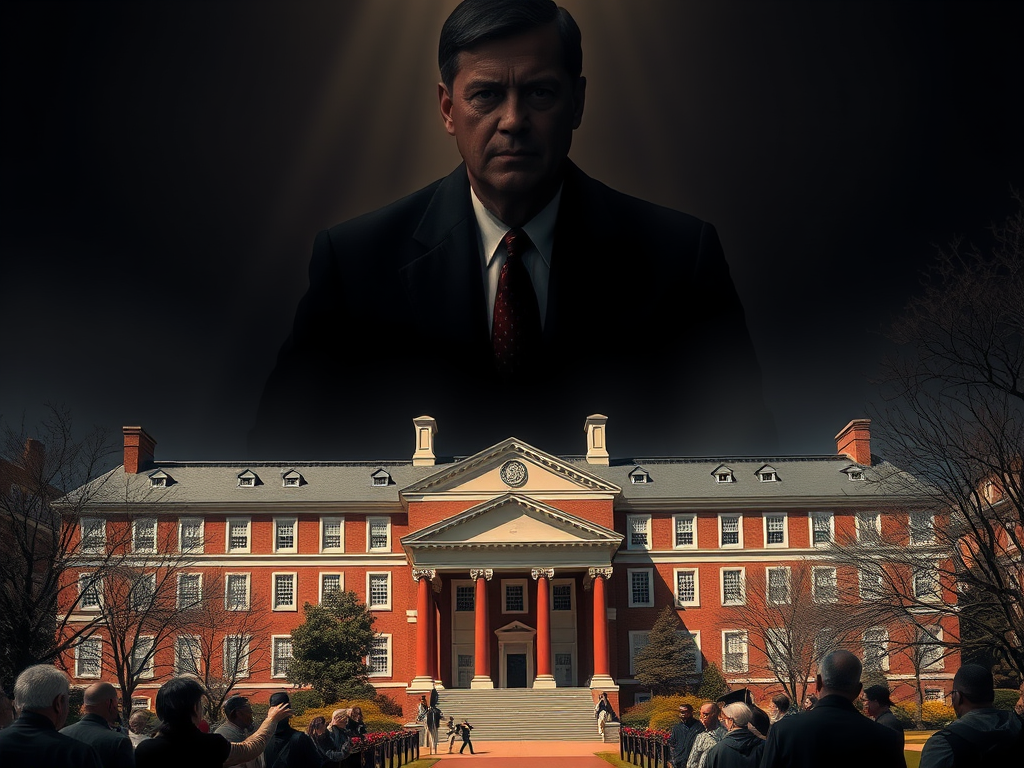

In the early months of spring, Harvard University—long regarded as the wealthiest and most prestigious academic institution in the United States—found itself at the center of an unprecedented clash with Washington. A newly empowered and polarizing presidential administration unveiled an extensive set of directives aimed at reshaping not only Harvard’s internal governance but also the broader culture of American higher education. With billions of dollars in research funding at risk, Harvard’s leaders are now locked in sensitive negotiations with the White House. Yet, even before any formal agreement is signed, the university has already begun enacting changes that mirror many of the administration’s demands.
What is unfolding at Harvard is more than a local dispute; it has become a test case for how far the federal government can go in steering elite universities toward its political and cultural agenda. Across the country, faculty, students, and administrators are watching closely to see whether Harvard resists, compromises, or capitulates.

A Clash of Values
The Trump administration’s wish list was detailed and unusually forceful, containing proposals that many within Harvard consider to be unconstitutional and a violation of academic freedom. Among the most controversial were measures that could influence whom the university hires, admits, or promotes. Harvard President Dr. Alan M. Garber publicly criticized some of these directives, calling them deeply intrusive.
At the same time, Harvard has quietly complied with a number of requests. Some of these steps include renaming or restructuring diversity offices, removing leaders of key academic centers, and shifting partnerships with international institutions. These actions, while framed as independent university decisions, align strikingly with the federal administration’s priorities. Critics inside Harvard fear that such compliance undermines the principle of academic independence and risks eroding freedom of expression on campus.
The Attack on Diversity and Inclusion
One of the administration’s most visible targets has been Harvard’s diversity, equity, and inclusion (DEI) programs. In April, the university rebranded its Office of Equity, Diversity, Inclusion, and Belonging, renaming it the Office for Community and Campus Life. Around the same time, Harvard quietly removed online resources for its Foundation for Intercultural and Race Relations, as well as programs for women and LGBTQ+ students, announcing that these would be merged into a single, centralized center.
Supporters of these offices argue that they provided safe spaces and programming for marginalized communities, from hosting National Coming Out Day events to memorials for Trans Day of Remembrance. Now, the future of such initiatives is uncertain. For many students, the restructuring is seen not as efficiency but as capitulation to federal pressure.
Eli Johnson-Visio, president of the Harvard College Queer Students Association, described the changes as “incredibly disappointing,” adding that “at a time when the queer community faces attacks at the federal level, Harvard’s decision feels like a retreat rather than a defense of its values.”

Faculty Shake-Ups and International Partnerships
The administration’s pressure has also extended into Harvard’s academic leadership. Following complaints from Jewish alumni that certain programs fostered antisemitic rhetoric, federal officials called for leadership changes within the Center for Middle Eastern Studies. Harvard responded by removing two directors, including Cemal Kafadar, a respected Turkish scholar.
The university also ended its longstanding partnership with Birzeit University, a leading Palestinian institution in the West Bank, while simultaneously strengthening ties with universities in Israel. Officials presented this as a move toward balance and inclusivity, though critics saw it as direct political interference in academic exchange.
Legal Battles and the Question of Funding
Tensions escalated further when the Justice Department sent Harvard a letter in February alleging that the school had failed to protect Jewish students from unlawful discrimination. This was followed by a series of private memos from the administration, some of which outlined demands such as centralized student disciplinary procedures, conservative academic centers, and enhanced security for Jewish student groups.
The stakes are enormous. Harvard has already seen $2.2 billion in federal funding frozen or withdrawn. In response, the university filed lawsuits seeking both the restoration of these funds and the protection of international students, many of whom have faced heightened scrutiny. Meanwhile, the American Association of University Professors (AAUP) has also taken legal action, accusing Harvard of “capitulation” that threatens academic freedom.

A Chilling Effect on Campus
Although Harvard continues to resist certain demands—such as reducing alumni involvement in governance or disclosing detailed disciplinary records of international students—the atmosphere on campus has shifted. Professors worry about self-censorship, fearing that controversial viewpoints could trigger federal scrutiny.
Nikolas Bowie, a constitutional law professor at Harvard Law School, expressed this anxiety: “Am I going to find myself in the cross hairs of the federal government because a student doesn’t like a position I’ve taken? It’s certainly part of how I now think about teaching.”
Students, too, are unsettled. The consolidation of diversity offices has sparked concerns that vital programming may disappear or lose institutional support. History professor Kirsten Weld, who also leads Harvard’s AAUP chapter, noted that the rebranding sends a troubling signal: “It shapes what language is now permissible to use when talking about identity and community.”
The Larger Battle for Higher Education
What is happening at Harvard is not occurring in isolation. The Trump administration’s campaign against the university is emblematic of a broader attempt to reshape the nation’s higher education system. By targeting one of the most powerful and symbolic universities, the administration has demonstrated how federal leverage—particularly through funding—can be wielded to demand compliance.
For decades, universities have prided themselves on independence from political interference, guided instead by academic peer review and shared governance. But the current climate suggests that these norms are vulnerable when political leaders choose to exercise the full weight of federal authority.
Some observers see parallels to past battles over affirmative action and free speech on campus, yet many acknowledge that today’s confrontation is more sweeping. The inclusion of demands such as the creation of a conservative think tank modeled on Stanford’s Hoover Institution illustrates the administration’s ambition to reshape not only policies but also intellectual culture.
Balancing Resistance and Survival
Despite accusations of surrender, Harvard has drawn some firm lines. The university has refused to disclose comprehensive records of student protests and has resisted proposals that would have effectively disqualified previous presidents from office. These refusals suggest that Harvard is trying to walk a delicate line: adopting enough changes to protect its funding while resisting the most invasive demands.
Students and alumni remain divided. Some, like Harvard Law student Noah Harris, interpret the changes as largely symbolic: “It feels more like a label shift than a full elimination. My guess is that Harvard will do everything it can to keep student life going as normally as possible.” Others see the moves as a dangerous precedent that weakens the university’s ability to stand firm against political interference.

Conclusion: Harvard at a Crossroads
Harvard’s standoff with the Trump administration represents more than a battle over offices, partnerships, or programming. It is a struggle over the very identity of higher education in America. Should universities remain bastions of independent thought, free inquiry, and academic diversity? Or will they bend to political agendas when funding and federal power are at stake?
As negotiations continue, Harvard finds itself caught between principles and pragmatism. The choices it makes in the coming months will shape not only its own trajectory but also set the tone for how other universities respond to political pressure. Whether the outcome is remembered as a capitulation or a defense of academic freedom, one thing is clear: the struggle at Harvard has become a defining moment in the broader culture war over the future of American higher education.




Leave a Reply