
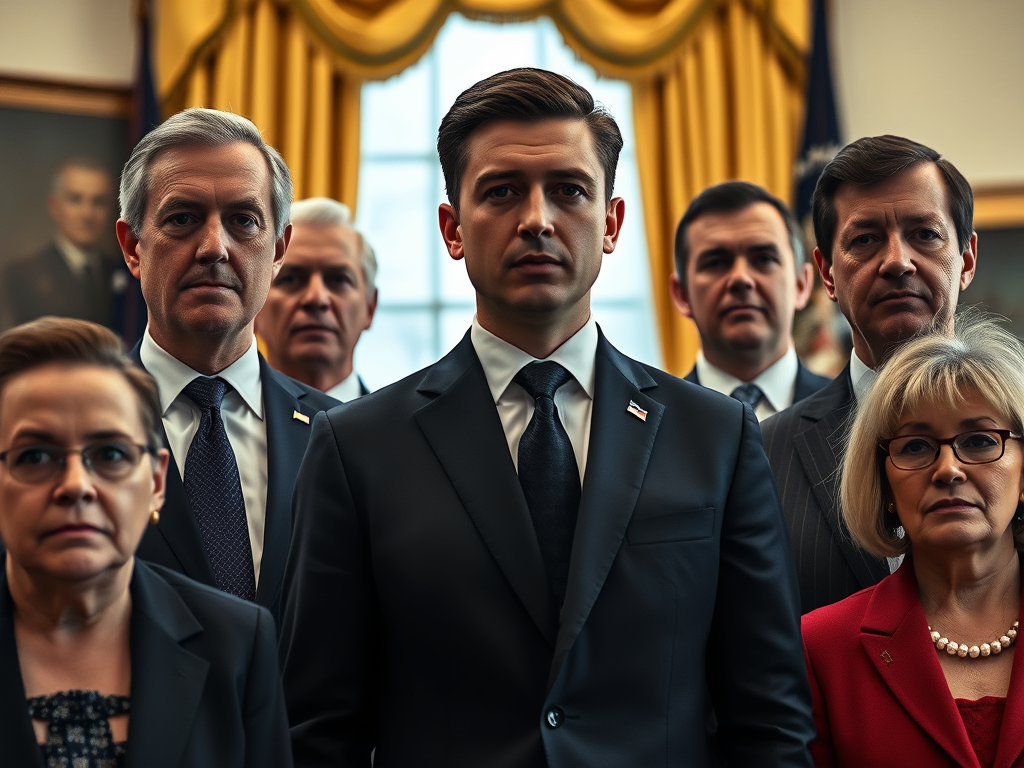

When Ukrainian President Volodymyr Zelensky enters the Oval Office this week, he will not be walking in alone. A group of European leaders — prime ministers and presidents alike — are flying to Washington to stand beside him in what could be one of the most consequential meetings since the war in Ukraine began. Their shared mission is twofold: to secure the survival of a sovereign and defensible Ukraine, and to preserve the fragile unity of the trans-Atlantic alliance at a moment when it risks fracturing.
The urgency of the gathering stems from President Donald Trump’s abrupt policy shift. After previously agreeing with European partners that a cease-fire must precede negotiations over territory and security guarantees, Trump reversed his position during talks with Russian President Vladimir Putin. The move left many European officials deeply unsettled, raising questions over whether Trump had once again drifted too close to Moscow’s agenda.

Europe’s Worries About Trump’s Reversal
For European leaders, the stakes are higher than ever. Their foremost concern is that Trump could pressure Zelensky into an unfavorable deal, effectively forcing Ukraine to concede significant territory and undermining its long-term viability as an independent state. At the same time, they are anxious about the possibility of Washington stepping back from its role as the cornerstone of European security, a role it has played since NATO’s founding in 1949.
In a weekend phone call, Trump promised Zelensky that the U.S. would provide post-war security assurances to Ukraine, a notable departure from his earlier insistence that Europe alone should shoulder the burden. Yet the specifics of those assurances remain vague, leaving allies unsure whether the United States is truly committed to the country’s defense.
European Commission President Ursula von der Leyen, speaking in Brussels on Sunday, underscored that Ukraine’s security and territorial integrity must be guaranteed. However, she also emphasized the immediate need to “stop the killing” and called for urgent direct talks among the presidents of Russia, Ukraine, and the United States.
Behind the scenes, European diplomats describe a mood of near-panic. One senior envoy admitted that the rapid organization of the White House meeting reminded them of the atmosphere just before the Iraq War.
Flashbacks to a Tense February Encounter

Much of the anxiety stems from a disastrous February meeting between Trump and Zelensky, held before television cameras in the White House. On that occasion, Trump bluntly told the Ukrainian president that he “didn’t have the cards” in the war, essentially urging him to accept Russian demands. Just last week, after Putin returned to Russia’s Far East, Trump repeated similar remarks in a Fox News interview, suggesting that Ukraine must recognize Russia as the stronger power and be prepared to make concessions.
American officials have tried to downplay European fears. Secretary of State Marco Rubio, who participated in the Anchorage talks with Putin, insisted that Monday’s meeting is not about preventing Zelensky from being bullied. Instead, he argued, it is about continuing close coordination with European partners and ensuring they have a role in the ongoing negotiations.
Still, European leaders are wary. While the White House extended formal invitations for them to attend, some believe their presence is designed to prevent Trump from making another unilateral pivot that could split the alliance.
Putin’s Long-Standing Goal: Divide the West
For Russian President Vladimir Putin, this moment represents a strategic opening. His long-term ambition has always been greater than seizing Ukrainian territory. For nearly twenty-five years, Putin has sought to fracture NATO and weaken the bond between the United States and Europe. Trump’s sudden change in negotiating posture, abandoning the idea of a cease-fire as a prerequisite for peace, gives Putin fresh momentum to pursue that objective.
European allies have pledged continued support for Ukraine, even organizing funding outside NATO structures to ensure aid flows uninterrupted. They managed to secure a U.S. commitment to provide weapons — though only if Europe covers the costs. The arrangement signals that Trump views the defense of Ukraine primarily as Europe’s responsibility, not Washington’s.
This dynamic was on full display at Anchorage, where Putin exploited divisions with skill. Trump echoed many of the Russian leader’s talking points, particularly regarding Ukraine’s NATO aspirations. He even suggested that Ukraine provoked the invasion by seeking membership in both NATO and the European Union.
A Dangerous Break in Strategy
Military experts warn that Trump’s reversal could have severe consequences. James G. Stavridis, a retired U.S. admiral and former NATO commander, described the shift as “a dangerous moment for the alliance.” By abandoning the cease-fire requirement without issuing new warnings to Moscow, Washington risks signaling weakness just as Russia pushes ahead on the battlefield.
This is exactly the type of split European leaders had tried to prevent since Trump’s return to power in January. NATO’s new secretary general, former Dutch prime minister Mark Rutte, made repeated visits to Washington to smooth relations, determined to avoid the public clashes that marked Trump’s first term. His efforts initially appeared successful: at the June NATO summit, members agreed to increase defense spending, handing Trump a symbolic victory.
In addition, European nations crafted a program to purchase American weapons for Ukraine, appealing directly to Trump’s transactional instincts. The plan seemed to be working until Anchorage, when Trump once again reversed course.

Putin’s Relentless Strategy
Putin, for his part, remains unwavering. Despite enormous Russian casualties, he continues to insist that peace will only come when Russia achieves its objectives. Last year, he signaled openness to a cease-fire if it froze the current battle lines, effectively locking in Russia’s occupation of 20 percent of Ukrainian territory. Ukraine and its allies rejected the proposal at the time. But with Russian forces now advancing, Putin sees little reason to settle.
Senator Rubio summed it up starkly: “It’s a meat grinder, and they just have more meat to grind.” The grim assessment highlights how Russia appears willing to sustain massive losses as long as it maintains momentum.
What Comes Next at the White House
When Zelensky and European leaders meet Trump in Washington, their agenda will extend beyond immediate territorial questions. A central challenge will be pressing the U.S. to commit to concrete security guarantees for Ukraine. Options on the table include an international peacekeeping mission designed to prevent Putin from reigniting the war in the future.
Trump has hinted that he may support such efforts, though American contributions would likely focus on intelligence rather than deploying troops. European leaders hope to lock him into that commitment, fearing otherwise that U.S. support could evaporate under pressure.
British Prime Minister Keir Starmer, following a weekend call with fellow European leaders, praised Trump’s stated willingness to provide Ukraine with security guarantees. His carefully worded statement appeared aimed at binding the U.S. president to a clearer position, while reiterating Europe’s readiness to send forces to secure Ukraine’s skies and seas once the fighting stops.
The Future of the Alliance Hangs in the Balance
The stakes of this week’s White House meeting could not be higher. For Ukraine, the outcome may determine whether it retains sovereignty or is forced into a fractured peace on Russia’s terms. For Europe, it could decide whether NATO remains united or slips further into division. And for the United States, it will test whether Washington still intends to play its historic role as the guarantor of trans-Atlantic security.
As the war enters its fourth year, one truth is clear: Putin is betting on Western disunity. Whether Trump and America’s European allies can find common ground will determine not only the fate of Ukraine but also the credibility of the alliance that has safeguarded peace in Europe for more than seventy years.




Leave a Reply