

Israeli Settlement Expansion Plan Will ‘Bury’ Palestinian Statehood, Minister Vows

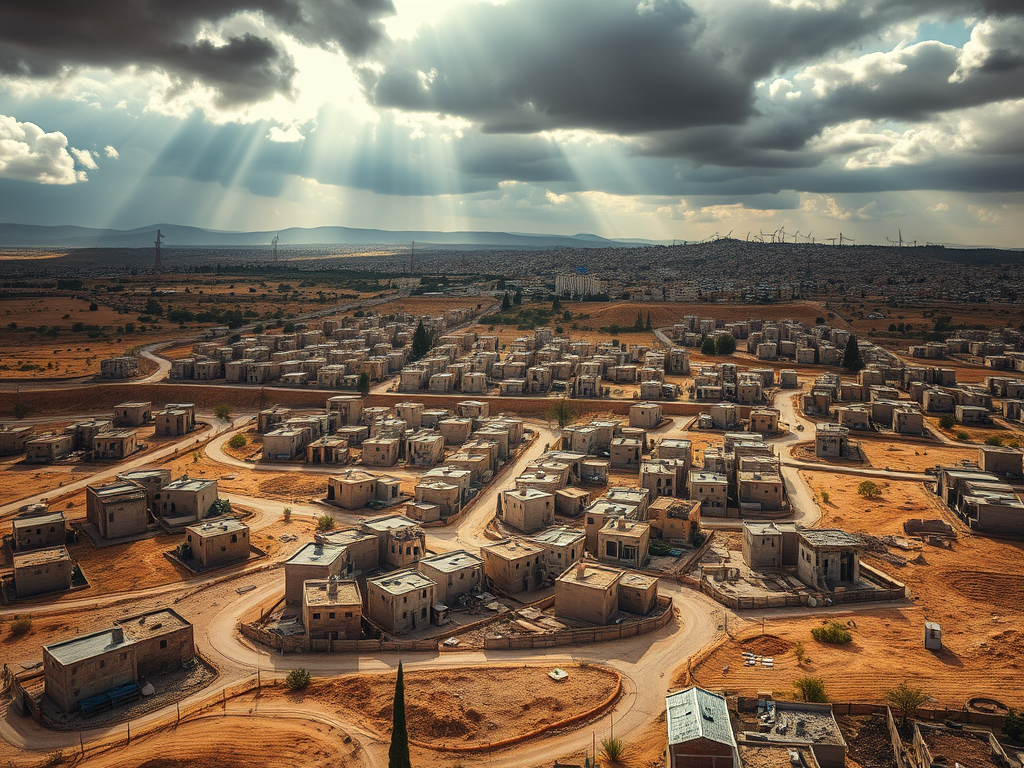
Israel’s far-right finance minister, Bezalel Smotrich, announced on Thursday that plans to expand a major settlement near occupied East Jerusalem have received initial approval — a move he claims will prevent the creation of a Palestinian state.
According to Smotrich, the proposal calls for the construction of roughly 3,400 new housing units in strategically significant territory under Israeli control. While this announcement marks a critical step forward, the plan still requires final authorization from the Supreme Planning Council, the government body overseeing such developments. This procedural step is expected to be addressed soon, but no official statement was released by the council on Thursday.
Timing Amid International Push for Palestinian Statehood
The declaration comes at a politically sensitive time. Several countries — including Australia, Britain, Canada, and France — have recently signaled their intention to recognize Palestinian statehood. Their rationale is to revive peace talks and push toward a two-state solution to the decades-old Israeli-Palestinian conflict, especially amid the worsening humanitarian crisis in Gaza.
Smotrich, however, made it clear he sees this expansion as a direct challenge to such international efforts. Speaking before journalists and settlement leaders in the Israeli-occupied West Bank and East Jerusalem, he stated:
“This plan buries the idea of a Palestinian state. Anyone in the world today who tries to recognize a Palestinian state will receive an answer from us on the ground — not through documents, decisions, or declarations, but through facts.”
Foreign Minister Gideon Saar reinforced this sentiment in an interview with Newsmax a day earlier, dismissing the notion of a two-state solution as outdated and counterproductive. “In the international community, it’s become a slogan — two-state solution. Who said it’s the solution? It’s probably the problem,” Saar said, describing the concept as “the two-state illusion.”
Strong International Condemnation
The settlement plan quickly provoked strong reactions from the international community.
Jordan’s Foreign Ministry issued a statement Thursday condemning both the proposed expansion and Smotrich’s remarks as “extremist and racist statements” and a “blatant violation of international law.” The ministry emphasized that the move undermines “the inalienable right of the Palestinian people to establish their independent, sovereign state on the June 4, 1967 lines, with occupied Jerusalem as its capital.”
Peace Now, an Israeli advocacy group that monitors settlement activity, reported that a subcommittee within the Supreme Planning Council had already dismissed all objections to the project earlier this month. The group noted that a final approval hearing was scheduled for next week — unusually quickly. If approved, infrastructure work such as roads, water systems, and electricity could begin within months, with housing construction potentially starting within a year.
Hagit Ofran, who leads Peace Now’s Settlement Watch project, suggested that Smotrich’s announcement was unlikely to have been made without the consent of Prime Minister Benjamin Netanyahu. In the past, Netanyahu has postponed or blocked settlement approvals under international pressure, but he has not publicly commented on this latest proposal. His office and Smotrich’s representatives did not respond to media requests.

The Legal and Political Context
Most of the international community, along with the United Nations, considers the West Bank and East Jerusalem to be illegally occupied territories. These areas are viewed as vital for any future Palestinian state, to be determined through negotiations. The International Court of Justice has previously declared Israeli settlements in these regions illegal and has called for Israel’s withdrawal.
The planned expansion would link Jerusalem with Ma’ale Adumim, a major West Bank settlement. Critics warn that this would geographically separate East Jerusalem from the rest of the West Bank, making the establishment of a contiguous Palestinian state far more difficult — if not impossible.
Israel captured these territories during the 1967 war with neighboring Arab states. Since then, successive Israeli governments have supported the gradual growth of Jewish settlements there. Today, approximately three million Palestinians and 700,000 Jewish Israelis live in the West Bank and East Jerusalem.
Tensions have escalated further since the Hamas-led attack on Israel in October 2023 triggered the war in Gaza. Reports of violence by extremist settlers against Palestinians have increased sharply in the months since.
Global Calls for Israel to Halt the Plan
International actors have expressed deep concern. Qatar’s Ministry of Foreign Affairs released a statement urging the global community to pressure Israel to stop the expansion plans. The chairman of the Palestinian National Council, Rawhi Fattouh, accused Israel of pursuing a “creeping annexation policy” consistent with Netanyahu’s vision of a “Greater Israel.”
The European Union’s foreign policy chief, Kaja Kallas, also condemned the proposal, warning that it “further undermines the two-state solution while being a breach of international law.” She called on Israel to halt both this project and broader settlement construction.
From Washington, a senior U.S. State Department official, responding to inquiries about Smotrich’s comments, reiterated the American position that “a stable West Bank keeps Israel secure and is in line with this administration’s goal to achieve peace in the region.”
A Potential Turning Point
If the plan receives final approval next week, it could represent a major turning point in Israeli settlement policy — one with lasting implications for the peace process. Experts note that the project’s location is particularly sensitive, as it would cement Israeli control over a corridor of land separating Palestinian communities.

Critics argue that such an expansion would effectively “seal off” East Jerusalem from any future Palestinian state, thereby rendering the two-state framework — long seen as the cornerstone of international peace efforts — unviable. Proponents within Israel’s right-wing government, however, view it as a legitimate assertion of sovereignty over what they consider historically Jewish land.
Given the current geopolitical climate, the decision will be closely watched not only by regional stakeholders but also by global powers seeking stability in the Middle East. Whether the Supreme Planning Council moves forward as expected, or whether international pressure prompts a delay, will likely signal the direction of Israel’s settlement policy in the coming years.
For now, the debate over this settlement expansion underscores the widening gap between Israel’s domestic political agenda and the international community’s vision for peace. As bulldozers and building crews stand ready, the question remains: will the facts on the ground outpace diplomacy once again?




Leave a Reply