
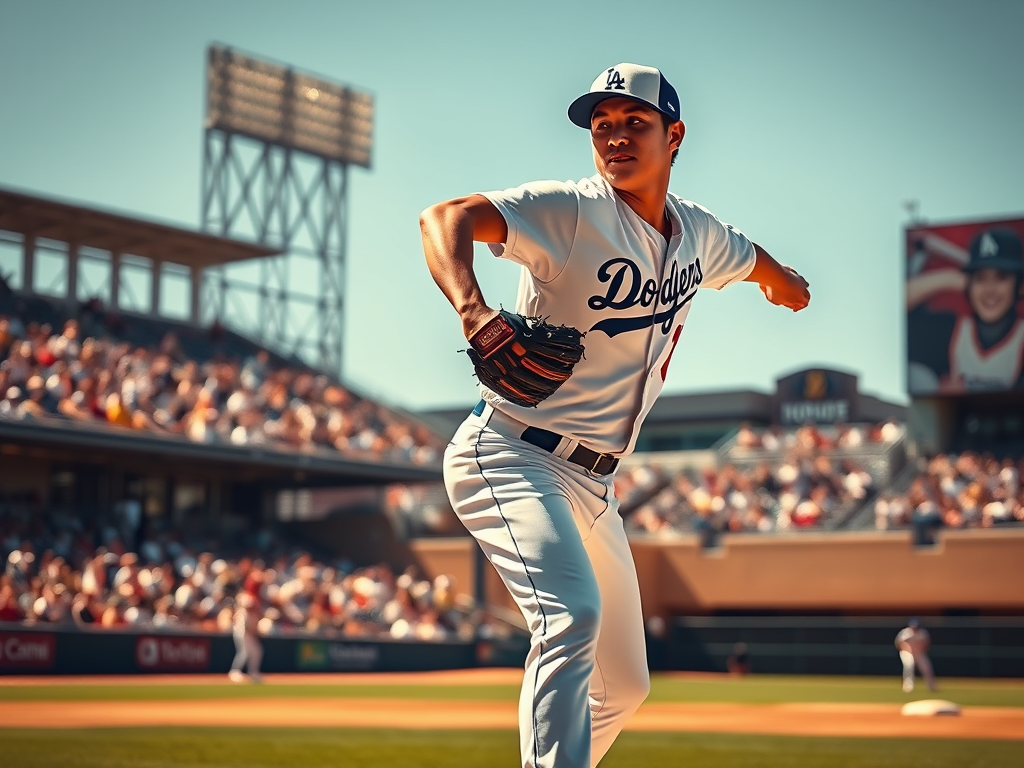

In June, after nearly two years away from the pitcher’s mound, Shohei Ohtani made his long-awaited return. Just minutes after throwing his final pitch of the first inning, he stepped into the batter’s box to lead off for the Los Angeles Dodgers. That single moment captured the essence of baseball’s most unique phenomenon — a true two-way player competing at the sport’s highest level.
Yet Ohtani’s path is an outlier. When he broke into Major League Baseball (MLB) with the Los Angeles Angels in 2018, it seemed his arrival might spark a new era of multi-talented athletes taking the field both as pitchers and hitters. Several players have been drafted in recent years with the intention of following in his footsteps. Still, Ohtani remains the lone active player capable of excelling in both roles — a rarity that begs the question: why hasn’t anyone else managed to join him?
The Physical and Mental Toll

Team executives and players who have tried to maintain both skill sets at the major-league level cite one obvious obstacle: the enormous physical and mental demands. Playing every day while also taking the mound requires constant preparation, recovery, and discipline. The result is often an increased risk of injury and burnout over the course of a 162-game season.
Kansas City Royals pitcher Michael Lorenzen, who has dabbled in the two-way role but hasn’t done both since 2021, puts it bluntly: “Shohei came in like the Babe Ruth of our generation. That’s now the standard. If you’re only slightly above average at both hitting and pitching, is it really worth the grind?”
In the majors, even “average” is elite. Lorenzen has posted a 104 ERA+ as a pitcher, slightly above league average, but his 84 OPS+ as a hitter put him below the hitting benchmark. For most players, excelling in one area is challenging enough — attempting both at a professional level often dilutes overall performance.
The Opportunity Gap
Even talented collegiate two-way stars face a harsh reality when turning pro. Lorenzen, for instance, hit .324 with power in college while also serving as Cal State Fullerton’s dominant closer. But when the Cincinnati Reds drafted him in 2013, the message was clear: his fastest path to the big leagues was through pitching, not hitting.
This is a common scenario. Scouts say that by the time a player is drafted, organizations are “99 percent” certain whether he will focus on hitting or pitching. Given that most prospects are eager simply to reach the majors, they tend to follow the team’s advice.
Ohtani was the rare exception. Already a proven two-way star in Japan’s Nippon Professional Baseball, he had the leverage to demand a chance to do both in MLB — and he arrived in the U.S. as a relatively affordable signing, giving teams more incentive to accommodate his wishes.
Draft Picks with Two-Way Potential
Some teams still draft players as two-way prospects. The New York Mets, for example, selected Nolan McLean in the third round in 2023, announcing him as both a pitcher and a hitter. However, McLean eventually chose to focus on pitching and is now ranked as the Mets’ No. 3 prospect. Other recent Mets draft picks, Carson Benge and Mitch Voit, were also introduced as two-way players but have since specialized.
The San Francisco Giants followed a similar pattern, drafting Reggie Crawford (2022) and Bryce Eldridge (2023) as two-way talents. Injuries and positional promise led both to concentrate on one discipline. Even high-profile college star Jac Caglianone, dubbed the “Ohtani of college baseball,” transitioned into a position player after being drafted by the Royals.
The pattern is clear: while MLB teams are intrigued by the concept, player development realities often force a decision early in a career.
The Roster Rule Roadblock
Perhaps the biggest structural challenge lies in MLB’s roster rules. Since 2020, to officially qualify as a two-way player, an athlete must pitch at least 20 innings and play in 20 games as a position player or designated hitter (with at least three plate appearances in each) in the current or previous season. Players with this designation don’t count toward the 13-pitcher limit on a 26-man roster, effectively allowing a team to carry an extra arm.
Without the designation, a hitter can only pitch in extra-inning games or lopsided contests (with a six-run margin or more), and pitchers face similar restrictions on hitting opportunities. This rule effectively sidelines two-way ambitions for players who might otherwise thrive in hybrid roles.
San Diego Padres infielder Jake Cronenworth, a former two-way player in college, questions the logic. “Why should you have to re-qualify in the majors for something you’ve already proven at other levels? It just limits what players are allowed to do.”
Injuries: The Constant Threat
Injury risk looms as the most significant deterrent. Royals reliever Lucas Erceg, once a promising two-way prospect, eventually gave up hitting after repeated elbow issues from the dual workload. Even Ohtani has undergone two major elbow surgeries in five years. For organizations, the fear of losing a top hitter or pitcher to injury often outweighs the potential rewards.
Players like Braves prospect Spencer Schwellenbach understand the trade-off firsthand. After Tommy John surgery in college, Schwellenbach decided the toll of maintaining both roles wasn’t sustainable. “Doing both at a high level is almost impossible if you want to stay healthy,” he admitted.
Specialization from an Early Age
Scouts also point to cultural shifts in player development. Young athletes are now encouraged to specialize in a single position or skill earlier than in past decades. This “pick-one” mentality narrows the pool of prospects who might develop into legitimate two-way threats by the time they reach professional baseball.
What the Future Holds
Despite the obstacles, interest in the two-way concept hasn’t vanished. Lorenzen has expressed willingness to go to Triple-A just to prove he can still hit, and Caglianone admits he still thinks about returning to pitching someday. Ohtani himself has voiced optimism, saying through his interpreter Will Ireton: “I’m sure we’ll see another two-way player in the future. When that happens, I’ll be just as excited as they are.”
Still, as of today, Ohtani remains a singular figure — the only player consistently excelling as both a pitcher and a hitter in MLB. His unique combination of skill, resilience, and opportunity is unlikely to be replicated anytime soon.
For now, the dream of the modern two-way star exists mostly in college programs, minor league experiments, and the imagination of fans who hope to see another player dominate the game from both sides of the diamond. Until someone else proves they can match Ohtani’s standard, he will remain not just a generational talent, but perhaps the last true embodiment of baseball’s most demanding role.




Leave a Reply