

Trump’s Ukraine Gamble: Tariffs, Sanctions, and a Shifting Strategy on Russia

Just a day after threatening to penalize Russia over its war in Ukraine, former U.S. President Donald Trump appeared uncertain about whether economic measures would actually be effective. His wavering rhetoric has sparked renewed debate about the true extent of American leverage over the Kremlin—and whether Trump is prepared to deploy it meaningfully.
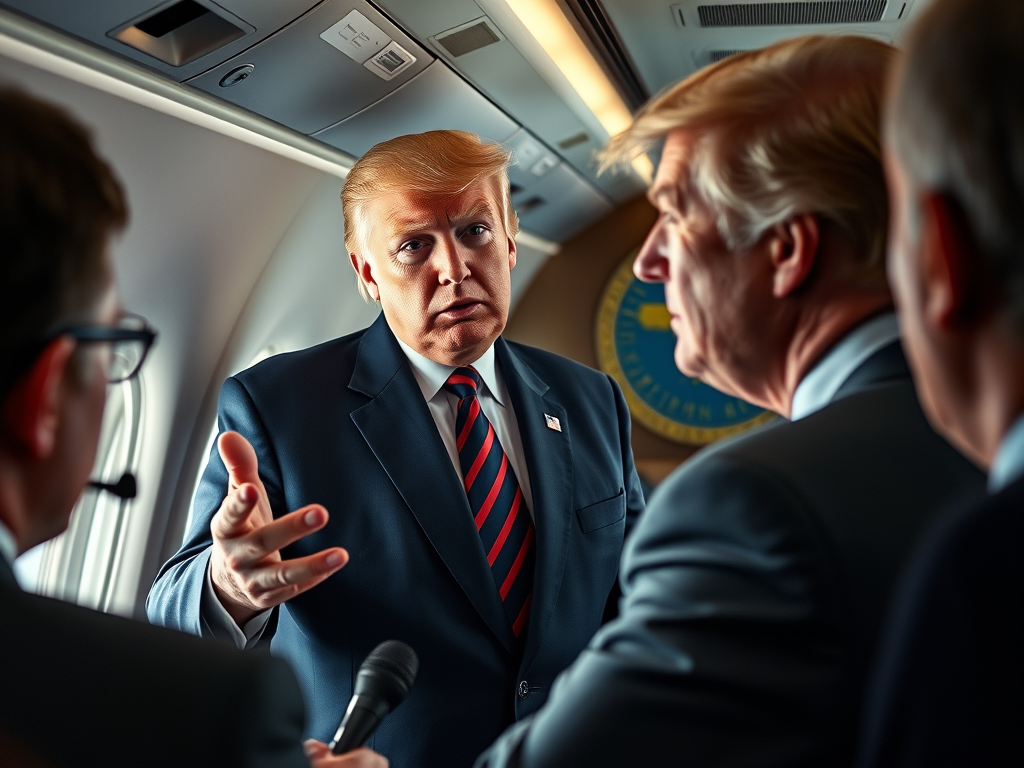
Speaking aboard Air Force One, Trump told reporters that the United States might implement tariffs within the next 10 days, adding, “I don’t know if it’s going to affect Russia, because [Putin] wants to, obviously, probably keep the war going.” Trump emphasized that the proposed economic actions “may or may not affect them. But it could.”
This ambiguity has fueled criticism that Trump’s approach to the Russia-Ukraine conflict is more reactive than strategic. At various points, Trump has positioned himself as uniquely capable of persuading Russian President Vladimir Putin to end the war. At other times, he has appeared to cast Ukraine—not Russia—as the provocateur, challenging the conventional narrative that President Volodymyr Zelensky’s government is the victim of Russian aggression.
But as the conflict grinds on with no clear end in sight, even Trump’s own patience seems to be wearing thin. Now, he is hinting at more aggressive economic retaliation, though critics question both his resolve and the feasibility of his proposals.
Mixed Messages and a Shortened Timeline

Earlier this month, Trump said he would give Moscow 50 days to deescalate the war. This week, however, he shortened the window to just 10–12 days, warning of “sanctions and maybe tariffs, secondary tariffs” if Russia continues its military operations. Secondary tariffs typically refer to penalties imposed on third-party nations that continue doing business with a sanctioned country—in this case, those buying Russian oil or other goods.
Despite Trump’s tough talk, he has yet to act decisively. While he has repeatedly promised to hold Russia accountable, none of these measures have materialized. His inconsistency has created uncertainty not only among foreign policy experts but also among U.S. allies who are struggling to decipher whether his administration—should he return to office—would adopt a more hawkish stance or revert to diplomacy.
Matt Duss, Executive Vice President at the Center for International Policy, noted, “Trump seems to be realizing what a lot of us observed from early on — that Zelensky is not the problem. Putin is the problem.”
Duss added, “Trump obviously had great confidence in his own deal-making abilities, but reality seems to be hitting.”
Can Tariffs Work Against Russia?

Experts argue that tariffs alone are unlikely to compel Russia to change its course. Trade between Russia and the U.S. has diminished substantially since the 2022 invasion of Ukraine, meaning there are few remaining goods to target with import duties. More impactful would be sanctions targeting Russia’s energy sector—particularly oil and gas—which account for roughly one-third of the Russian government’s revenue.
A Senate bill under consideration proposes exactly that: crippling sanctions aimed at restricting Moscow’s oil exports. However, Republican leaders have delayed a vote on the bill, reportedly due to Trump’s preference for unilateral executive action rather than bipartisan legislation.
Foreign policy analysts point out that Russia has spent years “sanction-proofing” its economy. Moscow’s financial technocrats have strengthened domestic production, diversified trade partnerships, and invested in academic programs—including a master’s degree in sanctions evasion—designed to insulate the economy from external pressure. However, oil and gas remain an Achilles’ heel.
Trump’s threat of secondary tariffs on countries that continue importing Russian oil—such as China, India, and Turkey—could significantly escalate global economic tensions. Critics warn such measures might drive global oil prices sharply higher, creating ripple effects throughout international markets.
Western nations have instead adopted an “oil price cap” strategy, seeking to limit Moscow’s profits while maintaining global energy stability. Yet this approach has largely failed to curb Russia’s ambitions.
Despite these risks, Trump appeared dismissive of any negative consequences to the oil market, stating that he was not concerned about the potential impact of sanctions and tariffs on global prices.
More Tools at Trump’s Disposal
Although tariffs may have limited effectiveness, Trump still holds a number of economic and military options. Foreign policy experts say he could take further action by restricting Russia’s banking operations, capping energy revenues more aggressively, or coordinating with European allies to block technology transfers critical to Russia’s war effort.
The White House, in a recent statement, declined to say whether Trump was exploring additional strategies. However, it reaffirmed his intent “to stop the killing, which is why he is selling American-made weapons to NATO members and threatening Putin with biting tariffs and sanctions.”
Evelyn Farkas, former Deputy Assistant Secretary of Defense for Russia, Ukraine, and Eurasia, said Trump has other tools available, including the Senate bill that would impose sweeping sanctions—up to 500%—on imports from any nation that trades with Russia, especially in uranium and petroleum products.
Farkas also urged Trump to increase military assistance to Ukraine, make better use of frozen Russian assets, and signal to the Kremlin that military victory is no longer attainable.
“He thought that he and his negotiators could talk Russia into some kind of compromise, but Putin is not interested in compromise,” Farkas said. “Putin will keep fighting until he realizes he cannot win militarily.”
Moscow’s Reaction: Skepticism and Scorn
So far, the Kremlin has offered only a muted response to Trump’s latest threats. Spokesman Dmitri S. Peskov said simply that the Russian government had “taken note” of Trump’s comments.
Other Russian officials have been more vocal—and mocking. Russian Foreign Minister Sergey Lavrov scoffed at Trump’s ever-shifting deadlines, noting that the former president previously offered timelines of 100 days, 50 days, and now just 10.
Former President Dmitri A. Medvedev accused Trump of playing “the ultimatum game with Russia,” warning that such rhetoric not only heightens tensions with Moscow but could also backfire domestically. In a social media post, Medvedev mocked Trump for using the same tactics as “Sleepy Joe,” Trump’s nickname for President Biden.
“Each new ultimatum is a threat and a step towards war,” Medvedev wrote. “Not between Russia and Ukraine, but with his own country.”
A Shift in Strategy?
Some experts believe Trump is slowly recognizing that his earlier approach may have been a miscalculation. Daniel Fried, a fellow at the Atlantic Council and former U.S. ambassador, said Trump’s initial hesitancy sent the wrong message to Russia, signaling a lack of American resolve.
“Trump gave Russia runway to play this out as long as they can, looking for total victory,” Fried said. “The inconsistency and abrupt shift of position makes it harder to keep the pressure on Russia, because it increases the chance that Putin will fold his arms and wait.”
Still, Fried suggested Trump might now be moving in a tougher direction—one that aligns more closely with long-term Western strategic goals.
Charles Kupchan, a senior fellow at the Council on Foreign Relations and Georgetown professor, said Trump should leverage his experience in coercive diplomacy and build on NATO unity to strengthen his hand.
“Bottom line, Putin will stop when he is stopped,” Kupchan said. “And Trump does not want to go down in history as the American president who lost Ukraine.”




Leave a Reply