
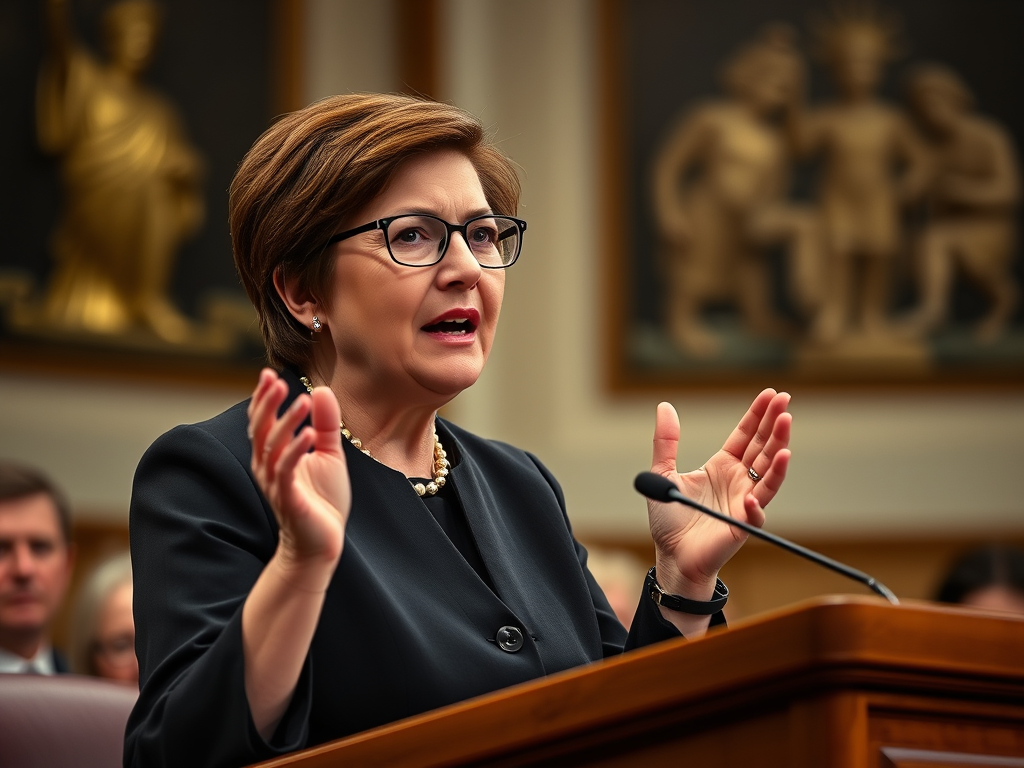

Justice Kagan Urges Supreme Court to Explain Itself in Emergency Decisions

In a candid public appearance on Thursday, U.S. Supreme Court Justice Elena Kagan expressed concern that the nation’s highest court has not been sufficiently transparent in explaining its decisions in emergency cases, particularly those involving major policy shifts pursued by the Trump administration. Speaking at a judicial conference in Monterey, California, Justice Kagan emphasized that the Court’s increasing reliance on the emergency docket has created a duty to more clearly articulate its reasoning—not just for the benefit of the public, but also for lower court judges who must interpret and implement these rulings.
“As our use of the emergency docket has grown,” Justice Kagan remarked, “so too has our responsibility to justify our decisions. I think when we first began this practice, we didn’t fully recognize that. But now, it’s clear: we owe the public and our colleagues in the judiciary an explanation.”
The emergency docket—often referred to by critics as the “shadow docket”—is a procedural tool used by the Supreme Court to make quick decisions without the extensive briefing and oral arguments required in standard cases. While these rulings can have far-reaching implications, they are frequently issued without signed opinions or any written rationale, leaving lower courts to speculate about the legal basis for the decision.
Justice Kagan noted that even brief explanations, spanning only two or three pages, would go a long way in helping others understand the court’s perspective. “At a minimum,” she said, “we should be able to say: ‘This is the key legal issue. This is what we saw as the core problem. Please address this.’ That kind of guidance can be incredibly valuable.”

During her discussion with a federal judge and an attorney from the Ninth Circuit, Justice Kagan concentrated much of her commentary on the shortcomings of the emergency docket system. She expressed frustration that the court often decides these high-stakes matters without providing any meaningful insight into how or why the conclusion was reached.
Over the past several months, the Supreme Court has been inundated with urgent applications, many stemming from the Trump administration’s attempts to reorganize the federal government. These include efforts to scale back federal departments, end temporary protections for large populations of immigrants, and remove agency heads from office. Typically, these matters arise when lower court judges issue preliminary rulings blocking executive actions, and the administration seeks immediate relief from the Supreme Court.
Justice Kagan acknowledged that while some emergency interventions are necessary, the court should approach these cases with caution. “We must recognize the gravity of issuing decisions without the usual deliberative process,” she said. “Sometimes it’s unavoidable, but we shouldn’t become too comfortable relying on this mechanism.”
Emergency decisions often lack even the most basic elements of judicial reasoning. Without oral arguments or full written briefs, the justices render decisions that provide no insight into their legal analysis. According to Georgetown law professor Stephen I. Vladeck, who authored the book The Shadow Docket, the Supreme Court has granted emergency requests from the Trump administration on at least seven occasions recently—without offering any explanation at all.
Kagan pointed out that the justices usually do not confer in person when handling emergency applications. Instead, decisions are made more informally, often under significant time pressure. She admitted that this process has evolved out of necessity but said the Court can no longer ignore the consequences of issuing unexplained rulings. “At some point,” she said, “we have to confront the fact that these orders don’t say anything. People deserve to know why we did what we did.”
One particularly troubling example, Kagan noted, occurred just last week. The Court allowed the Trump administration to make sweeping cuts to the Department of Education. The order was unsigned and gave no legal rationale, yet it effectively reversed a lower court decision that had blocked the cuts. Kagan, along with Justices Sonia Sotomayor and Ketanji Brown Jackson, issued a strongly worded 19-page dissent, outlining their objections in detail. But the majority gave no indication of its reasoning, leaving the lower court that had issued the original injunction in a difficult position.
“What are they supposed to take from that?” Kagan asked. “They’re left guessing about the grounds for our decision and how to apply it going forward.”
Justice Kagan’s remarks reflected deep concern for the trial and appellate judges who are tasked with applying the Supreme Court’s often-opaque rulings. Throughout her comments, she reiterated the importance of transparency and consistency within the judiciary, particularly during a time when the legal system is under increasing scrutiny.
She also touched on a growing and deeply troubling issue: threats and harassment directed at judges. While she did not name names, Kagan acknowledged that some judges, including her own colleagues, have been targeted for their rulings. She referenced the protests outside the homes of conservative justices following the Court’s controversial decision to overturn Roe v. Wade, and the terrifying incident in which an armed man appeared at the home of one of her fellow justices.
“That’s a frightening reality,” Kagan said. “Some of my colleagues, particularly those in the majority, faced protests outside their homes—homes with children in them. A gunman showing up at a colleague’s home? That crosses every line.”
She further noted that judges throughout the federal system are facing increased hostility, from trial court judges to those serving on appellate panels. “This kind of vilification is dangerous,” she warned. “Criticizing decisions is fair game. But threatening or demonizing judges undermines the entire judicial system.”
Despite these challenges, Kagan urged judges to continue upholding the rule of law with integrity and independence. She emphasized that the proper response to lawlessness or perceived bias in the system is not retaliation or withdrawal—but steadfast commitment to judicial principles.
“The way to counter attacks on judicial independence is through example,” Kagan said. “When we are challenged, we respond not with rhetoric, but with the law. We do our work, follow precedent, explain our decisions, and act with fairness. That’s how we protect the judiciary and earn the public’s trust.”
Her words served as a powerful reminder that in times of political turmoil and legal uncertainty, the legitimacy of the court rests not only on its decisions, but on its willingness to explain them.




Leave a Reply