

Columbia Expels and Suspends Students Involved in Library Takeover

Columbia University has taken decisive action against students involved in a major pro-Palestinian demonstration that disrupted campus operations in May. The protest, which led to the shutdown of Butler Library just before final exams, has resulted in the suspension and expulsion of several students. The university, in a marked departure from its previously slower disciplinary pace, acted more promptly and firmly this time, according to an official announcement released on Tuesday.
This recent disciplinary wave follows the implementation of a new centralized system for handling violations of campus rules, signaling Columbia’s firmer approach to campus protests that breach institutional policies. The university’s statement did not provide specific figures, but an individual familiar with the matter, speaking anonymously due to the sensitivity of the situation, revealed that more than 70 students had faced disciplinary consequences. Of these, approximately 60 students were suspended—most for a duration of two years—while a small number were permanently expelled.
In addition to the expulsions and suspensions, fewer than ten protesters were placed on probation. Probation was generally reserved for first-time offenders or students who cooperated with university security by presenting identification when asked. In at least one particularly severe case, a student had their academic degree rescinded, a punishment typically reserved for repeated violations of university policy.

These disciplinary measures come at a time when Columbia is engaged in negotiations with the Trump administration over the reinstatement of more than $400 million in federal research funding. That funding had been suspended amid federal allegations that Columbia had failed to sufficiently address antisemitism on campus, which the government considered a violation of students’ civil rights. According to individuals familiar with the ongoing discussions, the settlement currently under consideration could include a financial penalty of up to $200 million, which Columbia may agree to pay in order to resolve the charges.
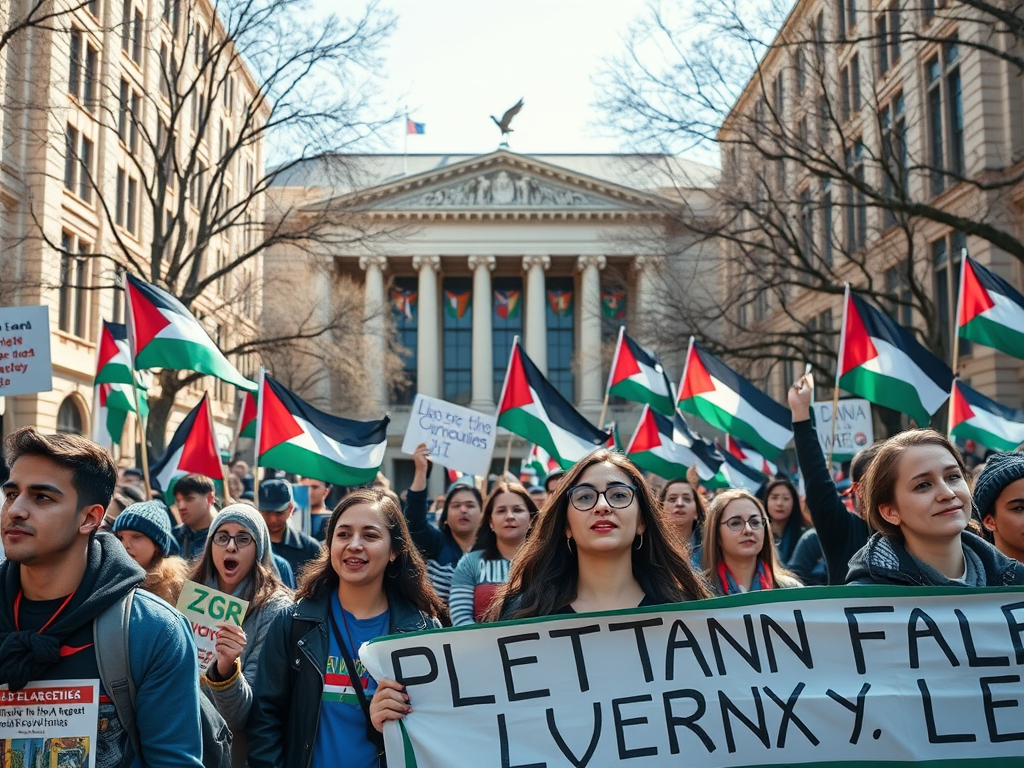
The incident that triggered these penalties occurred on May 7, when a group of students associated with Columbia University Apartheid Divest (CUAD), a pro-Palestinian activist organization, staged a surprise occupation of Butler Library. Their goal was to revive momentum for the Palestinian solidarity movement on campus, which had seen a decline in activism since the prior year. In a coordinated effort, dozens of masked students bypassed security and took control of a prominent space in the library, which they renamed in honor of a Palestinian activist who was killed by Israeli forces in 2017.
The university acted swiftly in response, sealing off entrances to the occupied room and insisting that protesters provide identification before leaving. When a number of students refused to comply, acting university president Claire Shipman authorized police intervention. Law enforcement officers from the New York Police Department were called in and arrested around 80 demonstrators associated with the sit-in.
On Tuesday, Columbia University Apartheid Divest issued its own statement, claiming that nearly 80 students had been notified of either suspensions or expulsions lasting between one and three years. The university’s official communication did not confirm these exact numbers but acknowledged that disciplinary actions issued on Monday included a range of penalties: probation, suspensions of various lengths, degree revocations, and expulsions.
The disciplinary decisions were made by a panel that now operates under the office of the university provost. This structural change to the disciplinary system was introduced in March in response to pressure from the Trump administration. Prior to this change, such decisions were made by a panel that reported to the university senate, a body predominantly composed of faculty members. The shift in oversight reflects an institutional effort to streamline and accelerate disciplinary proceedings.
Historically, university disciplinary processes are known for being slow and cumbersome. However, Columbia’s revamped system processed this latest incident in about ten weeks—a notable improvement in speed when compared to past cases. For example, the response to the spring 2024 occupation of Hamilton Hall and the establishment of pro-Palestinian protest encampments took roughly a year before any punishments were officially announced. The current round of disciplinary action also includes a greater proportion of serious consequences than previous cases.
According to CUAD, the total number of Columbia students who were suspended, expelled, or had their degrees revoked due to pro-Palestinian protests during the spring semester stands at 22. Columbia has declined to verify this number, citing the need to protect student privacy.
The response from lawmakers has been measured. Representative Tim Walberg, a Republican who chairs the House Committee on Education and the Workforce and is overseeing a congressional investigation into how Columbia handles allegations of antisemitism, responded cautiously to the university’s announcement. He acknowledged the disciplinary steps as progress but emphasized that the institution still has work to do.
“Columbia has more progress to make before Jewish students can truly feel safe on its campus,” said Walberg in a statement released on Tuesday.
The disciplinary crackdown comes at a politically sensitive time for Columbia, as it tries to balance the rights of students to protest with its responsibility to maintain order and compliance with federal regulations. The protests themselves have become flashpoints in a broader national debate about free speech, antisemitism, and university accountability. Student activism around the Israel-Palestine conflict has intensified in recent years, creating significant challenges for college administrations seeking to avoid both disruption and legal scrutiny.
The university’s handling of the Butler Library takeover is now being viewed as a litmus test for how it may manage similar protests in the future. By acting quickly and imposing a wide array of consequences, from probation to expulsion, Columbia is signaling that it intends to uphold campus rules with greater consistency and resolve than it has in the past.
Nonetheless, the disciplinary measures have drawn criticism from some student advocacy groups and civil liberties organizations, who argue that the punishments are disproportionately harsh and may have a chilling effect on political expression. CUAD and its supporters maintain that their actions were part of a broader movement to demand institutional divestment from entities involved in what they describe as violations of Palestinian human rights.
The university, however, maintains that its actions were justified in light of the disruption caused and the failure of protesters to follow established procedures for organizing demonstrations. In its view, ensuring the safety and academic success of all students—especially during critical periods like final exams—requires clear boundaries and accountability for those who cross them.
As Columbia continues to deal with the aftermath of the protest and the federal investigation, all eyes will be on whether these measures satisfy political critics and restore a sense of order on campus—or whether they provoke further activism and backlash from students who believe their voices are being suppressed.




Leave a Reply