

Two Days Inside the Movement to ‘Reindustrialize,’ and Rearm, America

Last week in downtown Detroit, a dynamic gathering unfolded that brought together venture capitalists from Silicon Valley and senior figures from the Trump administration. The event, hosted in a bustling convention center, was not just another tech meet-up—it was a rallying cry for a “techno-industrial renaissance” in the United States.
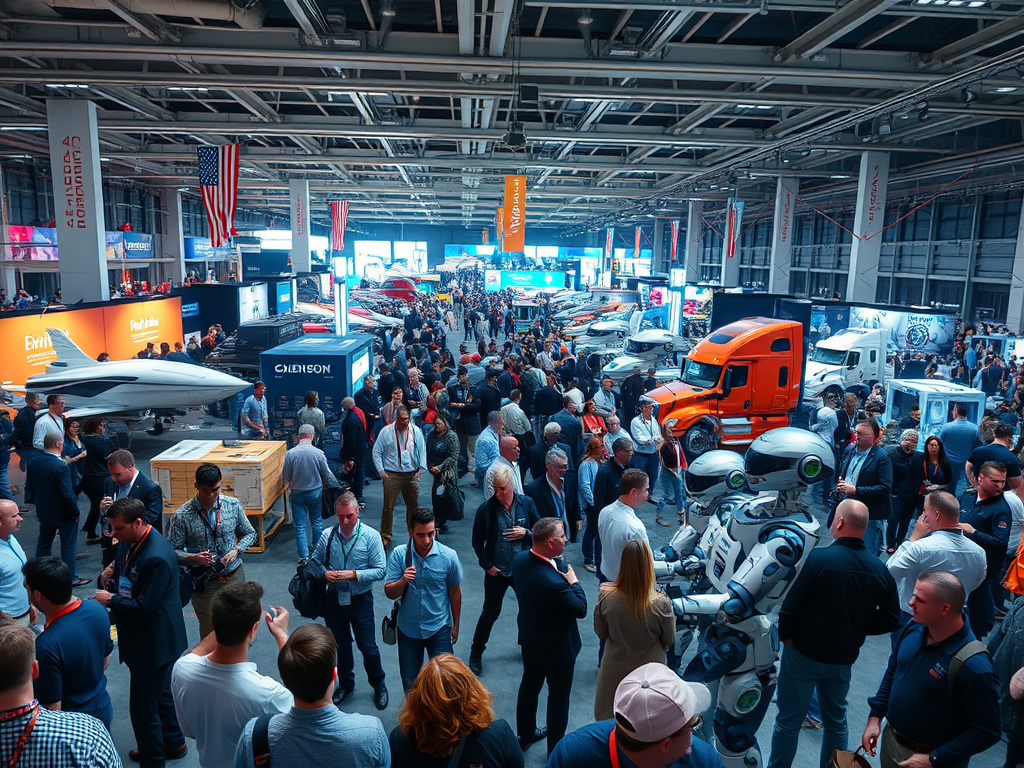
On the surface, the event had the appearance of a typical industry convention. Attendees browsed a broad display of innovations ranging from carbon brush components and marine propellers to futuristic flying boats, electric trucks with modular designs, vertical-lift air taxis, and humanoid robots. However, beneath the surface-level showcase of gadgets and hardware, a deeper and more urgent tone prevailed—one that linked industrial innovation directly with national security.
In a video address to attendees, Defense Secretary Pete Hegseth captured the summit’s spirit: “You are the architects of a future in which America can restore and maintain an industrial foundation capable of delivering critical defense systems—rapidly and at scale. We are running out of time.”
This two-day event, dubbed Reindustrialize 2025, was orchestrated by a loosely organized group connected through Atomic Industries, a Michigan-based manufacturing startup. One of the key figures behind the initiative is Atomic’s CEO, Aaron Slodov, author of A Techno-Industrialist Manifesto, which champions a shift in tech investments away from digital-only ventures and toward tangible, physical production.

Falon Donohue, a board member at Atomic and one of the summit’s co-founders, noted a dramatic surge in interest. Around 1,200 individuals took part—twice the turnout of the inaugural event the year before. Thousands more had signed up but couldn’t be accommodated, while over 16,000 people tuned in online to follow the discussions, panel talks, and interviews.
The concept of revitalizing American manufacturing isn’t new—business leaders have talked about it for decades. But the topic has taken on newfound urgency. Supply chain disruptions, foreign dependence on critical resources like semiconductors and pharmaceuticals, and rising geopolitical tensions have underscored how reliant the U.S. has become on other nations, particularly China.
Interestingly, despite their contrasting political philosophies, both former President Donald Trump and President Joe Biden have backed the notion of strengthening America’s manufacturing sector. Biden has emphasized government incentives, securing legislation to support domestic production through tax credits and subsidies. Trump, in contrast, has leaned toward imposing tariffs on foreign imports to protect and boost U.S. industry.

The Detroit summit attracted a crowd that saw manufacturing revival as not just a business opportunity, but a patriotic obligation. Many speakers, despite having foreign accents—from the UK and Australia, for instance—echoed the same message: the U.S. must reclaim its ability to produce essential goods within its own borders. In a notable cultural shift, manufacturing is being rebranded from low-prestige labor to an aspirational pursuit among high-net-worth investors and Silicon Valley elites.
“It’s becoming a badge of honor to back manufacturing ventures,” said Christian Garrett, an investment partner at 137 Ventures, while attending a celebratory party stocked with fried chicken. Garrett emphasized that the industrial deals emerging from the conference could yield prestigious, cutting-edge roles for skilled laborers—blending blue-collar jobs with the sheen of high-tech credibility.
Throughout the conference, a dominant theme emerged: industrial power is foundational to military strength. Speakers warned that the U.S. has compromised its strategic capabilities by allowing large segments of its manufacturing base to be outsourced. Overreliance on software and financial instruments has, in their view, hollowed out America’s ability to physically build what it needs in a crisis.

Chris Power, CEO of Hadrian—a defense-focused manufacturing startup—set the tone in his opening address. The sentiment was echoed by government officials, who drove home the idea that preserving the U.S.’s global influence hinges on restoring domestic production capacity.
Many speakers invoked World War II as a model, when Detroit’s car factories were swiftly repurposed into wartime production hubs. But officials cautioned that today, the country is no longer the manufacturing giant it once was. China now leads in sectors critical to warfare—shipbuilding, metallurgy, electric vehicles, and rare earth elements.
Mike Needham, chief of staff to Secretary of State Marco Rubio, addressed the audience with a blunt message. “In today’s world, Russia commands natural resources and China dominates manufacturing. An economy based on DoorDash deliveries and McKinsey slide decks won’t suffice,” he declared from the main stage. “China is the rival we’re often too hesitant to name—yet they’re overtaking us industry by industry.”
Needham urged the room of startup founders, angel investors, and venture capitalists to reignite what he called the “bold American mindset”—one that confronts problems head-on and doesn’t accept limitations. He called for a focused push to secure the materials, technologies, and infrastructure necessary for a resilient industrial economy.

The event also featured a notable presence from the Trump-era policy circle, including Kelly Loeffler, former Small Business Administration chief; Jamieson Greer, a former U.S. trade representative; and John Phelan, the Navy Secretary. CIA officials, whose identities were not disclosed, hosted a closed-door session with industry insiders to discuss sensitive issues around manufacturing and defense.
In his remarks, Secretary Phelan was direct about the country’s vulnerabilities. He proposed integrating commercial and defense shipbuilding efforts to address the critical lack of shipbuilding capacity—a capability he argued is essential to sustaining naval superiority.
Prominent tech figures were also in attendance. Shyam Sankar, Chief Technology Officer of Palantir, pointed out that when it comes to industrial prowess, the U.S. is now playing catch-up. “We are the underdogs,” he warned.
Palmer Luckey, the innovative founder of defense tech company Anduril, made a memorable virtual appearance. He addressed attendees through a humanoid robot wearing a Hawaiian shirt and a mullet wig—blending the humorous with the symbolic.
The origins of Reindustrialize 2025 can be traced back to a tour of Atomic’s factory in March 2024. According to Donohue, what began as a simple tour soon became a high-energy brainstorming session with investors and policymakers about the role of modern technology in revitalizing American manufacturing. Donohue, also a partner at Narya—a venture firm co-founded by Vice President JD Vance—recalled the moment clearly: “We walked out of there absolutely energized. We knew this needed to continue.”


Gregory Bernstein, CEO of the New Industrial Corporation and another co-founder of the summit, offered multiple motivations for the movement. For some, it’s about safeguarding national defense. For others, the draw lies in addressing socioeconomic divides or tackling the climate crisis through new industrial policies.
Bernstein put it this way: “An economy centered solely on intangibles—crypto trading, food delivery, streaming—just doesn’t give people much to believe in. Building real things gives meaning.”
Despite the strong participation from Trump-linked officials, the organizers emphasized that the summit was deliberately nonpartisan. In a show of balance, Jake Sullivan and Daleep Singh—both former national security advisers under President Biden—were among the featured speakers.
Still, the event was not without its critics. Activist group Engineers Against Apartheid demonstrated outside, protesting Palantir’s involvement in defense operations, particularly the firm’s alleged role in providing targeting technology for Israeli forces in Gaza.
Others were skeptical for different reasons. Robert Rose, CEO of Reliable Robotics, came across the summit by chance on LinkedIn and posted a critical note. As someone actively building hardware in the U.S., he questioned the need for a so-called “reindustrialization.” “We never stopped,” he wrote. “We’ve been here, doing the work.”




Leave a Reply