

CBS Canceling ‘Late Show With Stephen Colbert’ After Next Season

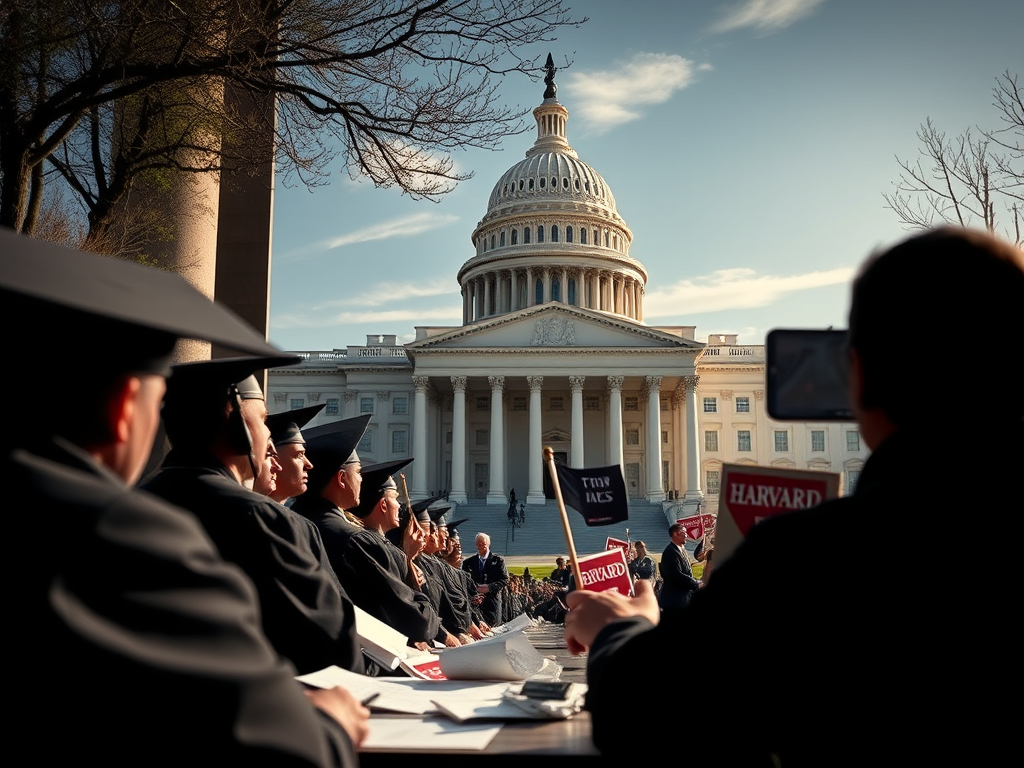
A politically charged decision by the Trump administration to terminate several federal research contracts with Harvard University has sparked internal debate and mounting concern over the fate of critical studies designed to support U.S. military veterans. These contracts, long-standing partnerships between Harvard researchers and the Department of Veterans Affairs (V.A.), underpin vital initiatives aimed at suicide prevention, toxic exposure analysis, and improved cancer screening methods for veterans.
Internal emails obtained by The New York Times reveal deep discord within the V.A. about the consequences of abruptly cutting these collaborations. One of the most urgent concerns stems from a joint project between Harvard Medical School and the V.A. aimed at developing a machine learning model to help emergency room doctors assess suicide risk in veterans. In a strongly worded email dated May 8, Seth J. Custer, an official in the V.A.’s Office of Research and Development, warned that ending this contract could “result in preventable deaths” by denying physicians a crucial tool in identifying at-risk veterans.
Nevertheless, John Figueroa, a senior adviser to Veterans Affairs Secretary Doug Collins, downplayed these risks, stating in internal communications that alternative institutions could take over the research without significant disruption. This position reflects the broader policy orientation of the Trump administration, which has intensified its scrutiny of academic institutions, especially Harvard, amid a larger culture war concerning elite universities, federal funding, and institutional priorities.

Research in the Crossfire
The decision to terminate Harvard’s federal contracts comes at a time when the administration is engaged in a high-profile confrontation with the university. Harvard has been a frequent target of criticism from President Trump and his allies, who have questioned the school’s admissions practices, ideological leanings, and its role in public discourse. While framed as part of a “veterans-first” policy realignment, critics argue that the move is less about fiscal responsibility or mission alignment and more about punishing an institution that has drawn the ire of the administration.
Peter Kasperowicz, a spokesperson for the Department of Veterans Affairs, confirmed that the agency is currently reviewing all active contracts with Harvard. He emphasized that the goal is to ensure all funded work supports the administration’s stated policy priorities. Neither Custer nor Figueroa responded to additional requests for comment, and Harvard representatives have remained silent beyond the university’s initial objections. The White House has also declined to clarify its involvement.

Alan M. Garber, president of Harvard University, issued a statement describing the contract cancellations as part of a broader effort to delegitimize academic institutions and undermine the credibility of scientific research. He warned that dismantling these partnerships would have a chilling effect on evidence-based policy and could derail projects with the potential to deliver real improvements in veteran healthcare. Harvard has since filed a lawsuit to halt the funding cuts, arguing that the administration’s actions lack legal justification and threaten public interest.
High-Stakes Projects at Risk
The potential impact of these cancellations is far-reaching. A May 7 email from a V.A. staff member indicates that the agency has already begun terminating six contracts with Harvard. The message advised colleagues to expect intense scrutiny for any attempt to salvage the partnerships and instructed them to proceed with cancellations unless explicitly directed otherwise.
Among the contracts being terminated is a project that evaluates the quality of cancer care provided by non-V.A. medical providers working in partnership with the department. According to Custer, this work is essential, aligning with both congressional expectations and V.A. leadership priorities. Its cancellation could leave a significant gap in oversight and quality control for one of the V.A.’s key private-sector collaborations.
Another crucial initiative now in jeopardy involves clinical data analysis. This project has enabled thousands of veterans to participate in clinical trials and has played a leading role in advancing precision medicine approaches for prostate cancer screening. Custer described the contract as “mission critical,” adding that the V.A. lacks internal capacity to continue the work on its own.
Dr. Walter Willett, a professor of epidemiology and nutrition at Harvard, said he has been working closely with the V.A. for over five years on one of the targeted projects. The research, which involves the analysis of dietary data from half a million veterans, aims to identify correlations between nutrition and chronic illness. Dr. Willett expressed frustration that a project with such universal benefit was being disrupted due to political motives. “This work benefits everyone,” he said. “It’s not about politics, but unfortunately, we’re caught in the middle of it.”
Political Motives Under Scrutiny
Observers say the decision to end these research collaborations cannot be separated from the Trump administration’s wider agenda. While officially justified as a cost-cutting and strategic realignment move, the timing of the terminations, coupled with the administration’s increasingly adversarial stance toward higher education institutions, suggests deeper motivations.
The V.A.’s cost-saving measures also include a controversial return-to-office mandate affecting its workforce, a policy reportedly influenced by Elon Musk and endorsed by the Department of Government Efficiency. The mandate has been criticized by employees as disruptive and unnecessarily punitive, adding further turmoil to an agency already navigating politically sensitive changes.
For many inside the V.A., the abrupt nature of the contract cancellations has been particularly concerning. The internal documents reviewed by The New York Times show that scientists and administrators were not consulted in advance, nor were impact assessments conducted before the decisions were made. “There was no planning, no coordination,” said one unnamed official. “It was like a guillotine came down overnight.”
Future Uncertain
As legal proceedings move forward and pressure mounts from veterans’ groups, scientists, and lawmakers, the fate of these Harvard-led research projects remains uncertain. Should the court side with the university, some contracts could be reinstated. However, if the administration prevails, years of collaborative work may be lost — along with the promise of life-saving advancements in healthcare for veterans.
In the meantime, many researchers are left in limbo. Teams who have dedicated their careers to veteran health research now face the possibility of being cut off from critical funding, data access, and institutional support. Moreover, the loss of continuity may make it impossible to revive some of these initiatives even if funding is later restored.
The broader implications for public-sector research are significant. Experts warn that using federal funding as a political lever sets a dangerous precedent, one that may discourage collaboration between academia and government agencies in the future.
Ultimately, the controversy surrounding these terminated contracts highlights the fragility of research infrastructure in a polarized political environment. For the veterans who stand to benefit from this work, the consequences are not abstract — they are immediate and potentially life-threatening.
“This isn’t just about Harvard,” said Dr. Willett. “It’s about what kind of country we want to be — one that supports science and service, or one that turns its back when politics get in the way.” was canceled for political reasons.”
“The Late Show” began in 1993, hosted by David Letterman until September 2015, when Mr. Colbert replaced him.




Leave a Reply