
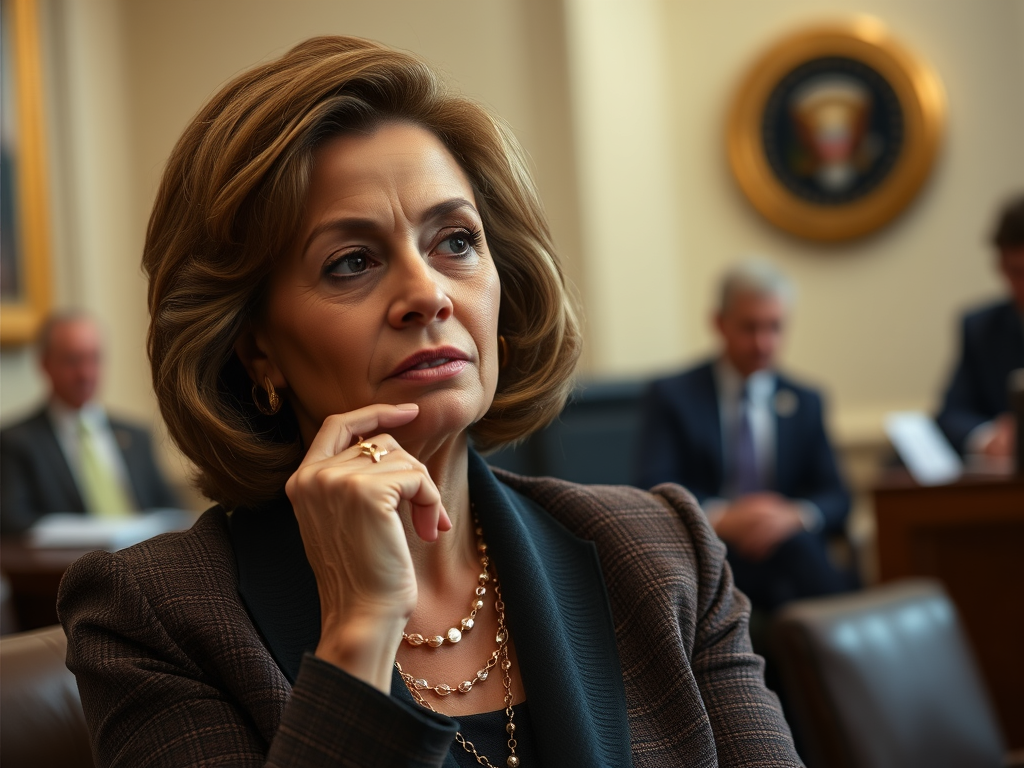

Marjorie Taylor Greene Critiques Trump’s Epstein Stance

Representative Marjorie Taylor Greene of Georgia, known for her deep alignment with far-right politics and an early involvement in the QAnon conspiracy theory, has consistently been one of Donald Trump’s most passionate supporters in Congress. However, recently, she has not shied away from voicing her disappointment with the former president, particularly regarding his sudden change of stance on the Jeffrey Epstein case.
Speaking in an interview, Greene expressed strong disapproval of the Trump administration’s recent declaration that no additional information about Epstein’s case would be released, despite earlier promises of full transparency. “It’s a complete reversal from what was previously communicated, and people are refusing to accept it,” Greene remarked. The Department of Justice stated that no further disclosures were “appropriate or warranted” concerning Epstein, the disgraced financier who died in custody in 2019 while facing serious charges related to sex trafficking.
This shift in tone from Greene reflects a growing sense of unease among some of Trump’s most loyal allies in the far-right camp on Capitol Hill. After spending the first half of the year largely unified in their unwavering loyalty to the former president, cracks are beginning to appear in the alliance. The internal dissent is becoming more visible as lawmakers react to what they see as a betrayal of core promises.
Over the past several weeks, Greene and several other staunch conservatives have been publicly critical of the Trump administration’s foreign policy—particularly its aggressive posture toward Iran, the decision to support military aid for Ukraine in its war against Russia, and the sudden halt in transparency around the Epstein investigation. To them, these moves signify a break from Trump’s earlier commitments to his base, many of whom expected a rollback of foreign military involvement and a more aggressive stance against political elites.

Greene was especially vocal about her frustration with the Epstein situation. “I can’t accept it, and I don’t believe anyone else should,” she said. “Everyday people go to prison for far less, and it feels like the powerful and well-connected continue to get away with everything.” Her remarks echo a broader sentiment of dissatisfaction and skepticism among the conservative grassroots, many of whom have long suspected that the Epstein files could implicate powerful figures and have demanded full disclosure.
President Trump, for his part, downplayed the issue. He said he trusted Attorney General Pam Bondi’s judgment and claimed that only information deemed “credible” should be made public. Later, he referred to the Epstein case as “boring,” dismissing concerns from both voters and lawmakers.
In a surprising twist, Democrats have found themselves, at least temporarily, aligned with far-right Republicans on this particular issue. While they fundamentally oppose each other on many fronts, both sides are united in their push for greater transparency from the Justice Department on Epstein.
Senator Josh Hawley of Missouri is another example of a Republican breaking ranks. During debates on a major domestic policy proposal, he repeatedly voiced concerns over drastic Medicaid cuts contained in the bill. His remarks, which could easily be lifted for use in Democratic campaign ads, included statements like, “We cannot be a party for working-class Americans if we’re stripping healthcare from them.” Although he eventually voted for the bill, Hawley later introduced a new piece of legislation aimed at undoing the very cuts he had supported.

On the issue of Ukraine, Greene, along with Representative Eli Crane of Arizona and others, criticized Trump’s decision to resume aid to Kyiv. They argue this move directly contradicts his campaign promise to avoid foreign entanglements and instead focus on domestic issues. To them, funneling American weapons and resources to a foreign conflict is an unacceptable deviation from what voters were led to believe.
Such internal conflicts are not uncommon when a new administration begins to govern and faces the complex realities of policy-making. However, in Trump’s case, the tension is heightened by the fact that he assumed office under a cloud of legal troubles and with no guarantee of a second term. At the same time, many congressional Republicans are preparing for their own reelection campaigns in just over a year, complicating their loyalties.
For years, Trump and many Republican leaders had implied that they would declassify documents related to Epstein, fueling widespread speculation and conspiracy theories among their base. These voters, many of whom are from working-class backgrounds and rely on government healthcare like Medicaid, now feel betrayed not only on the issue of foreign policy but also on the failure to deliver long-promised transparency.
Some Republican lawmakers, having spent the last six months largely deferring to the White House, now appear to be recalibrating. They are attempting to find a balance—remaining publicly supportive of Trump while signaling discomfort with some of his most controversial decisions.

Trump’s former advisor turned influential media personality, Steve Bannon, echoed these concerns on his podcast. Referring to the Ukraine situation, Bannon said, “We’re about to send weapons to people we have absolutely no control over. This is a brutal, old-school war in Eastern Europe—and we’re being dragged into it.”
Yet no issue seems to have struck such a visceral nerve among Republican voters as the Epstein files. Representative Nancy Mace of South Carolina noted that her office had been flooded with calls and messages demanding the release of unclassified documents. “It’s been nonstop for days,” she said. “Every social media platform, every phone line—it’s clear people care about this. And when that many people speak up, we need to listen.”
Mace expressed support for appointing a special counsel to investigate whether evidence had been tampered with and to identify any other individuals who might have been involved in Epstein’s trafficking network. “The Justice Department being more transparent would be good for the country,” she said. “People already distrust the government, and we haven’t done much to earn their trust back.”
Even Speaker of the House Mike Johnson, who has consistently supported Trump without question, stated in a podcast interview that he believed the Epstein files should be made public. “Let the people see what’s in there,” he said. “It’s not my specific area, but I agree that we should err on the side of transparency.”
Representative Tim Burchett of Tennessee was similarly frustrated. He criticized Pam Bondi for withholding the Epstein documents and said he had not yet discussed the issue directly with Trump. Still, he refrained from directly blaming the former president. His cautious approach may signal the broader dilemma Republicans face: they want to stay on good terms with Trump while addressing a rapidly growing wave of public dissatisfaction.

Democrats, meanwhile, made it clear that they saw Bondi as a shield for Trump’s decision. “There’s no reason for her to take the fall here,” said Representative Jamie Raskin of Maryland. “It’s obvious that Trump is calling the shots. Republicans are divided—some understand the public outrage, while others stick with Trump regardless.”
On Monday night, only one Republican on the House Rules Committee, Representative Ralph Norman of South Carolina, sided with Democrats in voting to force a floor debate on whether the Justice Department should release the Epstein files. The following day, Republicans closed ranks and unanimously voted against such a debate.
Still, not all Republicans were content to let the issue die. Later that evening, Representative Thomas Massie of Kentucky introduced a discharge petition—a procedural move that allows rank-and-file lawmakers to bypass leadership and bring legislation to a vote if a majority of House members sign on. Massie also teamed up with Representative Ro Khanna, a Democrat from California, to sponsor a bill requiring the release of all unclassified materials in the Epstein case, with safeguards to protect the identities of victims.
Democratic Representative Marc Veasey of Texas also introduced a separate resolution demanding full transparency. He emphasized that concern over the Epstein files transcends party lines. “This isn’t just about Trump or the MAGA movement. People want to make sure the powerful are held accountable, and that no one is above the law—especially when children are involved,” he said.ent makes these claims, and people want to make sure children aren’t being abused,” he said.




Leave a Reply