

Can Democrats Find Their Way on Immigration?

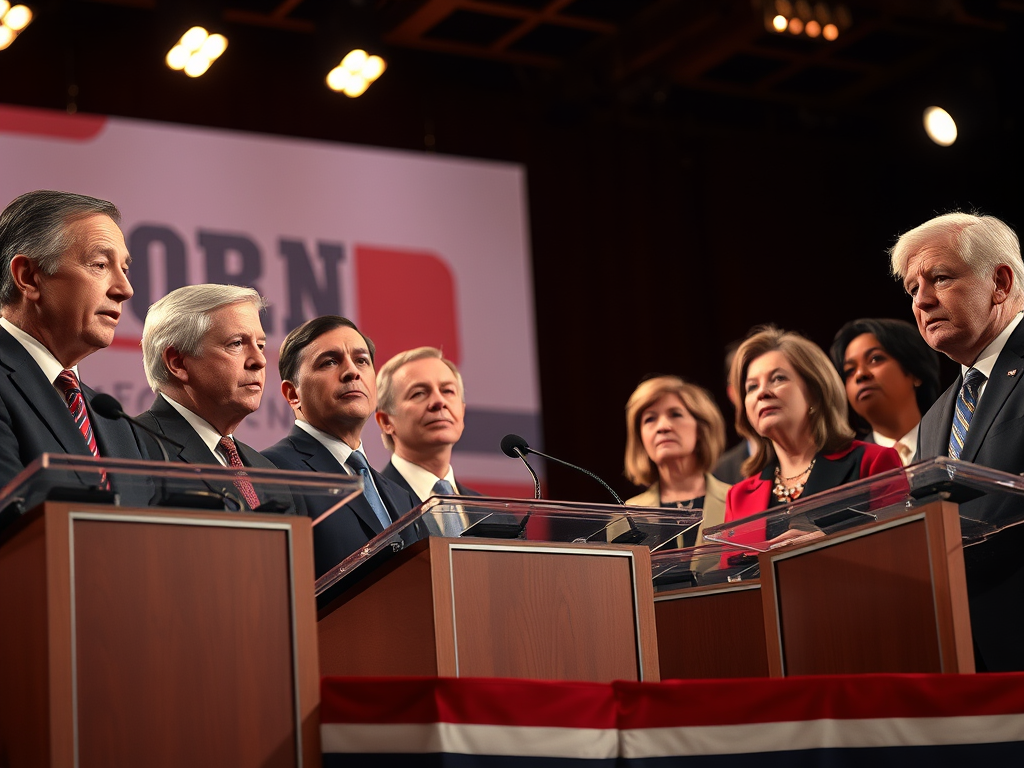
In 2019, during a Democratic primary debate, a defining moment unfolded that still echoes through the party’s political landscape. When asked if they supported decriminalizing unauthorized border crossings, nearly all ten candidates on stage raised their hands—except one. To those candidates, it was a gesture of moral resolve. But to a broad swath of American voters, it signaled something else: a party out of step with the national mood.
That image—ten presidential hopefuls aligning themselves with a significant shift to the left on immigration—continues to haunt the Democratic Party. What was intended as a bold display of progressive values has come to symbolize a political miscalculation, one that many now view as a key misstep in an era of heightened concerns over border security.

In the years since, public sentiment on immigration has shifted markedly. A 2023 Gallup poll found that 55% of Americans favored reducing immigration levels, a sharp increase from 2020 and the first time since 2005 that a majority expressed such a view. This trend includes not just white Americans but also working-class Latino voters—once a reliably Democratic constituency. Many of these voters have grown wary of the party’s increasingly liberal immigration policies.
Representative Vicente Gonzalez of Texas, whose border district flipped in favor of Donald Trump, issued a stark warning: “When the most Latino district in the country outside of Puerto Rico supports Trump, the Democratic Party needs to reevaluate.” His historically blue district had remained loyal to Democrats for over a century—until recently.

This dramatic shift is the culmination of years of strategic blunders, misread public opinion, and internal divisions within the Democratic Party, all while Republicans seized the opportunity to define the immigration debate on their terms.
Senator Ruben Gallego of Arizona offered a blunt assessment: “We misinterpreted the results of the 2016 and 2020 elections. We appeared indecisive, disconnected from voters, and weak on border issues.” In May, Gallego unveiled his own immigration and border security proposal, an effort to re-center the party’s approach.

Despite a widespread acknowledgment among Democrats that immigration and border control have become critical vulnerabilities, there’s little agreement on how to address them. Some party leaders are calling for a pragmatic shift. The Center for American Progress, a major Democratic think tank, released a plan advocating both the expansion of legal immigration and stricter asylum requirements—long a Republican stance.
Neera Tanden, the organization’s president, emphasized that Democrats must acknowledge the system’s failures to credibly challenge Republican extremism. “If we want to counter people like Stephen Miller,” she said, “we also have to admit that the border has been too porous and that reform is essential.”
Yet not everyone within the party agrees. Progressives argue that adopting conservative policies will legitimize what they see as a dangerous campaign to stigmatize and expel immigrants of color. Representative Ayanna Pressley of Massachusetts dismissed the security-focused rhetoric as a mask for racism and control. “Framing immigration as a law-and-order issue only furthers the agenda of those trying to revive Jim Crow-era policies,” she warned.
The debate is unfolding in the context of what many Democrats view as a national emergency. Under the Trump administration, immigration enforcement grew more aggressive: mass raids, courthouse detentions, and militarized operations created an atmosphere of fear among both undocumented and naturalized immigrants.
Cecilia Muñoz, who served as domestic policy advisor under President Obama, admitted that Democrats left a policy vacuum. “We failed to shape a coherent narrative on immigration, and Trump filled that space with cruelty,” she said.

Some Democrats are revisiting their own history for guidance. President Bill Clinton once oversaw significant expansions of border enforcement. President Obama promised a comprehensive overhaul but ended up deporting more undocumented individuals in his first term than any president since the 1950s, trying to strike a balance that ultimately satisfied neither side. His executive actions to protect certain immigrant groups were either blocked in the courts or criticized as insufficient.
Then came Donald Trump, who launched his campaign by denouncing Mexican migrants and promising to build a border wall. In response, Democrats moved further left. Activists pressured 2016 candidate Hillary Clinton to reject broad deportations and embrace progressive reforms. But those promises—like pledging not to deport undocumented immigrants except for violent offenders—played into Trump’s narrative that Democrats wanted open borders.
After Trump’s victory, Democratic rhetoric hardened. Calls to abolish ICE, end deportations, and decriminalize illegal crossings grew louder. Yet these policies focused more on resisting Trump than presenting a long-term vision. They rarely addressed the practical or economic arguments for reforming legal immigration channels.

Ironically, Trump’s most draconian actions—like family separation—provoked public backlash, briefly tilting public sentiment toward more generous immigration policies. But by the time President Joe Biden took office, the surge in illegal border crossings reignited concerns. Many migrants interpreted Biden’s election and rhetoric as a green light, resulting in increased arrivals at the southern border.
Within the Biden administration, aides reportedly urged the president to sidestep immigration issues and focus on pandemic recovery, the economy, and international conflicts. But Republican governors made that avoidance impossible. In April 2022, buses carrying migrants from Texas arrived in Washington, D.C.—part of Governor Greg Abbott’s strategy to spotlight the immigration crisis. Despite White House dismissals, the tactic gained traction.
In the following months, over 100,000 migrants were transported to liberal strongholds like New York and Chicago. Florida Governor Ron DeSantis even flew migrants to Martha’s Vineyard. These actions strained city resources and stirred resentment among residents, including longtime immigrant communities.
Representative Veronica Escobar of El Paso recalled the desperation of winter 2022, when migrants camped in freezing conditions. The crisis overwhelmed local resources, and efforts to pass moderate, bipartisan reforms drew criticism from within her own party for being too harsh. “What we lived through changed perspectives,” she said. “It showed how detached the party had become from the realities on the ground.”

Even in cities far from the border, frustration was mounting. Former Chicago Mayor Lori Lightfoot recounted how Black residents and established Latino communities questioned why recent arrivals were prioritized. The optics and resource allocation stirred deep tensions. “We heard things like, ‘What about us? We’ve been here all along,’” she said.
Meanwhile, the Biden administration struggled to formulate a unified response. Internal disagreements over how quickly to dismantle Trump-era policies paralyzed progress. Although Congress attempted to broker a deal combining tighter border controls with expanded work permits, Trump encouraged Republicans to block it—denying Biden a legislative win.
By early 2024, immigration took center stage in key elections. Democrat Tom Suozzi, running in a special House race in New York, leaned into a tough-on-border message and called for deportations of violent offenders. His success underscored a broader lesson: voters weren’t necessarily embracing Republicans—they were rejecting perceived Democratic neglect.

Eventually, Biden issued a sweeping executive order to suspend asylum claims during border surges—the most restrictive Democratic immigration policy in decades. While illegal crossings dropped, the damage to public perception lingered. When Vice President Kamala Harris replaced Biden on the 2024 ticket, Trump still held a commanding edge on immigration.
He campaigned under banners declaring “Deport Illegals Now” and treated his victory as a license to enact an even more sweeping crackdown. Reports of immigrant teenagers being arrested at traffic stops and kitchen workers being seized during lunch shifts painted a grim picture of escalating enforcement. Protests erupted, but the administration’s deployment of the military to suppress dissent only worsened tensions.
Privately, Democrats began soul-searching. Latino advocacy groups launched listening tours, and strategists conducted voter research to understand where they went wrong. The party, once proud of its immigrant-friendly image, now faces the urgent challenge of redefining itself on one of the most emotionally charged issues in American politics.
Whether Democrats can find a sustainable path forward—and rebuild trust with both their base and skeptical voters—remains an open question. But the stakes could not be higher. Immigration may well determine the future of the party and the shape of American democracy in the years to come.




Leave a Reply