

Despite Pressure From Trump, Powell Remains Patient on Rate Cuts

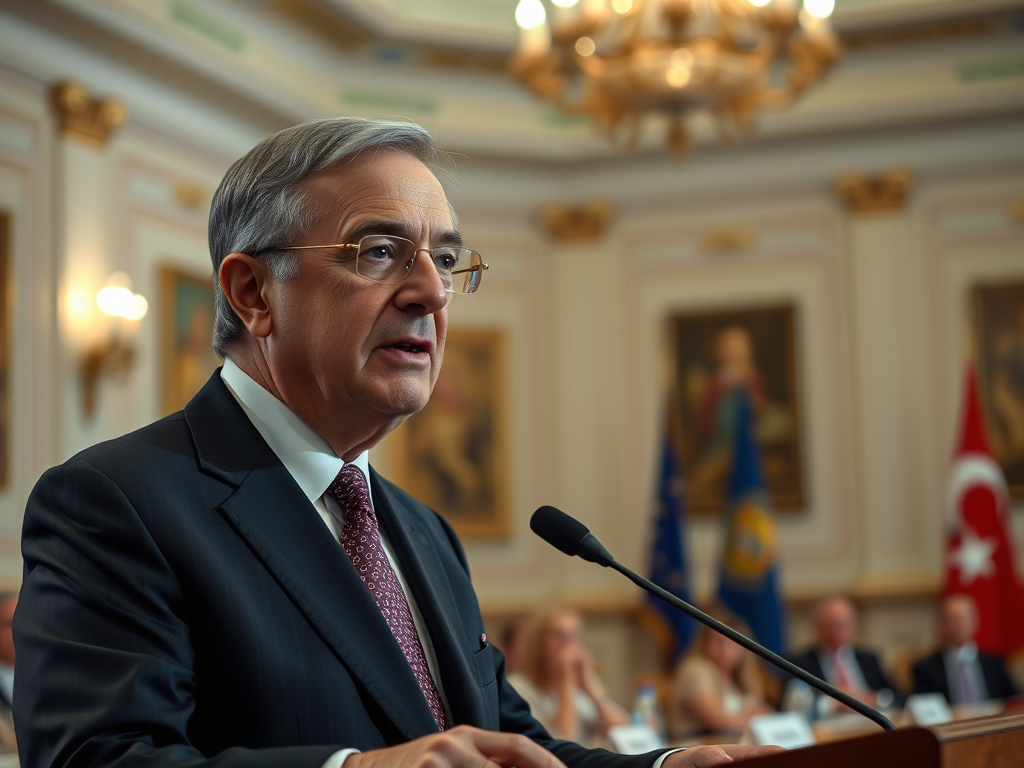
At a time when central banks across the globe are swiftly easing monetary policy, Federal Reserve Chair Jerome H. Powell has chosen a more deliberate route, defending the central bank’s measured approach to cutting interest rates. Speaking at the European Central Bank’s annual forum in Sintra, Portugal on Tuesday, Powell emphasized that the Fed’s decisions will remain grounded in economic data, despite mounting pressure from President Donald Trump for immediate action.
Powell refrained from offering any explicit timeline for potential rate cuts, but acknowledged that a majority of members on the Federal Open Market Committee (FOMC)—the body responsible for setting U.S. interest rates—anticipate rate reductions at some point before the end of the year. “We are proceeding one meeting at a time,” Powell remarked. “There are no firm decisions until we have assessed incoming data. Every meeting is on the table, but also subject to change depending on the evolving economic indicators.”

While several central banks have already acted to reduce rates in response to slowing inflation and weakening global demand, the Fed has opted to maintain its current course. This divergence has sparked debate among economists and policymakers, particularly given the backdrop of volatile global conditions and heightened geopolitical uncertainty—much of which stems from the U.S.’s own shifting economic and trade policies under President Trump.
Christine Lagarde, President of the European Central Bank (ECB), underscored the complexity of the current global environment during the same panel discussion in Portugal. “We are navigating through geopolitically unstable waters,” she said, adding that these uncertainties carry both inflationary and deflationary risks. “Our role is to remain highly alert and responsive to the rapidly changing global context.”
A number of key central bankers echoed these concerns, noting that the unpredictable nature of trade policy—especially concerning tariffs introduced or threatened by the U.S.—is disrupting global supply chains and creating new challenges for economic forecasting. Both the heads of Japan’s and South Korea’s central banks participated in the discussion, and they too expressed apprehension over the long-term effects of U.S. trade moves on their domestic economies.
The Fed’s approach has not gone unnoticed in Washington. President Trump has been particularly vocal in his criticism of the Fed’s reluctance to follow the ECB and other institutions in slashing rates. On Monday, he even went so far as to send a handwritten message to Powell and other board members, chastising them for not acting more aggressively to stimulate the U.S. economy through lower borrowing costs. This was only the latest in a series of public rebukes from the President, who has repeatedly suggested that the Fed’s current policy stance is harming American economic growth and international competitiveness.

Powell, for his part, remained unfazed by these attacks. “My focus is entirely on fulfilling my responsibilities as chair,” he stated when asked about the president’s repeated criticisms. His response was met with a round of applause from the assembled audience of international economic leaders, indicating strong support for the Fed’s independence.
President Trump has claimed that the Fed’s inaction—particularly its choice to hold rates steady in 2024 after a full percentage-point cut the previous year—has cost the U.S. economy trillions of dollars. At one point, he even called for an immediate and dramatic 2.5 percentage-point reduction in rates. Nonetheless, Powell has maintained a cautious posture, resisting political pressure and stressing the importance of data-driven decision-making.
Internal discussions within the Fed suggest that while most officials foresee a rate cut later this year, opinions differ regarding its urgency and scale. A minority—including two members appointed by Trump—believe that the first cut should happen as early as the next FOMC meeting, scheduled for the end of the month. Meanwhile, market participants are betting that the first rate reduction will likely come in September.

The rationale for the Fed’s wait-and-see strategy is rooted in the belief that the U.S. economy, though exposed to global risks, remains fundamentally resilient. As long as economic indicators such as employment, consumer spending, and corporate earnings remain solid, policymakers argue there is little need to rush into further rate cuts.
In contrast, the ECB has been more aggressive. Over the past year, the European central bank has lowered rates eight times in response to sluggish inflation and weakening growth. Many of these cuts have come amid heightened trade tensions, particularly those initiated by Trump’s administration. The ripple effects of tariffs and shifting trade alliances have begun to dampen Europe’s economic momentum, prompting fears of long-term stagnation and additional pressure on prices.
Economists warn that the same forces could soon hit the U.S. as well. Tariffs on Chinese goods and other imported products are expected to raise consumer prices and potentially slow growth if businesses respond by cutting back on investments and hiring. Whether the resulting inflation will be temporary or evolve into a more entrenched problem remains an open question. Powell noted that in his remaining 10 months as chair, he would prioritize preserving a stable economy and positioning it well for his successor.
In Europe, Lagarde expressed cautious optimism, stating that eurozone interest rates are currently at levels that should help absorb ongoing global uncertainties. Recent data showed that inflation in the eurozone averaged 2 percent in June—precisely in line with the ECB’s long-standing target. “We’ve reached our goal, though I wouldn’t declare mission accomplished just yet,” she said.
Across the English Channel, the Bank of England has taken a moderately conservative path, reducing rates four times over the past year, bringing the benchmark rate down to 4.25 percent. Bank Governor Andrew Bailey addressed concerns about rising inflation in the UK, arguing that much of the recent price growth is attributable to temporary spikes in regulated sectors like utilities, rather than underlying economic overheating. He emphasized that the central bank is seeing signs of weakening demand, which could ultimately bring inflation down.
“I believe the general trend for interest rates is still downward,” Bailey commented, signaling that further cuts may be ahead if economic softness persists.
As central bankers around the world weigh their next moves, a common theme emerges: uncertainty rules the day. From U.S. tariffs and geopolitical tensions to shifting demand and supply patterns, the economic landscape has become more difficult to navigate than at any time in recent memory. For Powell, Lagarde, Bailey, and their peers, striking the right balance between stimulating growth and controlling inflation will remain a formidable challenge.
Despite political interference and divergent global strategies, Powell is standing firm in his belief that monetary policy must be responsive—not reactionary. “Every decision we make will be informed by data,” he reiterated. And while his tenure may soon come to an end, the principles guiding the Fed’s work remain unchanged: independence, caution, and a deep commitment to economic stability.hink the direction of interest rates continues to be downwards,” he said.




Leave a Reply