
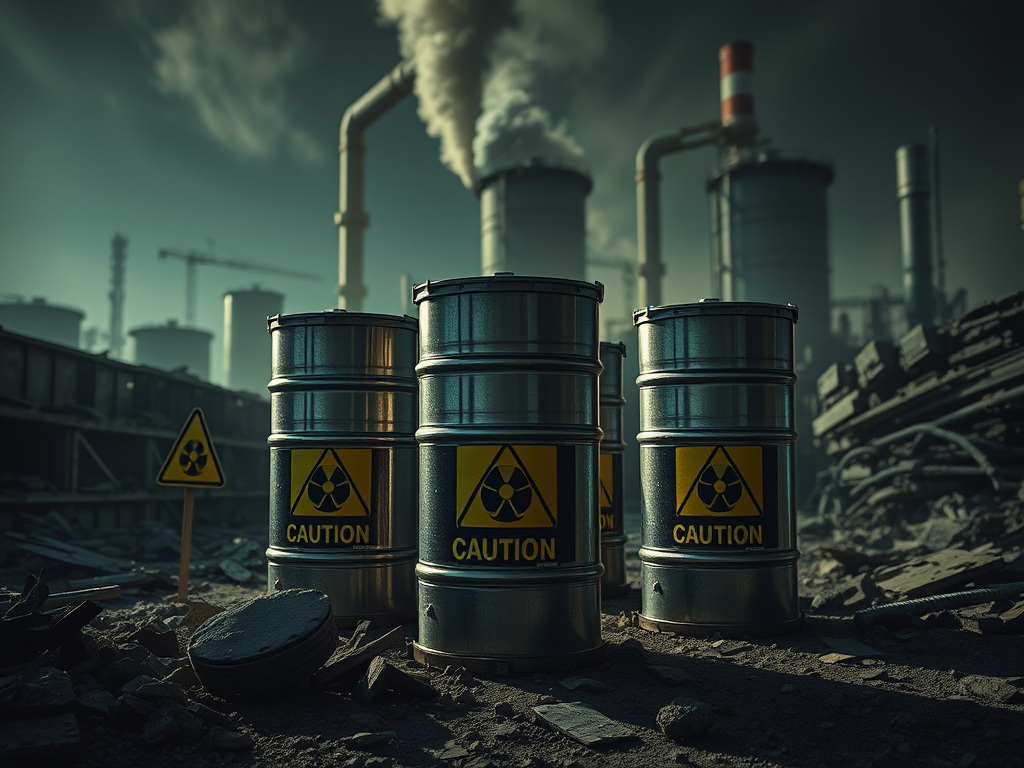

Fate of Iran’s Enriched Uranium Is a Mystery

Despite extensive discussions surrounding the recent U.S. military strikes on Iran’s nuclear infrastructure, one pressing question remains unresolved: what has happened to Iran’s significant stockpile of enriched uranium?
For years, Iran has methodically expanded its nuclear program, constructing deeply buried facilities and operating a vast number of centrifuges. This effort resulted in the accumulation of an estimated 880 pounds (approximately 400 kilograms) of uranium enriched to 60 percent purity—just a short technical step from weapons-grade material. Though American intelligence agencies consistently assessed that Iran had not yet committed to producing a nuclear bomb, they acknowledged that, given the quantity and enrichment level of Iran’s stockpile, the country was dangerously close to having the capability.
The recent U.S. and Israeli airstrikes undeniably inflicted substantial damage on Iran’s nuclear infrastructure, severely impairing the regime’s ability to quickly generate additional nuclear fuel. However, these operations did not target the uranium stockpile directly. Intelligence officials have long predicted that in the event of an imminent military strike, Iran would likely relocate its enriched uranium—either to preserve it as a bargaining chip in future negotiations or to retain the option of rapidly developing a nuclear weapon.

U.S. Vice President JD Vance, in a televised interview on Sunday, emphasized that the administration is seeking to open communications with Iran regarding the status of the stockpile. However, just days earlier, President Donald Trump dismissed suggestions that any enriched uranium had been moved prior to the U.S. strikes. Writing on his social media platform, Trump asserted that the uranium was either destroyed or buried during the bombardment of the Fordo facility. “Nothing was taken out of the facility,” he claimed. “It would have taken too long, been too dangerous, and the material is far too heavy and difficult to move.”
White House Press Secretary Karoline Leavitt echoed this statement, noting that U.S. intelligence agencies had been closely monitoring Iranian nuclear sites and had seen “no indication” that any enriched uranium was transported out of those locations prior to the military action.
Yet, within the intelligence community, the situation appears far more complex. According to officials familiar with internal assessments, intelligence gathered from within Iran indicates inconsistent understandings among Iranian officials themselves about what ultimately happened to the uranium. Furthermore, while some of the buildings at the Natanz facility—where part of the uranium was believed to be stored—sustained damage, they were not completely destroyed.
Given the conflicting nature of the evidence, U.S. intelligence agencies have yet to reach a definitive conclusion about how much uranium, if any, remains in Iranian possession. Individuals who have been briefed on the situation say the matter is still under active investigation.
Following a closed-door briefing in the U.S. Senate on Thursday, several Republican lawmakers emphasized that the mission of the strikes was never to eliminate or seize the stockpile itself. Senator Lindsey Graham of South Carolina remarked that although the targeted sites were heavily damaged, “the issue is far from resolved.” Speaking to reporters, he said, “We still don’t know where the 900 pounds of enriched uranium are located. It hasn’t been a strike objective for several years now. These sites are destroyed, but Iran can rebuild.”

Adding to the uncertainty is the question of where the uranium was being stored prior to the attack. President Trump suggested Fordo was the primary location, but others have pointed to Natanz. According to the International Atomic Energy Agency (IAEA), the bulk of the stockpile was likely held at Isfahan, home to a number of reactors and nuclear research facilities. Some nuclear experts even argue that Iran may have dispersed the uranium across multiple secret locations to minimize the risk of total loss.
Rafael Mariano Grossi, Director General of the IAEA, reported that Iranian officials had previously told international inspectors that they intended to relocate the enriched material if they believed it was at risk. He noted that the uranium was stored in containers compact enough to fit into “the trunk of a standard car,” suggesting the material could have been moved quickly and discreetly.
Indeed, in the days leading up to the U.S. cruise missile strikes on Isfahan, IAEA officials observed unusual vehicular activity around the nuclear facilities, including what appeared to be the transfer of materials into or out of the labs. Given that this stockpile represents one of Iran’s most strategically important assets, Grossi argued, it would have been illogical to keep it all in one vulnerable location. He added this week, “I cannot confirm that the entire stockpile was moved, but the available evidence strongly indicates that a significant portion was.”
European intelligence agencies have also issued preliminary assessments suggesting that Iran may have succeeded in relocating some or all of the uranium. However, they cautioned that these are early findings, and no one can currently say with certainty where the material is now.
Western intelligence officials further corroborated American assessments that the damaged nuclear sites may take years to return to full operational capacity. Of particular concern is the Fordo facility, where critical centrifuges—used to further purify uranium—are believed to be inoperable following the strikes. The destruction of these centrifuges significantly impairs Iran’s ability to increase enrichment levels should it attempt to resume its weapons program.
In addition, U.S. Secretary of State Marco Rubio confirmed during a NATO summit in The Hague that the Isfahan “conversion facility”—which transforms gaseous uranium into solid forms suitable for use in weapons—was also heavily damaged. This has further hampered Iran’s technical ability to progress toward constructing a bomb, even if it retains enriched material.
Despite the substantial setbacks to Iran’s infrastructure and fuel production capabilities, critical questions remain about how long it would take for the country to construct a crude nuclear device if it chose to do so. In the recent fighting, Israeli forces reportedly eliminated several Iranian nuclear scientists. Still, if a sufficient number of experts survived, and if enriched uranium has indeed been secretly moved and preserved, Iran might be able to accelerate efforts to build a weapon—potentially shortening the timeline to just a few months.
Congressman Jim Himes of Connecticut, the leading Democrat on the House Intelligence Committee, underscored the urgency of the situation. Posting on social media, he wrote, “Destroying physical sites is not enough if Iran has successfully relocated enough 60% enriched uranium, centrifuges, and other tools necessary to create a nuclear weapon. The regime may be brutal, but they are far from foolish. These materials can be transported and hidden with relative ease.”
As of now, the true status and location of Iran’s enriched uranium remain one of the most pressing—and dangerous—mysteries in international security. With nuclear tensions escalating and the potential for proliferation growing, the coming weeks may be critical in determining whether the damage inflicted by the recent military action has truly diminished Iran’s nuclear ambitions—or merely forced them deeper underground.




Leave a Reply